


BY THE OPTIMIST DAILY EDITORIAL TEAM
Tending your own vegetable garden is a rewarding way to bring fresh, homegrown produce to your table. But if you want to get the most out of your growing season, starting your seeds indoors can give your plants a strong head start. This method not only extends the growing window but also improves the chances of a healthy, productive crop.
Whether you are a seasoned gardener or a beginner eager to grow your first batch of veggies, this guide will walk you through everything you need to know about starting seeds indoors.
Set yourself up for success
Before diving into planting, take a moment to assess your space. “Pay attention to how much light you’re getting throughout the day as that will determine what type of seeds you can grow,” says Ohemaa Boateng, executive director at Black Creek Community Farm, an urban agricultural center in Toronto.
Beginners should start with just a few varieties—three at most—to keep the process manageable. Boateng suggests choosing seeds based on what you like to eat or opting for easy-to-grow plants such as tomatoes, beans, and leafy greens. Additionally, purchasing seeds from a local supplier ensures they are well-suited to your area’s growing conditions.
When to start your seedlings
The best time to start planting seedlings indoors depends on where you live and what you plan to grow.
- In most of the U.S. and Canada, late February to early March is a good time to start thinking about planting seedlings indoors.
- For warmer regions (USDA zones 7-10), you may be able to start as early as January or early February for crops like tomatoes and peppers.
- For cooler regions (USDA zones 3-6 and Canada), mid-to-late March or early April might be better, depending on the last frost date in your area.
A general rule is to check your local last frost date and count backward 6 to 8 weeks to determine when to begin planting indoors. This ensures your seedlings will be ready to transition outdoors at the right time.
Plant your seeds with care
Once you have your seeds, it’s time to get them into soil. Choose small pots with drainage holes to prevent overwatering, then fill them with a seed-starting potting mix. This fine, soilless blend—often made from coco coir, perlite, and vermiculite—encourages strong root growth.
When sowing seeds, a good rule of thumb is to plant them at a depth of three times their width. “Some tougher seeds may need to be soaked overnight prior to sowing,” Boateng advises. She also recommends planting multiple seeds per pot to ensure at least one strong sprout emerges.
Keep track of your seedlings
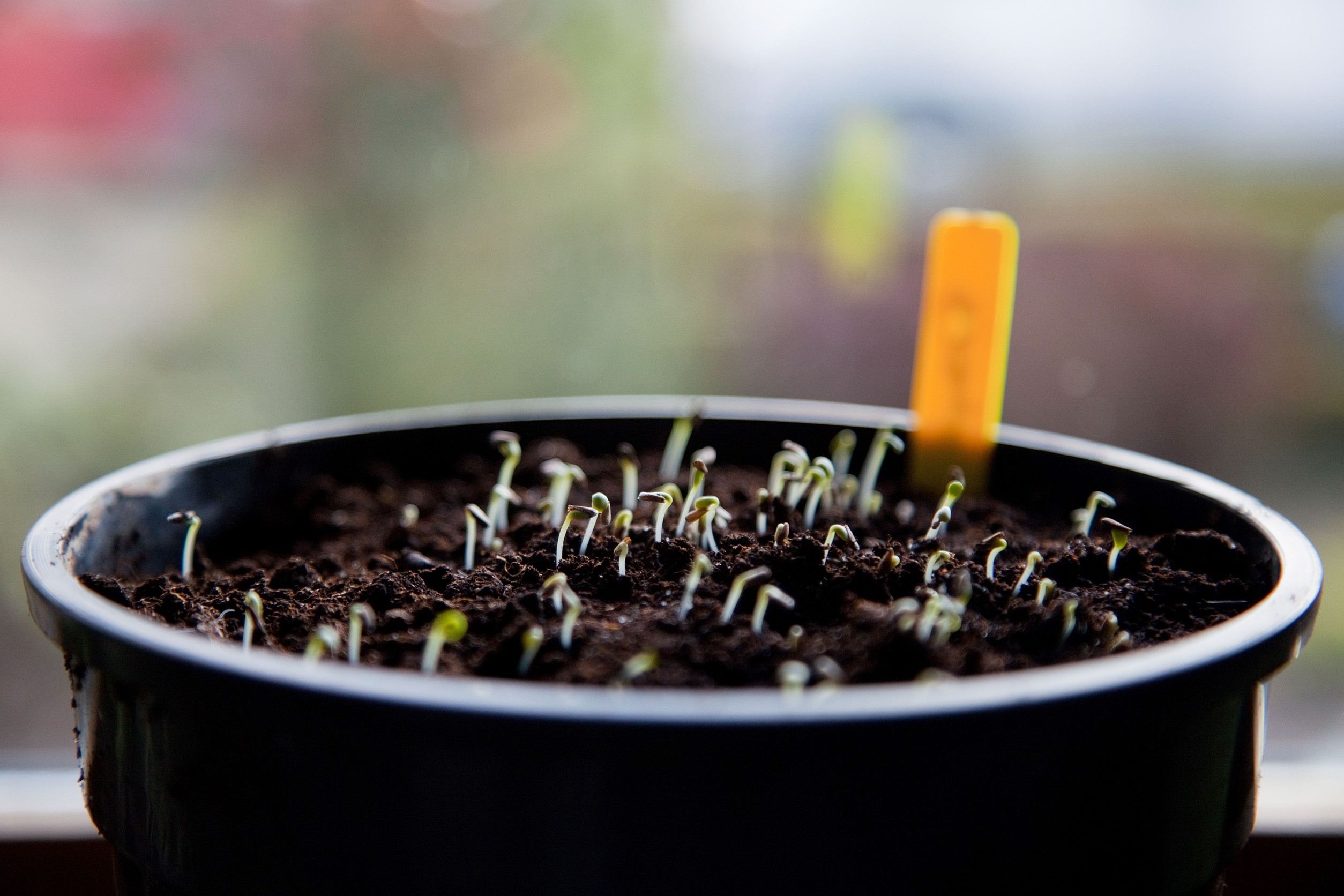
As you plant, label each container with the seed variety and sowing date. This simple step makes it easier to track your plants’ progress and care for them properly.
Create the right growing environment
Temperature plays a vital role in seed germination. While some plants, such as leafy greens, thrive in cooler conditions, others—like tomatoes, peppers, and eggplants—require warmth. Keep these heat-loving plants near a warm spot, such as on top of a refrigerator or by a radiator. Covering the pots with plastic wrap can help retain moisture and warmth, but be sure to remove it once shoots begin to emerge.
Watering is another crucial factor. The soil should remain moist but not soaked. To maintain consistent hydration, Boateng suggests setting up a self-watering system by placing a string from a water-filled container into the soil. This allows water to gradually travel to the roots as needed.
Help your seedlings grow strong
Once your seedlings sprout, relocate them to a cool, sunny spot, such as a windowsill. Rotate the containers periodically to promote even growth. Boateng notes that some plants, like certain herbs and leafy greens, may do better in indirect sunlight.
When your seedlings develop their second set of leaves (called true leaves), it’s time to fertilize. Organic and natural fertilizers provide the best nutrients for healthy plants.
Additionally, thinning your seedlings is essential. Keeping only the strongest sprout per pot prevents overcrowding and promotes robust growth. Instead of pulling out weaker seedlings, which can disturb the roots of the remaining plant, simply snip them at the soil line.
Prepare for the transition outdoors
Before transplanting your seedlings outside, they must be hardened off—a process that helps them adjust to outdoor conditions. “Start with one hour a day,” Boateng recommends, “gradually increasing their time outdoors over the course of one to two weeks.” This gradual exposure helps prevent transplant shock.
The best time to move your plants to their permanent home is after the last frost date in your area. When transplanting, ensure the root system is strong and beginning to poke through drainage holes. If possible, plant early in the morning to reduce sun exposure stress. Boateng also suggests adding mulch around the base of plants to help retain soil moisture.
If you are short on space, consider vertical gardening. “It’s a good idea to maximize the space by having plants grow up instead of growing out,” says Boateng. Beans, cucumbers, and tomatoes are great options for small gardens or balcony spaces.
Best household items for starting seedlings
If you do not want to buy seed-starting pots, there are plenty of household items that can serve as eco-friendly alternatives:
-
toilet paper rolls: Cut slits at the bottom and fold inward to create biodegradable pots.
-
plastic bottles: Cut them in half and poke drainage holes in the bottoms.
-
eggshells: These naturally break down and enrich the soil with calcium.
-
egg cartons: Compostable and easy to use—poke holes in the bottom and use the lid as a drainage tray.
-
food containers: Repurpose yogurt cups and other plastic tubs by adding drainage holes.
Grow with confidence
Starting seeds indoors is a simple yet rewarding way to get a head start on your garden. By following these steps—choosing the right space, using quality soil, maintaining proper conditions, and gradually transitioning your plants outdoors—you will set yourself up for gardening success.
Whether you are growing your first tomato plant or expanding a thriving garden, the key is to start small, stay patient, and enjoy the process. Happy planting!






