BY THE OPTIMIST DAILY EDITORIAL TEAM
In the quiet suburb of Monterrey, Mexico, Iván Venzor sat down for dinner with his family while a telescope just a few meters away captured something extraordinary—a distant Jupiter-sized planet briefly passing in front of a star. The flicker of light was too quick to see with the naked eye, but thanks to Venzor’s telescope, the moment was recorded and shared with researchers around the world.
“It’s effortless,” he said. “I’m having dinner with my family, and I’m trying to discover a new kind of planet.”
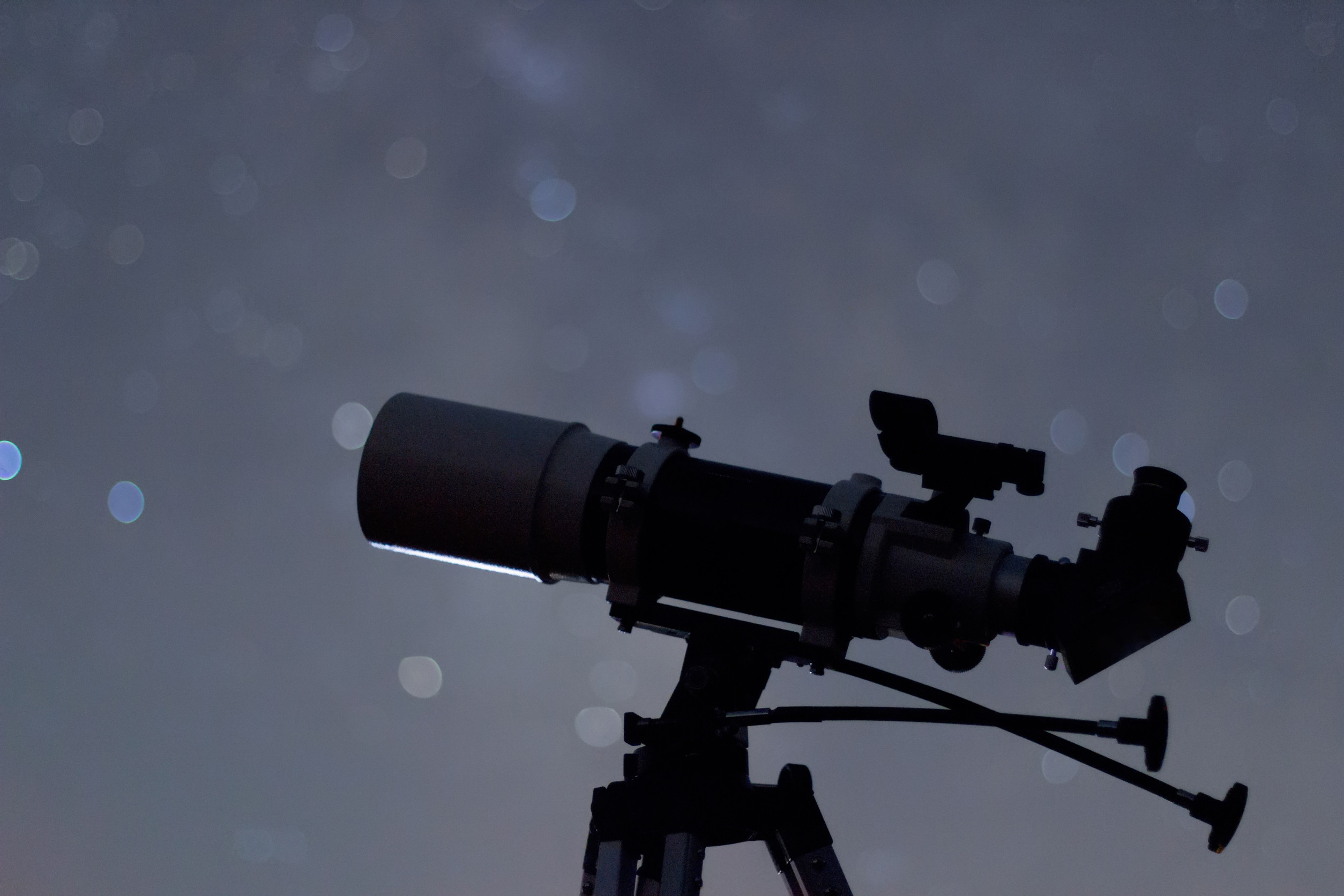
Venzor is part of a fast-growing global community of amateur astronomers using small, Wi-Fi–enabled telescopes produced by the French company Unistellar. These telescopes, more than 15,000 strong and spanning six continents, allow people from all walks of life to participate in space research—from tracking asteroids and discovering exoplanets to helping NASA monitor mission impacts in real time.
A telescope in every town
What makes this initiative remarkable is not just its scientific output but its accessibility. The telescopes are designed for ease of use—point, click, observe—allowing anyone to contribute to real astronomical research. Users select a target from a monthly list of observable cosmic events and let the telescope’s companion app do the rest, aligning it to the sky and capturing data.
Much of the science hinges on a simple but powerful method: occultation. When a planet or asteroid passes in front of a star, it causes a temporary dimming of light. By comparing how long that dip lasts from different locations, researchers can determine the size, shape, and path of the celestial object.
“The network is the coolest citizen science project I’ve ever seen,” said Jon Vandegriff, a space physics data scientist at Johns Hopkins Applied Physics Laboratory.
Bridging science and community
The telescopes aren’t cheap—some models cost up to $4,000—so to broaden participation, Unistellar and groups like Astronomers Without Borders have donated equipment to underserved communities and educational institutions around the globe.
That effort is paying off.
Marcelo Souza, an astrophysicist in Rio de Janeiro, said receiving a donated telescope for his university club “changed everything.” It’s now central to teaching, outreach, and research. In Armenia, space engineer Vachik Khachatryan and his brother have used their donated telescope to engage more than 2,000 children in stargazing events. It even made an appearance at Vachik’s wedding.
For these communities, astronomy has become more than a hobby—it’s a shared language, a bridge to global discovery, and a chance to feel part of something much bigger.
Discoveries powered by people
The impact of this telescope network is already impressive. At a recent meeting of the American Geophysical Union, Unistellar’s Chief Scientific Officer, Frank Marchis, announced that the network helped detect 136 asteroids and is refining the orbits of about 20 exoplanets in partnership with NASA.
A new paper will soon detail the discovery of a rare binary asteroid—two space rocks orbiting one another. It’s just one example of how citizen-collected data can support professional research and help fill in observational gaps.
Expanding the sky’s reach
Next up: automation and inclusivity. In April, 50 observers will test new hardware prototypes that allow researchers to remotely control telescopes during key events—reducing user error and maximizing data collection. The team is also applying machine learning to filter out bad data caused by clouds or satellites.
And critically, Marchis hopes to grow the network’s footprint in underrepresented areas like Africa, Central Asia, and parts of South America. By doing so, they’ll not only improve global coverage of the sky but also invite more people to take part in the wonder of discovery.
“On your own, you can do only so much,” said Venzor. “By working together, you are feeling part of something greater.”