


BY THE OPTIMIST DAILY EDITORIAL TEAM
In the wake of Southern California’s Eaton Fire, which reduced entire neighborhoods to skeletal remains, a quiet effort is underway. One that’s turning charred debris into the foundation for rebuilding.
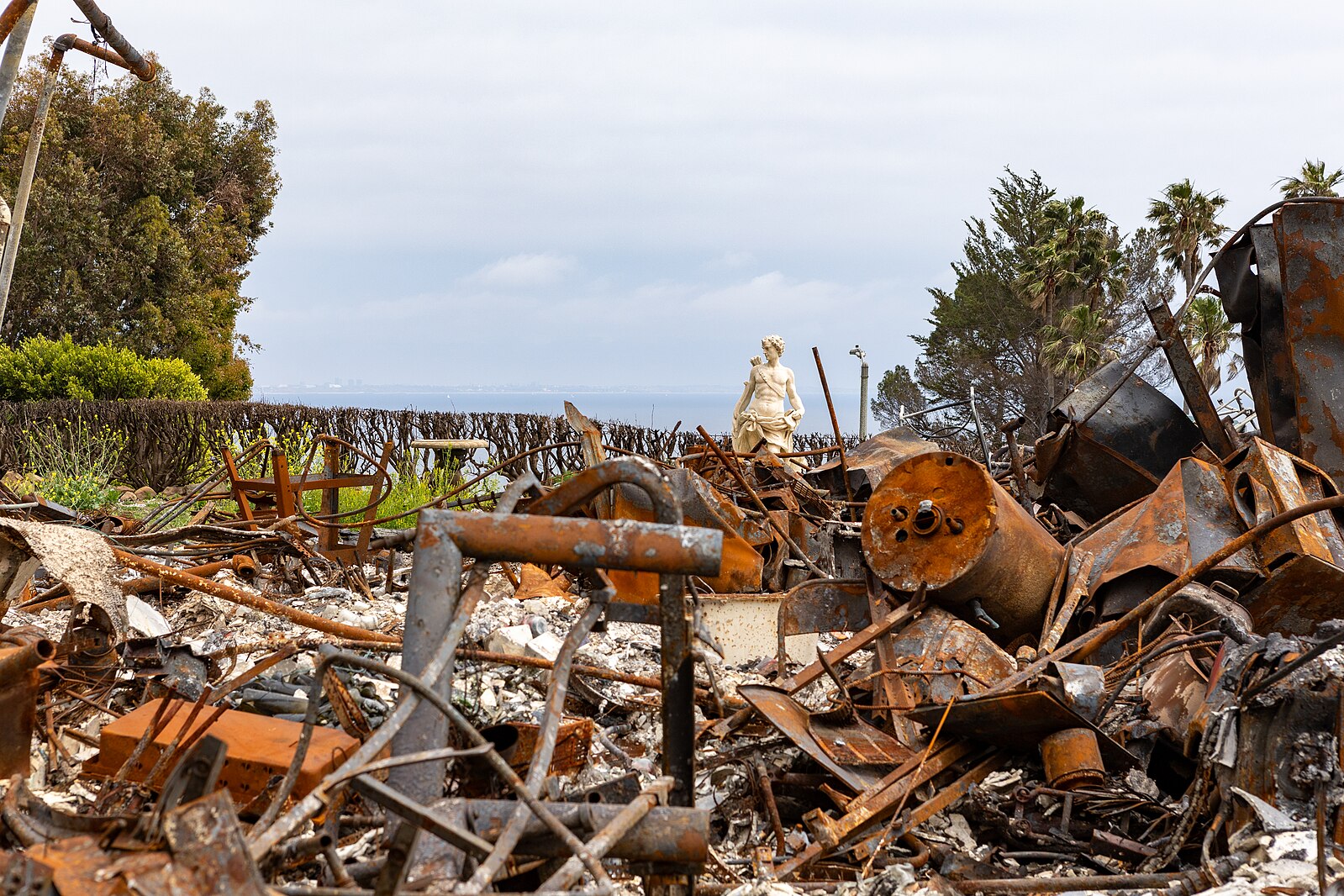
At The Bunny Museum in Altadena, co-founder Candace Frazee recently walked through the ashes of what once held over 60,000 bunny artifacts, now scorched concrete, twisted metal, and smoke-damaged earth. Yet amid the destruction, Frazee found purpose in what could still be saved.
“It’s fantastic. It’s absolutely fantastic,” she said of the effort to recycle the remnants of her museum and home. “That’s the right thing to do.”
Steel gets a second—and third—life
Steel collected from fire-ravaged properties is being compacted and trucked to recycling facilities, where it’s melted down and reborn into everything from beams to car doors.
“Steel is infinitely recyclable,” said Adina Renee Adler, executive director of the Global Steel Climate Council. “It is, in fact, the most recycled material out of everything that we have.”
The United States, the world’s fourth-largest steel producer, recycles between 60 to 80 million tons of scrap steel annually, according to the American Iron and Steel Institute. Even something as commonplace as a recycled refrigerator can prevent 215 pounds of carbon dioxide from entering the atmosphere.
For those who lost their homes, knowing the metal can live on elsewhere, or perhaps come back in a rebuilt version of their own home, offers a small sense of comfort. “There is definitely this notion… a lot of the stuff that we’re able to recover will actually come back and help rebuild Altadena,” said Col. Sonny Avichal of the Army Corps of Engineers, who oversees recovery operations in the region.
Concrete: crushed, reused, and environmentally smart
Beside the steel, heaps of pulverized concrete that once made up walls and foundations are stacked 10 feet high in Altadena. This crushed material is trucked to local companies and transformed into base layers for roads, elevation fill for construction sites, or even new concrete.
While making concrete is responsible for about eight percent of global carbon dioxide emissions, recycling it reduces the need for extracting fresh raw materials like gravel and sand. Ben Skinner, a manager on the cement and concrete team at RMI, a clean energy nonprofit, explained that although recycled concrete doesn’t dramatically shrink its carbon footprint, its environmental value is still significant.
“It reduces the extraction of new raw materials… while still producing high quality material,” Skinner said. And perhaps just as importantly, it keeps tons of rubble out of landfills.
Trees lost to fire find new purpose
The same winds that fanned the flames of the Eaton Fire also felled trees across Altadena’s streets and yards. Some trees were turned to ash and sent to landfills, but others are being repurposed: usable logs are shipped to mills to be cut into lumber for rebuilding, while less usable wood is mulched and sold as organic soil amendment.
Matthew Long, senior program manager at Environmental Chemical Corporation, the contractor overseeing the debris operations, has helped with wildfire recovery since 2017. From California to Hawaii’s Lahaina fires, his team has turned loss into utility.
“It’s really rewarding work,” he said. “You’re interacting with someone who lost everything daily and helping them move to the next step of recovery.”
Recovery with a side of resilience
In addition to restoring materials back into circulation, the Army Corps of Engineers emphasizes that this process also speeds up recovery and limits the environmental toll. By recycling instead of dumping, the number of trucks on the road is reduced and landfill overflow is avoided.
Still, some residents have raised concerns about dust and air quality. The Corps insists they’re taking precautions by continually watering the sites and monitoring air pollution levels to protect nearby communities.
Through fire, destruction, and loss, a cycle of renewal that brings steel, concrete, and wood full circle is underway. In Frazee’s words, recycling what remains is simply “the right thing to do.”






