BY THE OPTIMIST DAILY EDITORIAL TEAM
In a world where advertising saturates nearly every surface, from billboards and buses to our scrolling thumbs, one startup is flipping the script. Instead of using ads to sell soda or smartphones, Hope Hydration is using them to give away something far more essential: clean drinking water.
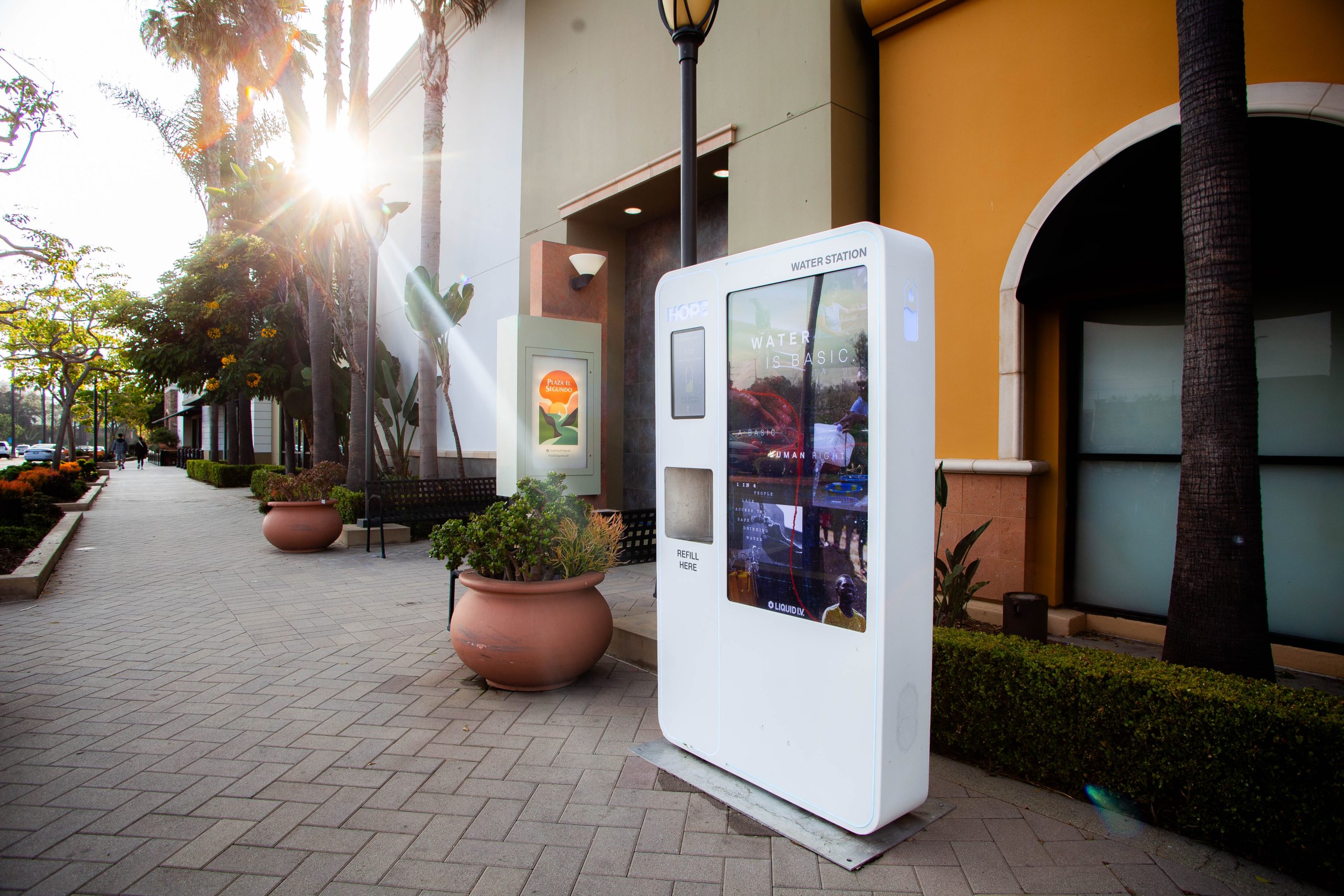
The company’s flagship idea is simple but clever. Install sleek, eight-foot-tall water refill stations at massive events (think SXSW, Coachella, Formula 1), and let thirsty attendees top off their bottles for free. While they hydrate, they’re greeted with brand content on a 55-inch screen built into the station. This turns each water break into a moment of high-impact advertising as well as a win for public health and sustainability.
“We’re maximizing impressions and maximizing our potential for impact,” said cofounder and CEO Jorge Richardson, who believes the model proves that you can deliver both profit and purpose.
A sustainable idea, built on experience and credit
The journey to Hope Hydration started with a realization: grants alone weren’t going to fix the global water access problem. Richardson, previously head of business development at Closca (a Spanish startup that built an app for locating public water fountains), saw firsthand how limited funding was for sustainable water infrastructure.
Then came a breakthrough moment at the Cannes Lions advertising festival in 2019. Richardson met Philip Thomas, the festival’s then-CEO, who was seeking new ways to bring sustainability to the event. Their collaboration planted the seed for Hope.
One year later, Richardson swiped his personal credit card to build the company’s first ad-powered water station. He launched the prototype at New York Advertising Week in 2021, drawing sponsorship from Microsoft and Dentsu. It worked. Over the next 18 months, Hope stations popped up at festivals, sports arenas, and global events.
Millions of bottles and emissions avoided
Since that first installation, Hope Hydration has prevented the use of more than 2.6 million single-use plastic bottles and cut over 29 million units of CO2 emissions. The refill stations tap into local water lines and filter the supply with carbon and PFAS filtration systems before chilling and dispensing it. Each unit is equipped with IoT sensors to track water use and impact in real time.
And it’s not just events. Hope’s permanent installations, like those in Times Square and Minneapolis–Saint Paul International Airport, signal a bigger vision: turning hydration into basic public infrastructure, supported by brands instead of budgets.
From big brands to underserved communities
The latest milestone? A $20 million Series A funding round led by Pentair plc, with additional support from Burnt Island Ventures. The infusion brings Hope’s total funding to $26 million, giving it the capacity to scale beyond high-traffic hubs.
“Now it’s about investing in the permanent network,” said Richardson. Flint, Michigan, where residents have struggled with water safety since 2014, is one of the communities he hopes to serve next.
“You can’t fund this the same way, but there is equal excitement from brands we’re seeing to help provide water access for airports as there is to be a lifeline and really help Flint, Michigan,” he explained.
Changing habits, one refill at a time
Still, not every challenge is technical. Getting people to bring their own bottles and adopt refill habits remains an uphill climb.
“Sustainability is all about delivering convenience,” said Jamie Richards, director of ESG at Bansk Beauty. “If the consumer feels inconvenienced, they’re most likely not going to engage.”
But recent trends offer hope. Reusable water bottles from Stanley to Hydro Flask to Owala are more popular than ever. As Tom Ferguson of Burnt Island Ventures put it, “We are inertia monsters. We do not want to do anything different ever. But what Hope is riding is really interesting.”
That momentum, combined with fresh capital and a solid track record, has put Hope Hydration in a strong position to grow both its tech and its mission.