BY THE OPTIMIST DAILY EDITORIAL TEAM
Welcome to our Best of 2025 spotlight on the environment, which we all know is one of the most dynamic and urgent spaces for innovation and impact. This year brought some truly awe-inspiring breakthroughs in sustainability, conservation, and climate resilience. These stories remind us that when creativity and science meet care for the planet, real transformation is possible.
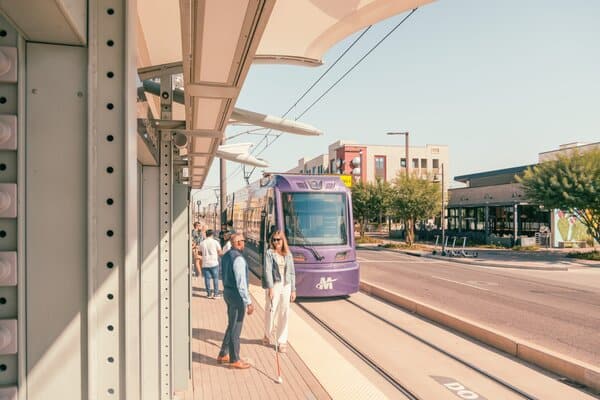
In a country where the car is king, a bold car-free community in Arizona is challenging the status quo. Culdesac Tempe, a $200 million, 17-acre development, is designed to prioritize walkability, public transit, and community connection. Since its debut in 2021, the high-profile project has drawn both praise and skepticism, but two years in, the verdict from its residents is largely positive.
Home to about 300 tenants in 288 units, Culdesac offers a lifestyle built around human interaction rather than parking spaces. Residents have been lured by free e-bikes, public transit passes, and easy access to amenities, eliminating the need for private cars. “Culdesac said, ‘Here’s a free e-bike; here are free transit passes—use them.’ I was impressed,” said Sheryl Murdock, a postdoctoral ocean researcher at Arizona State University who moved from Canada to be closer to work.
But does this model actually work? And could it be a blueprint for more cities across the U.S.?
The design: where the streets belong to people
Without the need for roads and parking garages, Culdesac’s layout is optimized for pedestrian life. Instead of wide asphalt streets, paseos (walkable pathways) weave through clusters of buildings, creating shaded walkways and fostering social interaction.
Architect Daniel Parolek of Opticos Design led the heat-conscious desert-modern design, writing that eliminating car infrastructure “opened up the opportunity to focus on creating people-oriented spaces.” Public spaces include courtyards, communal seating, murals, and a neighborhood-wide high-speed Wi-Fi network.
The result? A neighborhood that feels less like a typical American suburb and more like a Mediterranean town. “It reminds me of Mykonos,” Murdock noted. “The walkways wind between bright-white buildings, limiting sun exposure while making the whole space feel welcoming.”
Overcoming early hurdles
While residents now praise the development, early phases weren’t without complaints. Some amenities were delayed, including retail spaces, the fitness center, and the pool. “It didn’t hit the ground running, but now there is a lot,” said Murdock.
Today, the neighborhood boasts a gym, dog park, co-working spaces, and local retailers, including a bike shop, Korean market, coffee shop, and a James Beard–nominated Mexican restaurant. For those who need a car occasionally, an on-site car rental service offers vehicles for five dollars an hour.
Despite initial skepticism, many residents say the lack of cars has strengthened community bonds. Ignacio Delgadillo, a former suburban homeowner, moved into a two-bedroom unit with his wife and four-year-old son. He was drawn to the safety of the car-free design, explaining that his son can now ride his bike freely without the dangers of vehicle traffic. “We’ve probably made more connections here in six months than we did in 15 years in the suburbs.”
Can walkable neighborhoods work in America?
The idea of walkable, transit-oriented developments isn’t new; many European cities already embrace them. But scaling this model in the U.S. poses challenges. American suburban sprawl is built around cars, and a recent Pew Research survey found that most Americans still prefer larger homes further from amenities rather than compact, walkable communities.
Even so, cities are relaxing zoning laws to allow for denser housing, reducing parking mandates, and investing in public transit, all steps that could pave the way for more Culdesacs. “We need more housing and land-use experimentation,” said Kevin DeGood, director of infrastructure policy at the Center for American Progress. “Bold experiments like Culdesac show there is real demand for alternatives.”
The future of Culdesac and beyond
Culdesac’s ultimate goal is to house 1,000 residents across 700 units. With the project slated for completion within three years, its impact could influence future developments across the U.S.
While critics argue that a single-car-free neighborhood won’t solve America’s urbanization issues, Culdesac’s success suggests a growing appetite for walkable, community-driven living.
Murdock, for one, is all in. “Once our kids finish high school, I’m hoping the family and the dog will join me. If units here ever become available for sale, I would definitely buy.”