BY THE OPTIMIST DAILY EDITORIAL TEAM
Our Best of 2025 Education stories reflect a growing global commitment to reimagining how we learn, teach, and grow. These five highlights explore new models, inspiring individuals, and bold ideas that bring equity and creativity into classrooms and beyond.
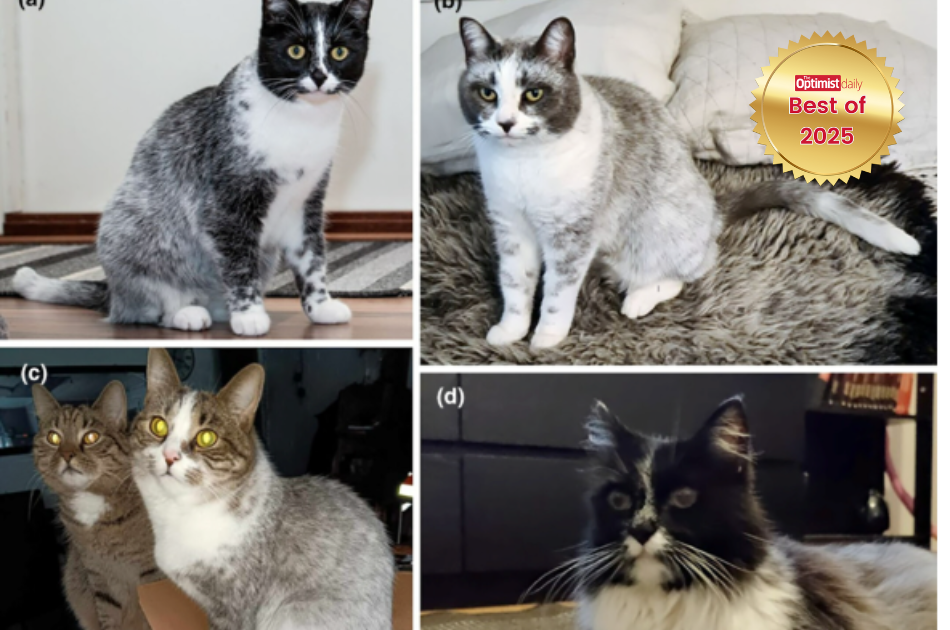
In a surprising turn for feline genetics, scientists have officially identified a new cat coat color that defies traditional classifications. Named salmiak after the salty liquorice candy popular in Finland, this unique coat starts as black at the root and fades to white at the tip of each hair strand, giving cats a misty, monochrome appearance unlike anything seen before.
The coat was first spotted in 2007 and began attracting scientific attention in 2019 when a group of experts led by feline geneticist Heidi Anderson set out to understand its origin. After years of investigation, the team published their findings in the journal Animal Genetics, confirming that this striking coat is caused not by a known gene but by a newly discovered recessive mutation.
A colorful mystery unraveled
When it comes to cat colors, the basics are surprisingly simple: genetically, cats come in just two shades—black and orange. Every other coat color, from grey to cream to calico, is the result of the dilution, combination, or patterning of those two foundational colors.
So when cats began appearing with the distinct salt-and-pepper look of salmiak, researchers initially suspected a novel expression of the dilution gene, which typically mutes standard black and orange shades. But something didn’t add up.
The team tested known genetic variants that influence the dilution gene and found no connection. That’s when they decided to sequence the entire genome of two salmiak-coated cats—a deep dive that paid off.
“There was a huge chunk of sequence missing downstream from the KIT gene,” Anderson told New Scientist, referencing a gene already associated with white coat patterns in animals. In these cats, a nearby piece of DNA was simply missing, revealing a novel mutation that had never been documented before.
Rare and recessive, but admired
After testing 181 cats, the researchers confirmed that this missing sequence is the cause of the salmiak coat. Because the mutation is recessive, both parent cats must carry the gene for it to appear in their offspring, which helps explain why the pattern is so rare.
Despite its rarity, the color has drawn admiration from cat lovers and researchers alike. “These coats have aroused a lot of admiration for years,” Anderson said. “It’s really exciting that we now have some genetic explanation for it.”
More than just pretty fur
The discovery not only deepens our understanding of feline genetics but could also play a role in responsible breeding practices. As Anderson states, solving the salmiak puzzle “enriches our understanding of feline coat color genetics” and could help preserve this unique trait in future generations.
While this elegant, mist-tipped coat may still be a rare sight, researchers and breeders alike hope it will become a lasting feature in the colorful world of cat genetics.
Source study: Animal Genetics—A new Finnish flavor of feline coat coloration, “salmiak,” is associated with a 95-kb deletion downstream of the KIT gene
Did this solution from 2025 stand out to you? Support The Optimist Daily so we can fill 2026 with more positive headlines like this. Become an Emissary and help guide more people to solutions with us here.