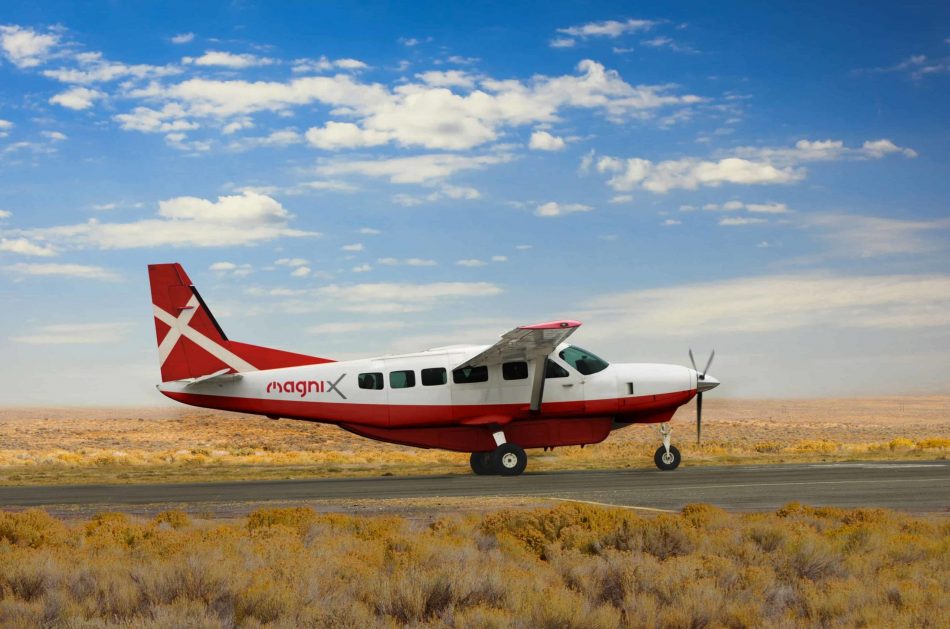
A future of all-electric air travel seems to be on the horizon after it was announced that the world’s largest electric plane will take to the skies today. The Cessna Caravan, retrofitted with an electric engine, is expected to fly for 20-30 minutes over Washington state in the US.
The plane can carry nine passengers but a test pilot will undertake the inaugural flight alone, cruising at a speed of 114mph (183km/h). The engine maker, magniX, hopes the aircraft could enter commercial service by the end of 2021 and have a range of 100 miles.
Before the coronavirus pandemic, aviation was one of the fastest-growing sources of the carbon emissions that are driving the climate emergency. Scores of companies are working on electric planes, although major breakthroughs in reducing the weight of batteries will be needed before large planes can fly significant distances on electric power alone. Other power sources being tested include hydrogen fuel cells and biofuels. The aviation industry is heavily regulated to ensure safety, but magniX hopes that by retrofitting an existing plane the certification process can be accelerated. A smaller seaplane powered by a magniX engine completed a short flight in December.
With the aviation industry being one of the most polluting in the world, The Optimist Daily will be closely covering the development of these electric planes—as we have always done.