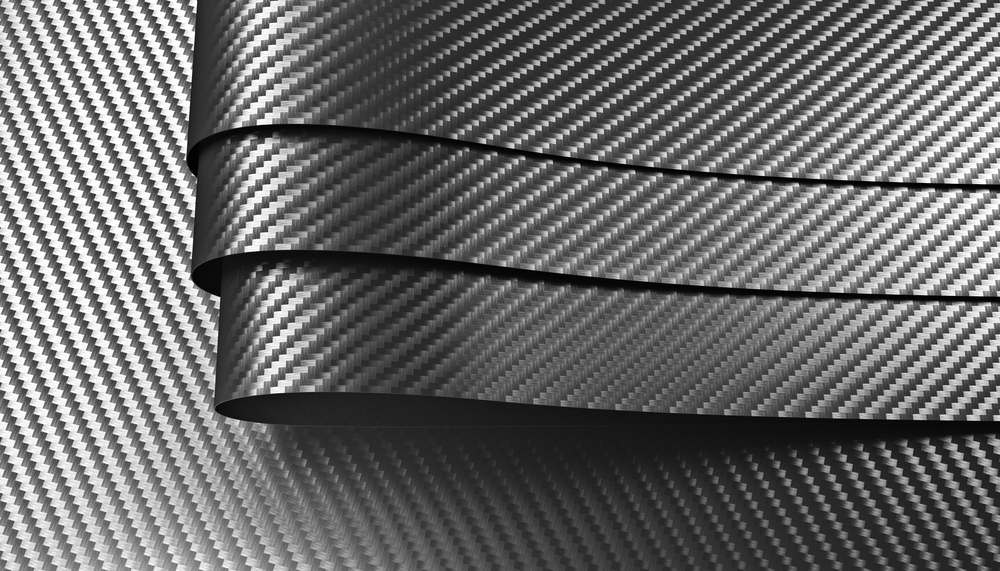
Carbon fiber has long been touted for its incredible material properties, including being extremely durable and lightweight at the same time. Although these properties are precisely what car manufacturers are looking for in materials for building cars, carbon fiber is still very expensive to make.
But engineers in the automotive industry may soon turn to a better option as South African scientists have developed a cheaper and more sustainable alternative, in which the carbon fibers are replaced with ones extracted from plantain plants.
Led by Prof. Tien-Chien Jen, researchers at the University of Johannesburg started by obtaining plantain “pseudo-stems” from harvested crops in Nigeria – this part of the plant is inedible and is typically just discarded.
To separate the individual fibers that make up those stems, the scientists used a process known as water-retting. The fibers were subsequently soaked in a 3-percent caustic soda solution for four hours, dried, treated with high-frequency microwave radiation for two minutes, then dispersed in ethanol to keep them from “bunching up.”
As a result, the fibers were better able to bond with epoxy resin – a resin typically used in the manufacture of construction materials – which also contained a small amount of multi-walled carbon nanotubes.
The best mix was a combination of one-part plantain fibers and four parts resin/nanotubes, with the tubes making up just 1 percent of the material by weight. That mixture was placed in a mold and compressed at room temperature for 24 hours.
When samples of the resulting composite were lab-tested, they were found to be much stiffer and stronger than same-sized pieces of the resin on its own. More specifically, they had 31 percent more tensile strength and 34 percent more flexural strength. What’s more, they also exhibited better impact strength and thermal conductivity.
“Using car parts made from these composites can reduce the mass of a vehicle,” says postdoctoral researcher Dr. Patrick Ehi Imoisili. “That can result in better fuel efficiency and safety. These components will not rust or corrode like metals. Also, they can be stiff, durable, and easily molded.”