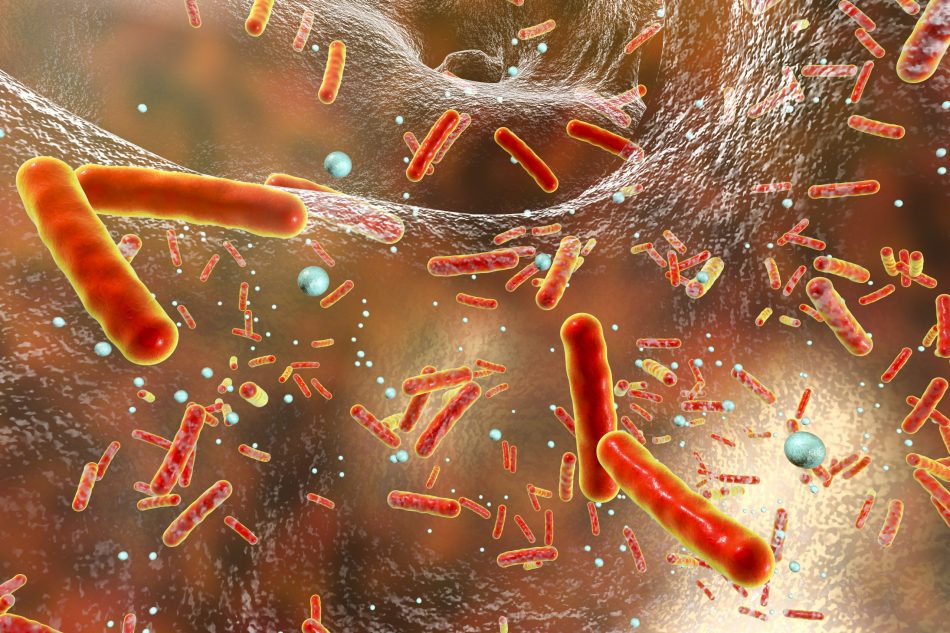
The first naturally-occurring bacteria killer, penicillin, was discovered nearly a century ago and with it came the advent of a new class of medicines: antibiotics.
Bacterial infections were the leading cause of death at the time, and the new drugs gave doctors a way to combat these infections. Unfortunately, decades of overuse have led to some bacteria evolving to resist once-effective antibiotics. These superbugs have developed what doctors call “antibiotic resistance” and pose a deadly threat, but a team at the University of Göttingen might have a solution.
The research team is experimenting with antivitamins, substances that interfere with the function of vitamins, to combat antibacterial resistance. Some bacteria wipe out their competition by producing an antivitamin for vitamin B1, which kills off other bacteria in their environment, so researchers wondered if this natural ability could be translated into medical use for humans.
The B1 antivitamin is nearly identical to the vitamin itself, except for one extra atom, so the researchers decided to focus on that atom. When they exposed drug-resistant E. coli to the B1 antivitamin, they found that the extra atom interfered with the function of the bacteria’s metabolic processes.
“Just one extra atom in the antivitamin acts like a grain of sand in a complex gear system by blocking its finely tuned mechanics,” said researcher Kai Tittmann in a press release.
After making this discovery, researchers used computer simulations to predict how the antivitamin would affect humans in a real world setting. Based on this new research, the research team believes the B1 antivitamin has potential to be the basis for a whole new antibiotic.
This study, published in the journal Nature Chemical Biology, is just one solution scientists are working on to tackle the challenge of antibiotic resistance. We will continue to follow this lead closely and keep you updated!