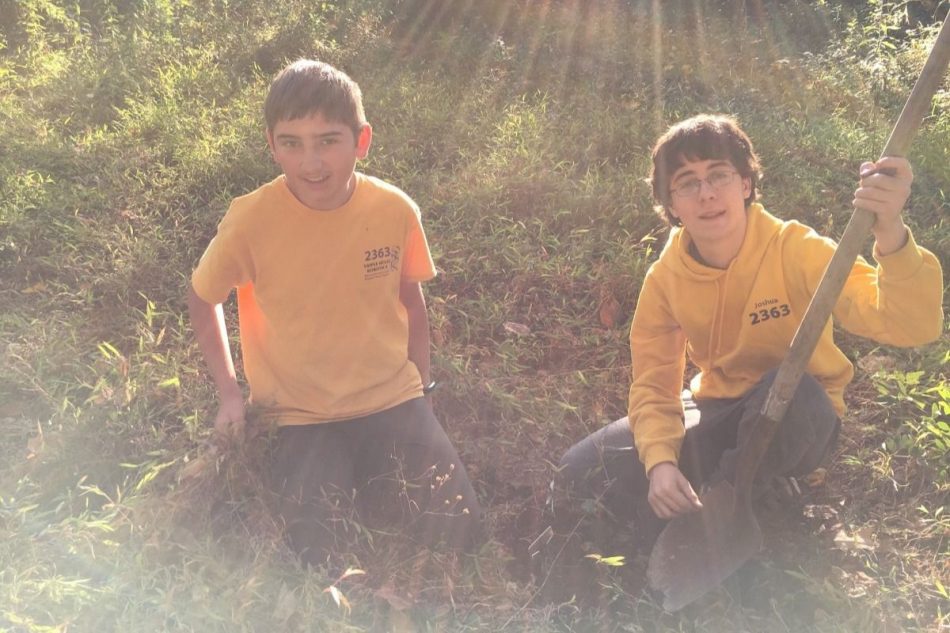
With bee populations threatened by habitat loss, a pair of 14-year-olds in Virginia decided to take matters into their own hand with their own project to save local bumblebees.
To kick off the project, the teenagers identified two existing public spaces in the town that could be used as a pollinator habitat and worked with the city to get permission to plant there. “Then we realized there are still some gaps between those public sites,” Luke said.
The sites needed to be no more than one-third of a mile apart to ensure that worker bees could bring food back to their queen. That’s what inspired the teens to identify more areas that could serve as pollinator habitats. All in all, they identified a string of 97 sites where flowers and shrubs can be grown to create a Bee Byway, which is what the teens call it. It will start out 3 miles long, with hopes of stretching the bee habitat out to 13 miles.
Although the pandemic slowed their plans a bit, Luke and Joshua managed to get 100 people together in early March 2020 to start the planting operation in 30 different sites around town. Once lockdown orders came into place, the duo kept working from a distance. They recorded webinars to help viewers create pollinator gardens in their own backyards, left 700 flyers advertising the Bee Byway in mailboxes, and delivered 1,100 plants they grew themselves to homeowners’ doorsteps around the city. With their guidance, residents planted dozens of gardens.
According to Huffpost, the team had just a few more areas to plant before its 97-site project is complete. Once that was done, the duo’s next goal was to extend the Bee Byway by another 10 miles and create a nonprofit to lobby for more bee-friendly regulations like limitations on pesticide use.
Just like the teens who created a mock COP26 in November 2020, Joshua and Luke are both shining examples of how serious Generation Z is about fixing the environment.