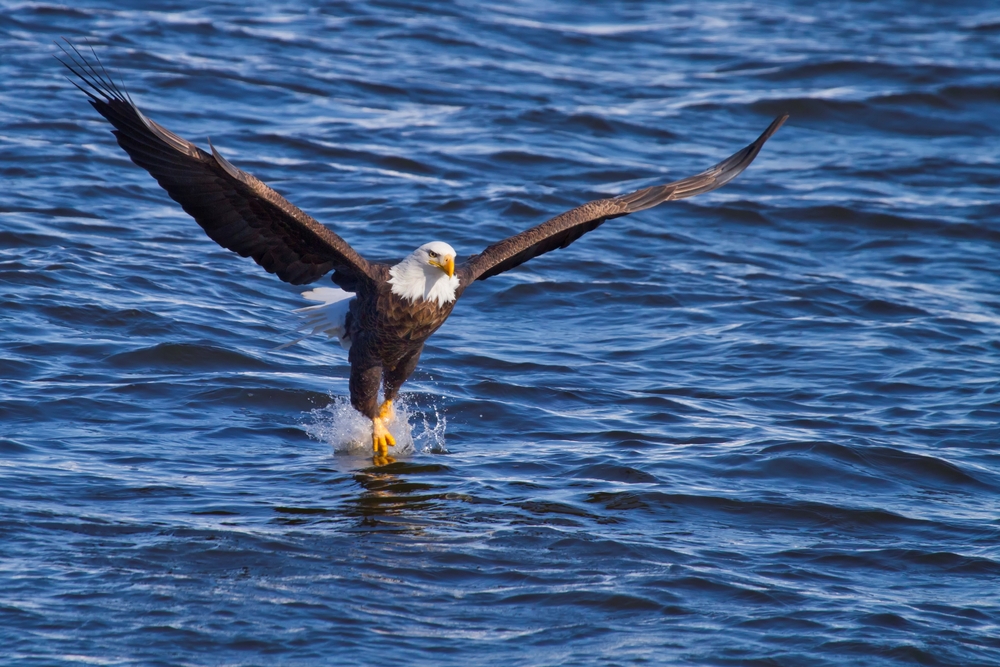
In a major win for conservation efforts, the population of American bald eagles — once on the brink of extinction — has more than quadrupled in size since 2009.
The good news was published in a recent report conducted by the US Fish and Wildlife Service, which said that there were over 316,700 bald eagles and more than 71,400 nesting pairs in the lower 48 states documented during the 2019 breeding season.
“This is truly a historic conservation success story,” said Deb Haaland, US Secretary of the Interior. “The strong return of this treasured bird reminds us of our nation’s shared resilience and the importance of being responsible stewards of our lands and waters that bind us together.”
Between 1870 and 1970, the population of the American bald eagle declined significantly in the lower 48 states as a result of hunting, habitat loss, and the use of the harmful DDT insecticide, which severely impacted the bird’s ability to produce healthy offspring. In 1963, the bird’s population reached an all-time low of 417 breeding pairs.
Thanks to decades of conservation efforts, including the ban of DDT and placement of the bird under the protection of the Endangered Species Act, the bald eagle’s population started to rebound. In 2007, the apex predator was removed from the list of endangered species and is now protected under the Bald and Golden Eagle Protection Act.