


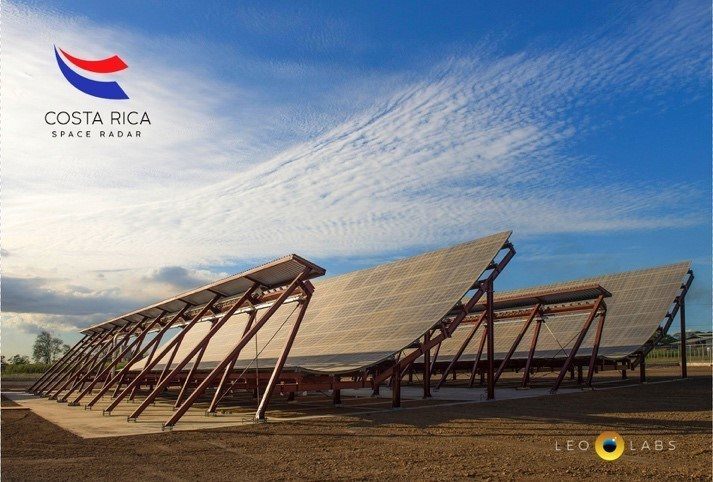
Space debris flying around Earth’s orbit is a major threat to the International Space Station (ISS) and future manned space missions. That’s why LeoLabs, a company that provides commercial radar tracking services for objects in Low Earth Orbit (LEO), just built the “most advanced commercial space radar of its kind” in Costa Rica.
The giant space radar can track orbital debris as small as two centimeters and is capable of identifying golf-ball-size objects traveling at up to 30,000 kilometers per hour. According to the company’s co-founder, Ed Lu, “The number one danger to astronauts aboard the International Space Station has been and is today the risk of orbital debris that is too small to be tracked by the US Department of Defense going through the hull.”
While the new radar can track active satellites too, the most important thing is that it can keep tabs on space junk, which makes up the vast majority of man-made objects found in LEO. Working in tandem with its four existing radars, the radar in Costa Rica now ensures that LeoLabs has a full coverage of the Low Earth Orbit and all its space debris. That’s a good thing considering that the threat of space debris is only expected to grow as more private companies deploy massive satellite constellations.
Source Image: LeoLabs Costa Rica






