


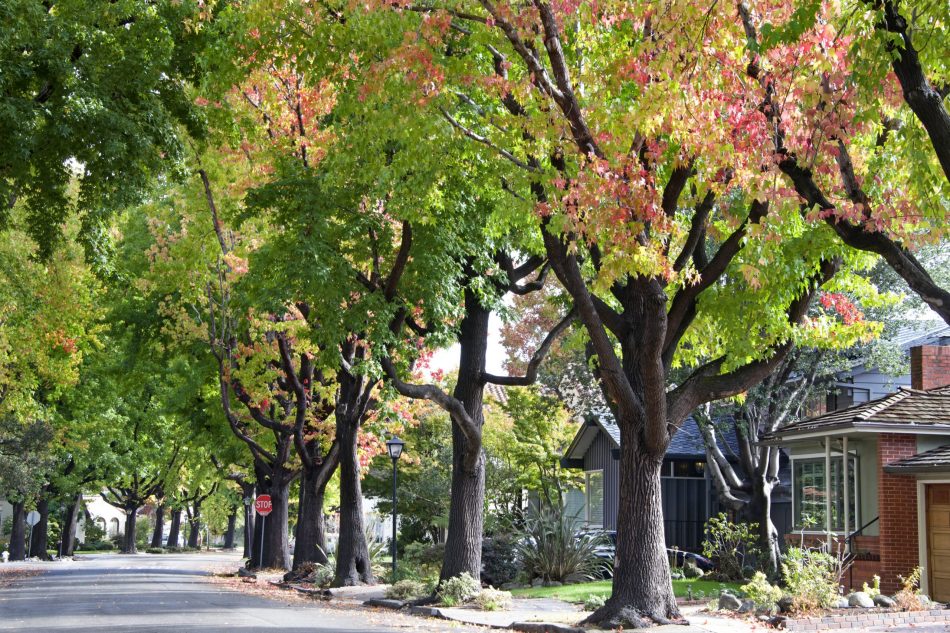
Trees and urban green spaces are essential for city dwellers. Vegetation improves air quality, and tree cover provides shade from the heat of the sun—something that is increasingly sought after as human-induced climate change takes temperatures to extremes.
Unfortunately, low-income neighborhoods, which are largely populated by marginalized communities, do not have equal access to green spaces. This discrepancy is mapped out by a new tool from the non-profit American Forests.
American Forests’ website reads: “A map of tree cover in any city in the United States is too often a map of race and income. This is unacceptable. Trees are a critical infrastructure that every person in every neighborhood deserves. Trees can help address damaging environmental inequities like air pollution.”
What the non-profit aims to accomplish is to not just expose this injustice, but also provide communities with the data and tools required to solve this issue through their Tree Equity Score (TES) tool. The TES tool is a database comprised of 150,000 neighborhoods and 486 municipalities in urban America that correlates tree cover with social and demographic statistics such as poverty levels, unemployment, and percentage of residents who are people of color, as well as children and seniors. The stats are then converted into a simple-to-understand Tree Equity Score rank from 1 to 100.
Users can zoom into specific regions of each city or community to get a highly accurate score for each census block, municipality, city parcel, or neighborhood. There is even an option for users to draw their own boundaries for a more customized analysis.
The information provided by the TES is backed up with details on how exactly the score was comprised for any given area. This data will help citizens and policymakers come up with targeted approaches to improving tree equity in specific areas that might have been neglected in the past.
President and chief executive officer of American Forests, Jad Daley, says that the TES “will help make us all accountable and create action at the local, state, and national levels… it shows us exactly where the problems exist, where we need to concentrate investment to solve them, and where we need to bring people together.”
In some cities, American Forests is able to go even further by developing a Tree Equity Score Analyzer that can be used to map out and prioritize targeted tree planting projects that will have the biggest impact.
One of the most significant things that American Forests accomplishes is understanding the connections between environmental inequity and social, racial, and economic inequity. While all these problems may be recognized as issues that need addressing, it’s not often that the systemic links between these issues are highlighted. The overall goal of the organization is for trees to not be a signifier of racial, economic, or social divides, but that every neighborhood, regardless of socioeconomic status, has fair and healthy access to trees.






