


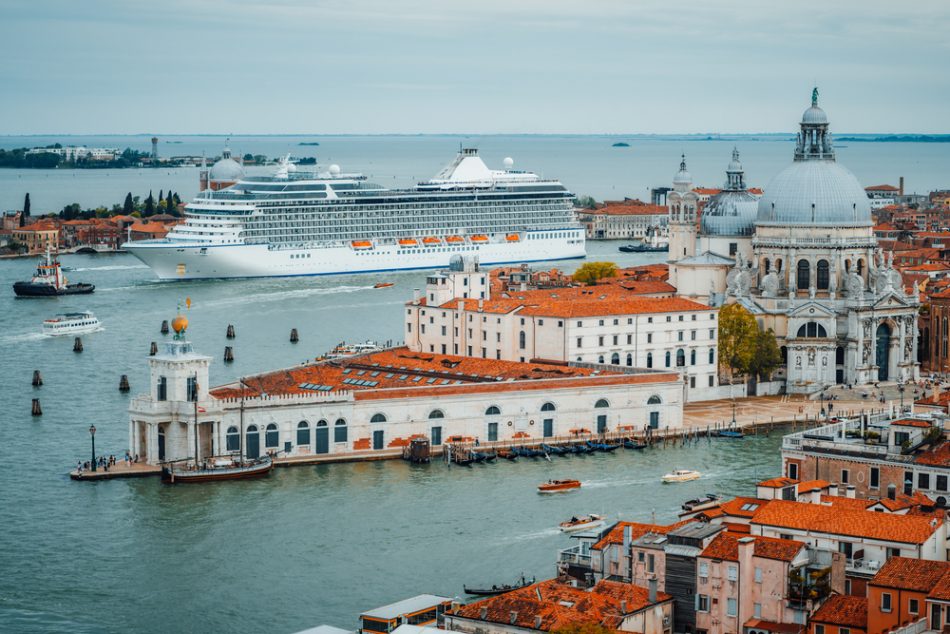
Venice is an incredibly popular tourism destination, but in recent years, criticism from locals and environmentalists has prompted calls for the end of cruise lines in the city. Yesterday, the city officially banned large ships in its waters.
According to Italian Culture Minister Dario Franceschini, the ban will go into effect in August and will cover St. Mark’s canal and the Giudecca Canal. It applies to all ships over 25,000 tons or longer than 590 feet.
The basis for the ship ban is the fact that large ships, and their wakes, pose a threat to local marine life and fragile building foundations already at risk from rising sea levels. The ban will help protect the city for generations to come. The city is said to be working on developing an alternative area for ships to dock near the city without endangering ecosystems or infrastructure.
“It is a decision awaited by UNESCO, by all the people who have been to Venice at least once in their lives, by Italian and foreign travelers who were shocked to see these ships passing through the most fragile and beautiful places in the world,” said Franceschini.






