


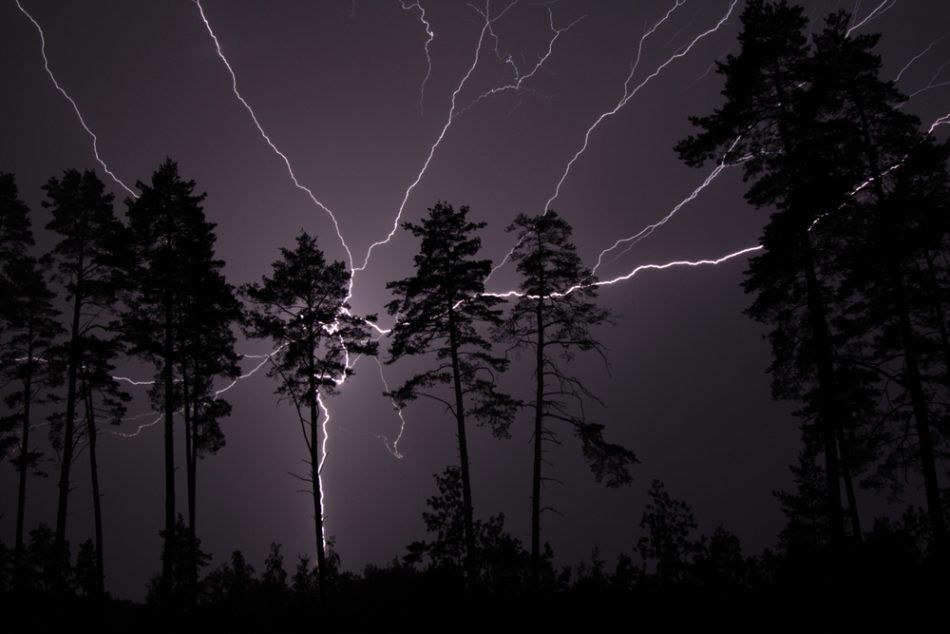
Lightning is one of the leading causes of destructive wildfires, but its notoriously difficult-to-predict nature means that firefighters and residents rarely have an accurate prediction about where and when lightning may strike. Researchers from the University of Washington hope to use AI to better predict this weather phenomenon.
The researchers are combining weather reporting with a machine learning equation. In tests, their method was able to predict lightning over the southeastern US two days earlier than traditional models. This technology could also have implications for tornado forecasting, as tornadoes form from thunderstorms.
The AI system was trained using lightning data from 2010 to 2016 gathered by the World Wide Lightning Location Network (WWLLN). The system is more accurate in predicting lightning in regions where it is common, as it has more data to learn from in these regions.
Daehyun Kim, an associate professor of atmospheric sciences at the University of Washington, explains that AI can be particularly effective at studying phenomena that aren’t fully understood by scientists. “The best subjects for machine learning are things that we don’t fully understand. And what is something in the atmospheric sciences field that remains poorly understood? Lightning.”
Moving forwards, the researchers plan to continue to improve the accuracy of the system with more data, as well as train it to anticipate weather variables.
Source study: AGU – A dynamical forecast-machine learning hybrid system for lightning prediction






