


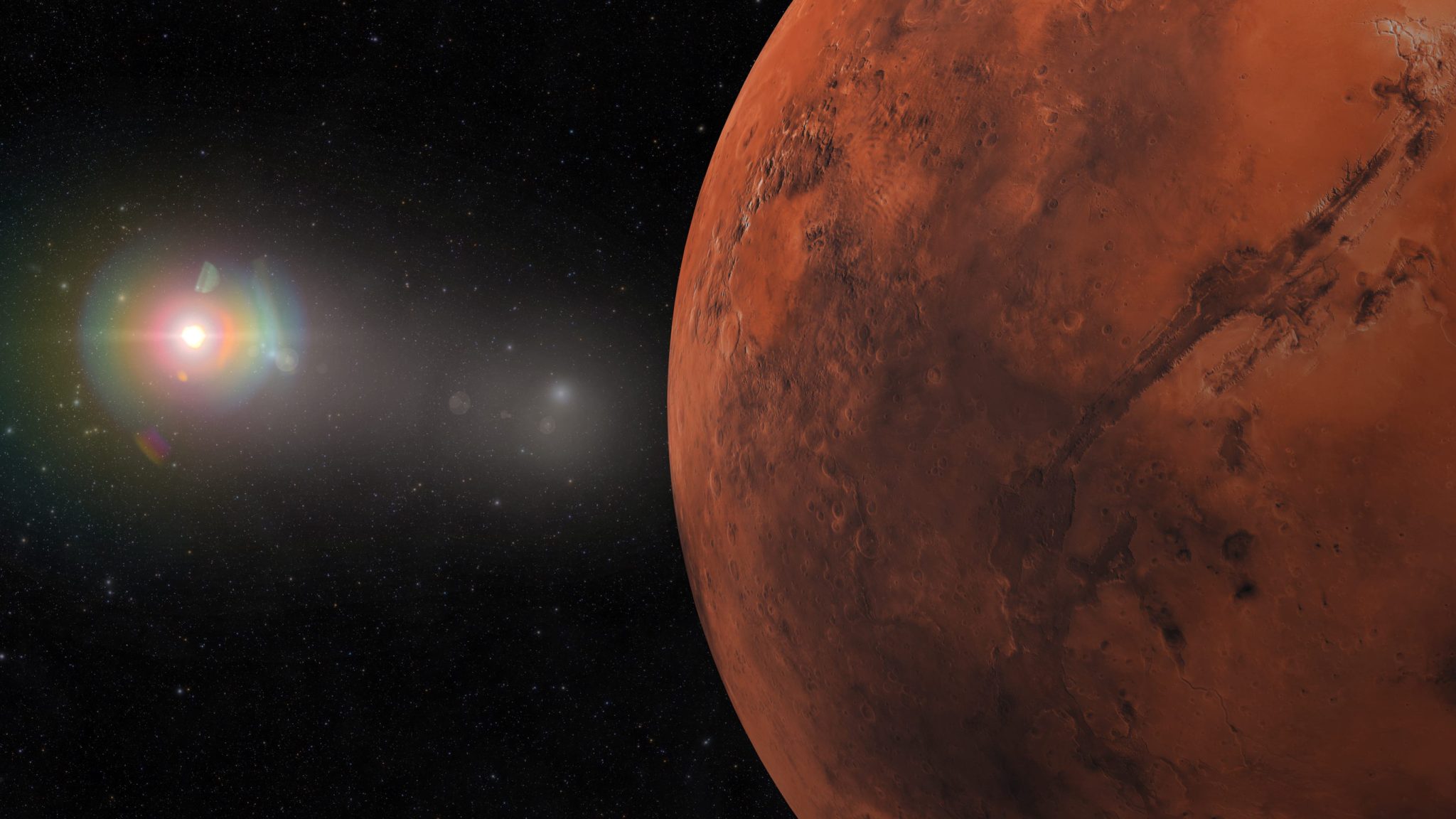
If you’ve ever wondered what Mars sounds like, then NASA’s Perseverance rover has answers for you! The robot landed on the Red Planet in early 2021 where it has been conducting experiments and collecting samples for scientists here on Earth to analyze.
We’ve previously reported on its findings of organic molecules, lava flow, and rock sample collection. This time, Perseverance has collected audio of Mars for the first time ever, revealing some interesting things.
What does Mars sound like?
If you enjoy calm and serenity, you might be pleased to learn that Mars is a very quiet planet. With only the sound of the wind accompanied by numerous “screeches” and “clanks” from the rover’s wheel over rocks to be heard.
The audio recorded occasional gusts of wind traveling at two different speeds of sound. “I panicked a little,” said Sylvestre Maurice, the main author of the study published in Nature. “I told myself that one of the two measurements was wrong because on Earth you only have one speed of sound.”
This would do strange things to humans hearing if they were to stand on Mars’ surface. Higher pitched sounds would reach our ears slightly faster, confusing our olfactory system and creating a strange, delayed effect on hearing. This would mean it’d be difficult for two people to have a conversation just five meters apart.
“On Earth, the sounds from an orchestra reach you at the same speed, whether they are low or high. But imagine on Mars, if you are a little far from the stage, there will be a big delay,” Maurice added.
Why is the speed of sound slower on Mars?
The lower pitched notes take longer to reach your ears because they actually travel at a slower speed of sound than the other. The slowest travels at 240 meters per second, compared to 340 meters per second on Earth.
Mars’ atmosphere causes this difference, thanks to its enormously different makeup. The Red Planet has an atmosphere high in carbon dioxide making up 95 percent of the gasses in the air, compared to Earth’s at 0.04 percent. Plus, Mars’ atmosphere is around 100 times thinner than on Earth, causing sounds to become around 20 decibels weaker.
More mysteries to solve
Besides this baffling discovery, the recording revealed another intriguing mystery in the form of vertical winds across the planet.
The “scientific gamble” of sending a microphone to Mars has certainly paid off. This information can help scientists redefine numerical models for climate and weather. Additionally, the Perseverance team can simply listen to the robot to hear if it’s malfunctioning.
Source study: Nature – In situ recording of Mars soundscape






