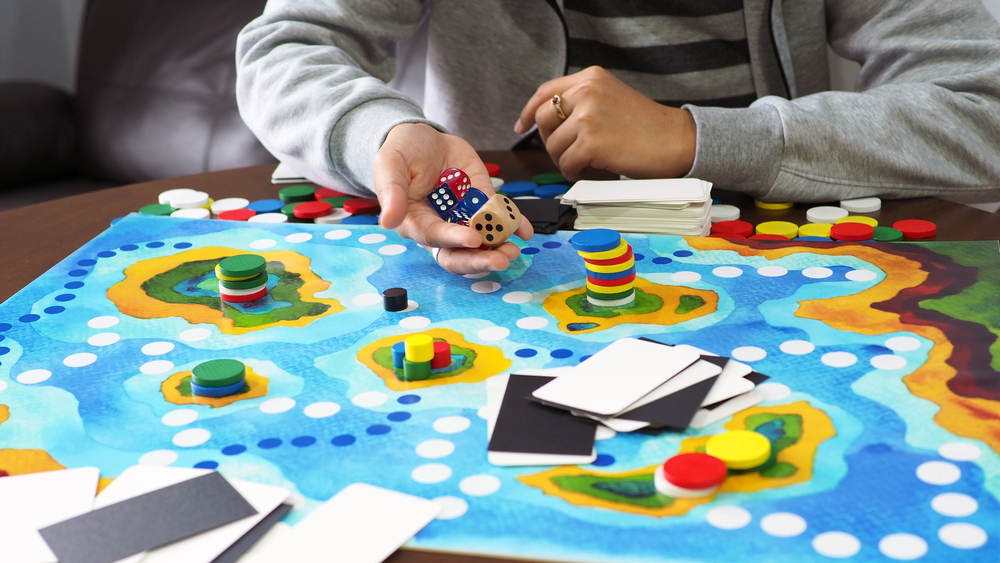
Board games are making a successful comeback in this age of screens and virtual realities. Nostalgia fans are ecstatic about the opportunity to recreate childhood memories, while pubs are offering game evenings and families are rediscovering the joy of face-to-face interaction.
In a world dominated by internet communications, these timeless games provide affordable amusement and develop meaningful connections. They also present an ingenious approach to embrace ecological and simplified living, since a single board game can survive for generations.
Master math by rolling the dice
Prepare to be astounded by the additional benefits of number-based board games such as Monopoly, Othello, Chutes and Ladders, and others. According to a recent study, these classic games can genuinely improve children’s math abilities. The number-based nature of these activities efficiently enhances counting, addition, and number recognition in children aged three to nine. It’s a fresh take on the age-old pastime of rolling dice and manipulating game pieces.
“Board games enhance mathematical abilities for young children,” says lead author Dr. Jaime Balladares. “Using board games can be considered a strategy with potential effects on basic and complex math skills. Board games can easily be adapted to include learning objectives related to mathematical skills or other domains.”
A smart move: Using board games to promote learning
The study included a thorough analysis of 19 papers published between 2000 and 2010 that focused on the effects of physical board games on children’s learning. The findings show that playing board games on a regular basis (two times a week for 20 minutes) leads to significant increases in math skills over a six-week period. The games target a variety of arithmetic skills, ranging from basic number competency to deepened comprehension, resulting in improved mathematical abilities for more than half of the activities studied.
According to the study’s press release, “In nearly a third (32 percent) of cases, children in the intervention groups gained better results than those who did not take part in the board game intervention.”
Board games’ future as educational aids is bright, with potential applications extending beyond mathematics. “An interesting space for the development of intervention and assessment of board games should open up in the next few years,” Dr. Balladares believes, “given the complexity of games and the need to design more and better games for educational purposes.”
So, let us rediscover the joy of board games! Turn off the television, put away your smartphones, and enjoy the traditional thrill of Chutes and Ladders or any other childhood favorite. These games will not only give hours of enjoyment for children, but they will also provide a unique and interesting approach for them to improve their mathematics ability. Remember, in a world of high-tech gadgets, the best moves are sometimes made with a roll of the dice and a bit of nostalgic fun.
Source study: Early Years— The effects of board games on math skills in children attending prekindergarten and kindergarten: A systematic review