


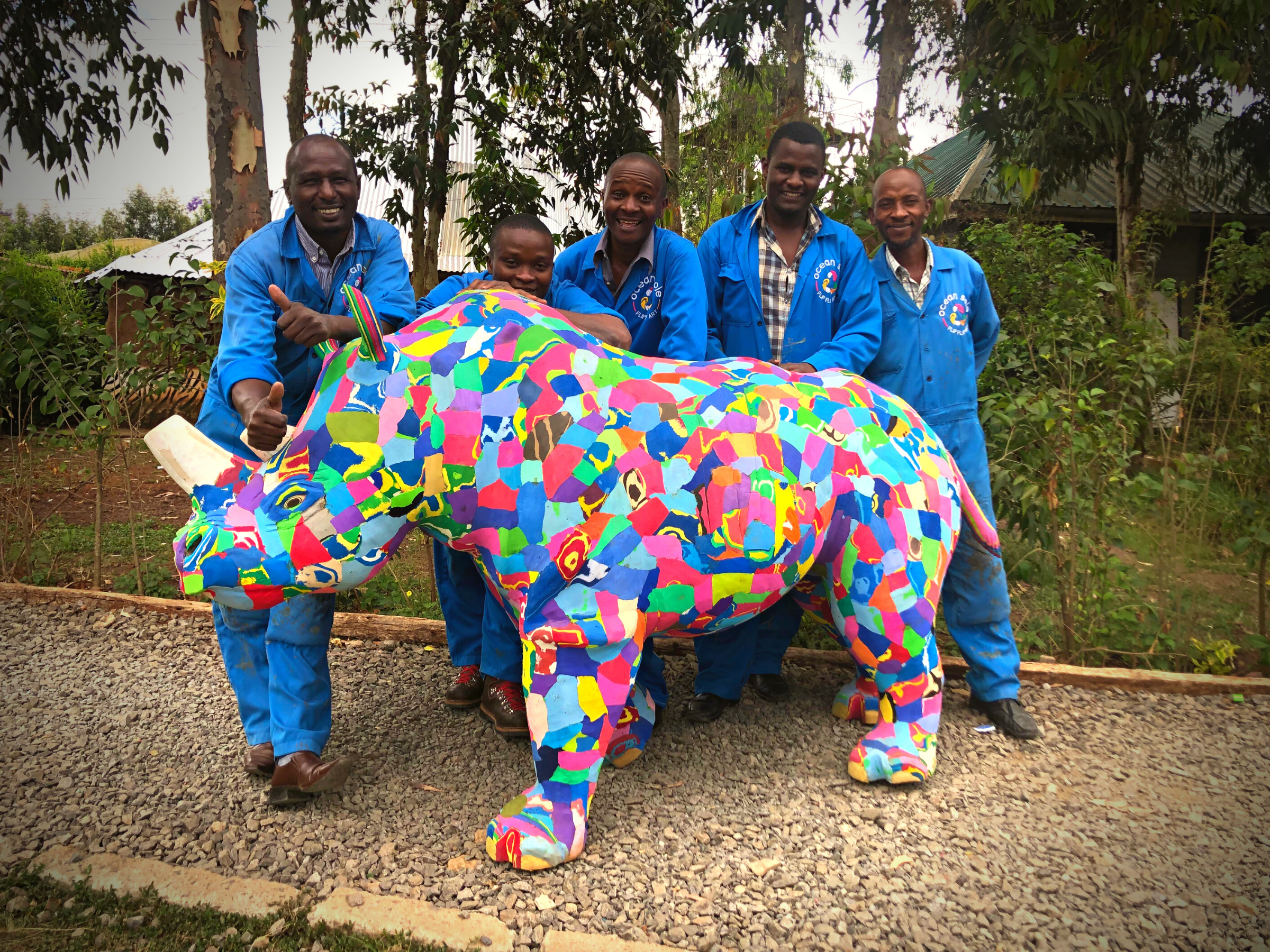
On the shores of Kenya, where waves weave tales of the sea, a remarkable story unfolds—a story of resilience and creativity. This is the journey of Ocean Sole, a company that doesn’t just clean beaches; it turns beach trash into vibrant, soulful sculptures that bring life and joy to local communities.
There are plenty of beach clean-up efforts going on around the world. However, we’re often left wondering about the fate of the plastic and waste that gets collected by environmentalists and do-gooders. In Kenya, amidst the challenges posed by discarded flip-flops, Ocean Sole saw not just waste but an opportunity for transformation.
Ocean Sole’s adventure began when founder Julie Church witnessed kids in Kenya repurposing discarded flip-flops into toys. Recognizing the possibilities of this material, she worked with local communities to collect, wash, and recycle flip-flops into colorful sculptures. Joe Mwakiremba, head of sales, highlights their mission, stating, “Ocean Sole was founded on the premise of cleaning our oceans and waterways whilst employing artists from high impact communities in Kenya.”
A second life for flip-flops
In addition to its environmental impact, Ocean Sole is important for uplifting communities. Mwakiremba underscores this by explaining, “The locals benefit greatly from selling the plastic waste to us.” The cash earned helps in a variety of ways, including paying for education and acquiring land and livestock. The good impacts spread throughout the community, demonstrating the transformative power of sustainable efforts.
The artistic process: creating unique masterpieces out of trash
Transforming discarded flip-flops into art is a collaborative project that involves local communities. After collection, the flip-flops are washed, adhered, carved, and sanded before being transformed into sculptures. Mwakiremba details, “Each piece is unique based on the materials collected.” Inspired by endangered species, vehicle designs, and practical items such as bottle openers, the works not only highlight artistry but also raise environmental consciousness.
Impact on places and people: beyond artistic expression
Ocean Sole’s impact goes beyond art, creating a lasting impression on people and the environment. Collectors find value throughout the wet season and contribute greatly to the endeavor. Mwakiremba shares stories of success, such as how one collector was able to send their child to college and how others purchased land and livestock. In terms of environmental impact, the company aims to recycle one million flip-flops each year, contributing to beach cleanups, educational programs, and conservation activities.
Supporting the cause: how can you get involved?
Ocean Sole encourages people to support their cause by purchasing unique art pieces online or volunteering in beach cleanups. Mwakiremba encourages involvement, stating, “We contribute over 10-15 percent of our revenue to beach cleanups, vocational and educational programs as well as conservation efforts.” By participating with Ocean Sole, individuals can contribute directly to sustainable practices and community development.






