


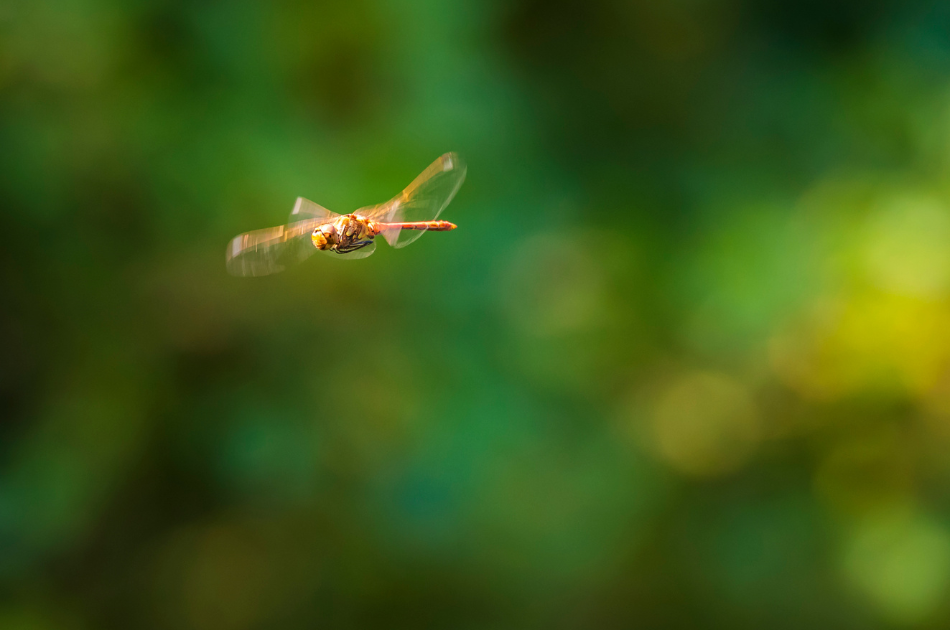
Insects, while frequently disregarded, are critical to the planet’s ecosystems. They make up about 90 percent of all animal species and play important functions in both ocean and land ecosystems. Without them, life on Earth could be severely disrupted. New research from the University of Exeter has revealed a unique travel superhighway in the Pyrenees mountains that billions of insects utilize each year, proving their crucial ecological contributions.
The discovery of an aerial superhighway
Entomologists and ecologists have long wrestled with public perceptions of insects. However, a remarkable investigation has revealed an incredible insect migration route. Over four years, researchers watched 17 million insects as they migrated over a narrow 30-meter gap in the Pyrenees between France and Spain. Scientists estimate that this mountain route sees at least 14.6 billion day-flying insects per year.
“More than 70 years ago, two ornithologists—Elizabeth and David Lack—chanced upon an incredible spectacle of insect migration at the Pass of Bujaruelo,” stated Will Hawkes of the University of Exeter. “They witnessed remarkable numbers of marmalade hoverflies migrating through the mountains, the first recorded instance of fly migration in Europe. In 2018, we went to the same pass to see if this migration still occurred.”
Methodology and findings
Due to the difficulty of counting small, fast-moving insects, researchers utilized a combination of video, direct observation, and flight-intercept traps to identify species passing through the mountain pass, which is 2,273 meters above sea level. “What we found was truly remarkable,” Hawkes said. “Not only were vast numbers of marmalade hoverflies still migrating through the pass, but far more besides. There were some days when the number of flies was well over 3,000 individuals per meter, per minute.”
The migration, which usually occurs at higher altitudes, becomes apparent at ground level under certain conditions—warm, sunny, dry weather with a light headwind. “The combination of high-altitude mountains and wind patterns render what is normally an invisible high-altitude migration into this incredibly rare spectacle observable at ground level,” said Karl Wotton, the research lead.
Ecological importance
Almost 90 percent of the migrating insects were pollinators, which are essential for preserving genetic diversity in fragmented vegetation regions. In addition, several insects, such as marmalade and pied hoverflies, act as natural pest controls. These migrating insects also provide food for birds like chaffinches, goldfinches, and swallows, which consume them in mid-air during their own migrations.
The majority of the observed insects were fly species, with butterflies and dragonflies accounting for just two percent of the population. Common garden insects, such as the cabbage white butterfly and the house fly, were also observed.
Implications for conservation
This study emphasizes the ecological significance of insect migration and the importance of habitat protection. “By spreading the knowledge of these remarkable migrants, we can spread interest and determination to protect their habitats,” Hawkes stated.
Understanding and safeguarding these migratory patterns is critical because insects play important roles in pollination, pest control, and as a food source for other animals. Their migration habits protect the health and sustainability of ecosystems worldwide.
Source study: Proceedings of the Royal Society B.—The most remarkable migrants—systematic analysis of the Western European insect flyway at a Pyrenean mountain pass






