


BY THE OPTIMIST DAILY EDITORIAL TEAM
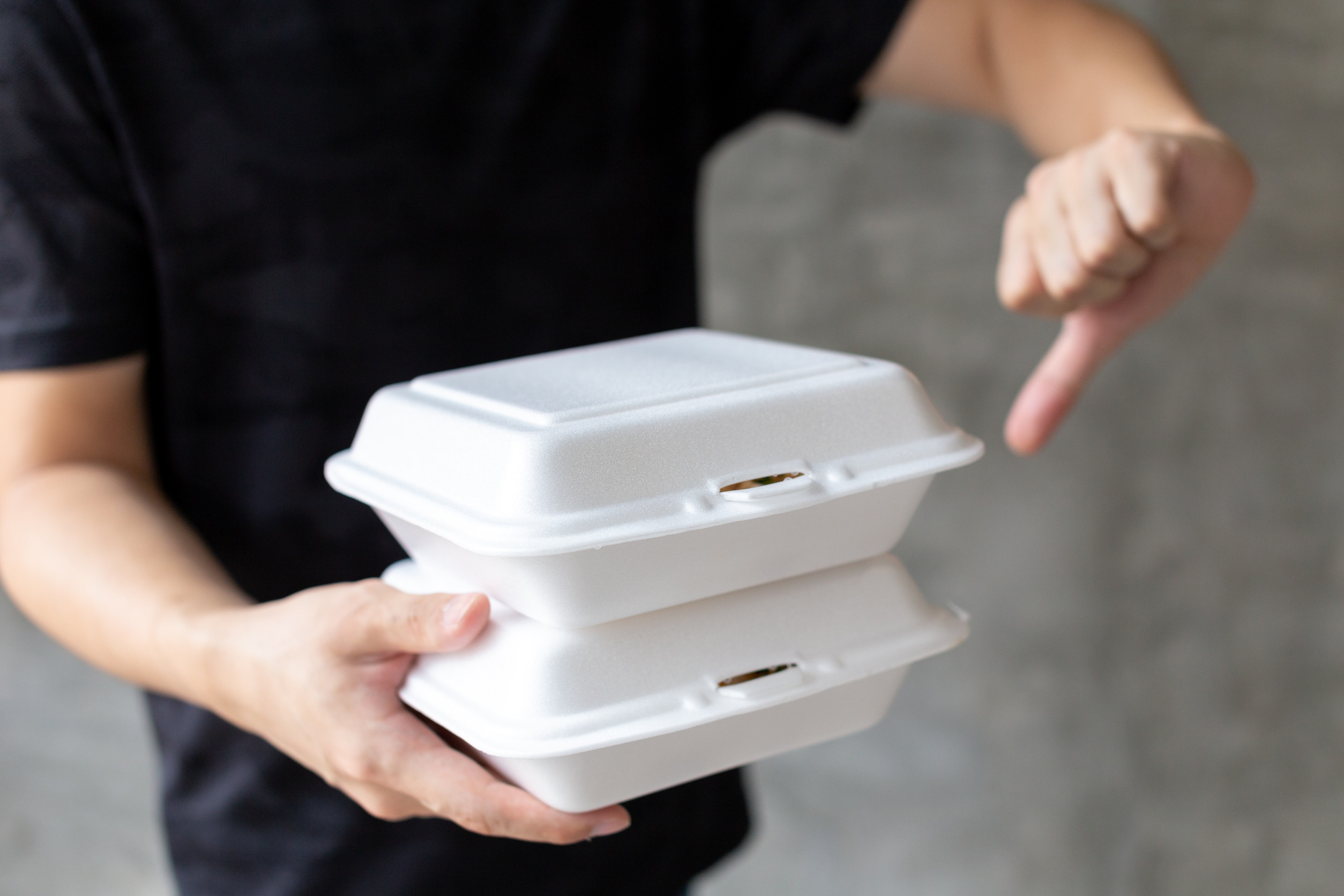
As of January 1st, California, the fifth-largest economy in the world, officially banned the use of most polystyrene foam food containers. This move, part of the state’s broader fight against plastic pollution, targets items like clamshell containers and cups, commonly (and incorrectly) referred to as “Styrofoam.” Conservationists are hailing the decision as a monumental step in limiting waste and curbing environmental damage.
“We found that this could eliminate up to 3.9 billion pieces of foam ware every single year,” explained Anja Brandon, director of plastics policy at Ocean Conservancy. The ban focuses on the environmental hazards posed by expanded polystyrene foam, which breaks into microplastics, travels long distances, and creates a nearly unmanageable waste problem.
From ban to industry reform
California’s Plastic Pollution Prevention and Packaging Producer Responsibility Act (SB 54), signed into law in 2022, imposes stringent new recycling standards for foam products. By January 1, foam users were required to prove that at least 25 percent of the products were recycled—a nearly impossible feat, given that less than one percent of polystyrene foam is actually recycled, according to the Environmental Protection Agency.
This requirement acts as a de facto ban, nudging the industry toward more sustainable packaging alternatives. California State Senator Ben Allen, the architect of SB 54, emphasized the law’s broader goal: “This is not about banning products. This is about ensuring the products in our market meet the needs of our communities by ensuring they are truly recyclable and sustainable.”
Allen and his colleagues are betting on California’s economic clout to influence global practices. “California’s massive market provides us with leverage to influence how industries behave not just across the nation, but around the globe,” he noted.
Why polystyrene foam is a problem
Expanded polystyrene foam might be lightweight and convenient, but it’s also a major environmental headache. These items often end up in the ocean or as roadside litter, breaking into tiny, indestructible pieces.
“There are much better reusable or recyclable options to replace it with,” said Brandon, adding that foam’s lack of a recycling pathway makes it one of the most problematic forms of waste. Ocean Conservancy data shows that foam ware consistently ranks among the top 10 waste items collected during international coastal cleanups, despite making up only a small percentage of overall plastic usage.
The impact of such bans has already been observed. After Maryland became the first state to implement a similar ban, Ocean Conservancy reported a 65 percent decline in foam items collected during cleanups. “This really does show that these types of policies work when it comes to preventing ocean plastic pollution,” said Brandon.
Industry adjustments and global implications
Not everyone is thrilled with California’s new regulations. Dart Container, a major foam ware producer, has reduced its operations in the state, citing the challenge of meeting the recycling standards. “We are actively realigning our resources to position Dart to meet the changing needs of our industry and customers,” said CEO Keith Clark.
Despite resistance from some manufacturers, the broader industry trend is clear. Erin Simon, World Wildlife Fund’s vice president of Plastic Waste and Business, highlighted the importance of phasing out products like foam ware: “You want to get rid of the things that are the most problematic and harmful in the first place.”
Jonathan Quinn, CEO of the U.S. Plastics Pact, echoed this sentiment. He noted that over 100 organizations within the pact are working on a road map to eliminate problematic materials, including polystyrene foam.
The ripple effect of California’s leadership
California’s ban is expected to accelerate global efforts to tackle plastic pollution. The United Nations is in ongoing negotiations for a global treaty on plastic waste, and advocates like Brandon see state-level actions as key drivers of change.
Brandon noted that state-led initiatives like California’s have the power to shift industries toward sustainable practices faster than global agreements can. “The businesses themselves are recognizing that there are some material types that are just more problematic and unnecessary,” she said.
With 10 other U.S. states and over 100 cities also enacting foam bans or restrictions, California’s example could set the gold standard for tackling single-use plastics. The ban is not just about limiting waste—it’s about redefining what responsible consumption and production look like in the 21st century.






