


BY THE OPTIMIST DAILY EDITORIAL TEAM
In a landmark win for wildlife lovers and conservationists, Scotland will now require swift bricks to be installed in all new buildings, a move aimed at reversing the steep decline of swifts and other endangered cavity-nestingbirds.
Members of the Scottish Parliament (MSPs) voted to support an amendment by Scottish Green MSP Mark Ruskell, making the bird-friendly bricks mandatory in all new dwellings where “reasonably practical and appropriate.” The law positions Scotland at the forefront of UK efforts to support threatened urban bird species.
“Swifts join our communities every summer, but they are becoming rarer everywhere,” Ruskell said. “I’m looking forward to seeing every new building in Scotland host a family of swifts in the future.”
What are swift bricks?
Swift bricks are specially designed nesting bricks that are built directly into the walls of new homes. On the outside, they look almost identical to standard facing bricks, but inside, they contain a hollow chamber with a small entrance hole where birds can safely nest.
Because they’re part of the structure, they don’t fall down in storms, don’t need regular maintenance like external nest boxes, and can last as long as the building itself. Installed high on walls and away from windows, they provide long-term, predator-safe nesting spaces for swifts and other cavity-nesting birds.
Why this matters for birds and biodiversity
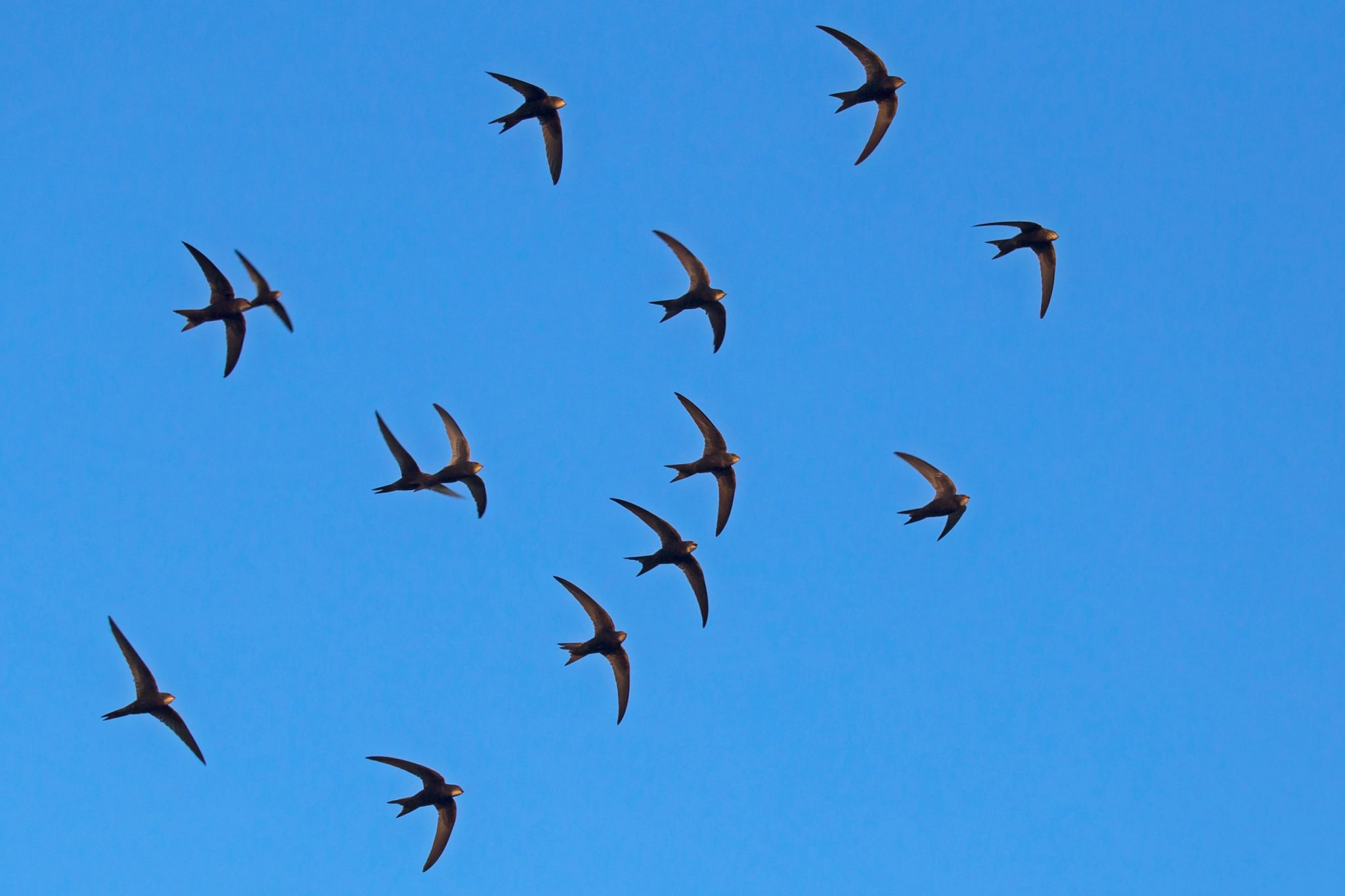
Swifts are remarkable birds. They travel thousands of miles from Africa each year to nest in the UK, often returning to the exact same spot. But in recent decades, their numbers have plunged by 60 percent since 1995, largely due to the loss of natural nesting spaces caused by modern construction and renovation practices.
“These iconic species were once a common sight across Scotland,” said Minister Gillian Martin during the Holyrood debate, “but they are under threat. I welcome practical ways to protect this species and improve biodiversity.”
Swifts and other cavity-nesting birds such as sparrows, starlings, and house martins have lost millions of nesting sites as old roofs are sealed during renovations and insulation upgrades. Swift bricks offer a discreet and effective solution. Installed directly into walls, they provide safe, long-lasting nesting spots for birds without altering building aesthetics.
A contrast to England’s cautious approach
While Scotland has acted swiftly (no pun intended), efforts to mandate swift bricks in England have met resistance. The Labour government rejected a similar amendment last year, choosing instead to include swift bricks in planning guidance. But because it isn’t legally binding, developers aren’t required to use them, which means that many don’t.
Critics argue that guidance alone won’t do enough. Hannah Bourne-Taylor, a national advocate for swift bricks, called Scotland’s move a “landmark victory” and urged the rest of the UK to follow suit. “To save Britain’s swifts, with fewer than 40,000 pairs remaining, England, Wales and Northern Ireland must follow Scotland’s lead,” she said. “You can’t offer toothless guidance and expect real results.”
Even when boxes or bricks are technically required, enforcement can be weak. A University of Sheffield study found that 75 percent of bird and bat boxes mandated as part of planning conditions had not been installed by the time construction was finished.
What’s next: setting the standard
Before implementation, Scotland will carry out a 12-month consultation to ensure building standards are appropriate for widespread use of swift bricks. The measure isn’t just for swifts. It’s a broader win for urban biodiversity.
Lord Goldsmith, who has tabled legislation in the House of Lords to mandate swift bricks, praised the Scottish approach. “It’s only taken Scotland one month to decide to mandate swift bricks, proving how easy it would be for England to finally do the same,” he said.
A global model in the making
Other regions have already seen the benefits. In Gibraltar, a key stopover on the swifts’ long migration between Europe and sub-Saharan Africa, swift bricks have been required for decades. According to Professor John Cortes, Gibraltar’s environment minister, the result has been a stabilized and now increasing population of swifts.
“Scotland’s decision is a significant step in ensuring the survival of this species, which has come to depend so much on us,” Cortes said.
Although Wales rejected swift bricks last year, claiming developers might use them to avoid other nature-positive requirements, conservationists insist these small measures are an essential part of a much larger solution.
And in urban areas where natural nesting spaces are disappearing fast, swift bricks offer a simple, scalable fix that turns everyday homes into safe havens for birds.
Did this solution stand out? Share it with a friend or support our mission by becoming an Emissary.






