BY THE OPTIMIST DAILY EDITORIAL TEAM
In a city built across 14 islands, water is not a backdrop but a major part of the infrastructure. Now Stockholm is proving that those waterways can be cleaner, quieter, and dramatically more efficient.
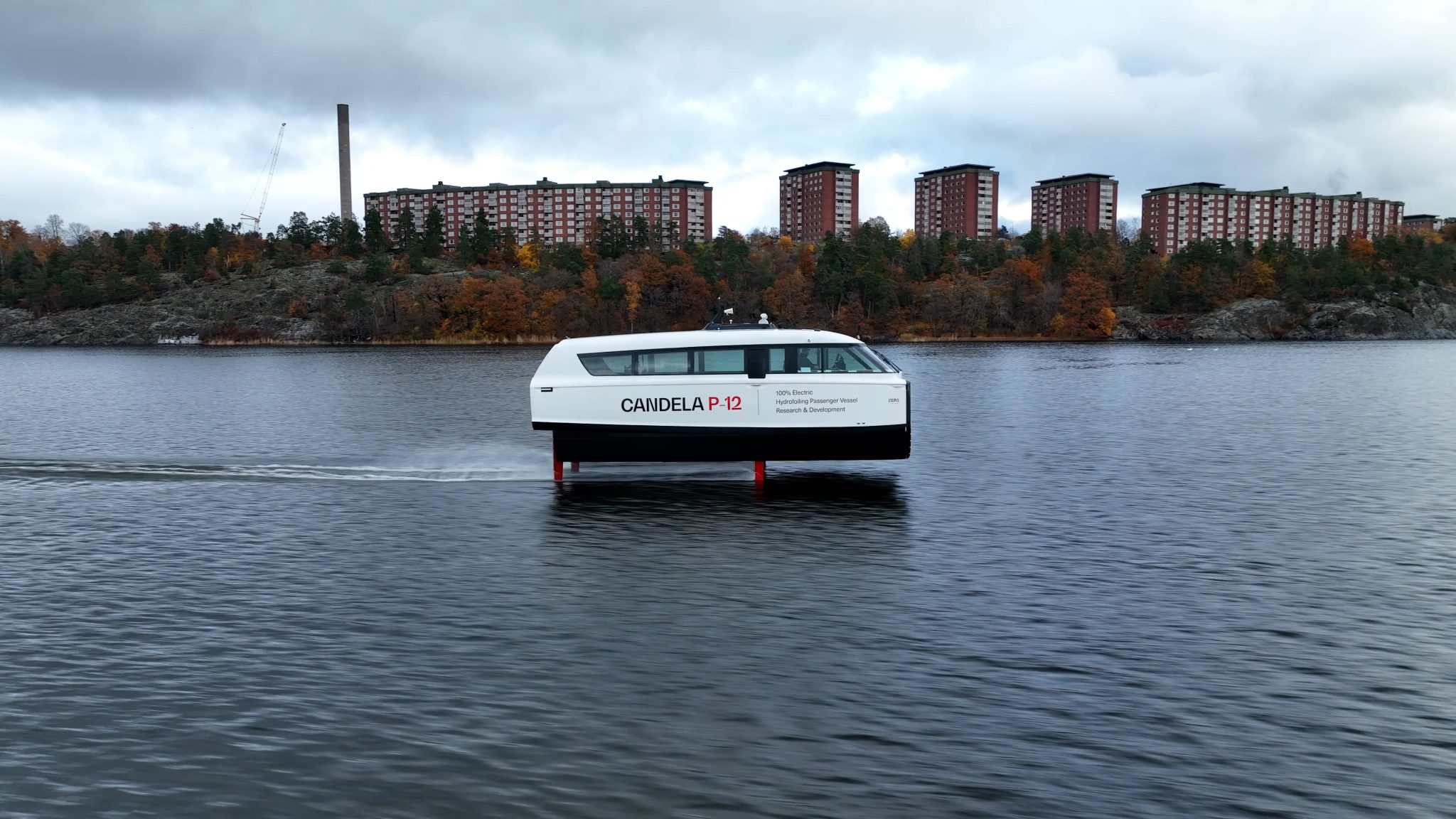
In late 2024, the Swedish capital introduced a hydrofoiling electric ferry that appears to glide above the surface of the water. Just over a year later, the Swedish Transport Administration has declared the pilot a clear success.
The results are hard to ignore: travel times are nearly halve, passenger numbers are up, and carbon dioxide emissions are reduced by around 94 percent compared with similar diesel ferries.
For a city where diesel-run ferries account for nearly half of public transport emissions, that shift could be transformative.
Cutting commute times in half
The hydrofoil electric vessel, the Candela P-12 Shuttle, now runs between the suburb of Ekerö and central Stockholm near City Hall. What was once a 55-minute commute now takes roughly 30 minutes.
The ferry’s manufacturer describes it as the world’s fastest electric passenger vessel currently in service. Speed, however, is only part of the story. The evaluation suggests the ferry is not just faster, but fundamentally more efficient.
Local politicians have gone so far as to call it a potential “paradigm shift” in how cities use their waterways, especially those that, like Stockholm, are already defined by them.
How the ‘flying’ ferry works
The P-12 is the first computer-controlled electric hydrofoil ferry to enter serial production, according to Candela.
Beneath the hull, carbon fibre wings known as hydrofoils generate lift as the vessel accelerates. Once it reaches cruising speed, the boat rises above the water’s surface. By minimizing contact with the water, drag drops dramatically, allowing for higher speeds and far lower energy consumption.
An onboard computer system continuously adjusts the angle of the foils in real time, using sensors to keep the ferry stable as it “flies.” The result is a ride that feels smoother and more controlled than traditional ferries.
There are also environmental advantages beyond emissions. Because the ferry produces a dramatically smaller wake comparable to a small dinghy with an outboard motor, it reduces shoreline erosion and ecological disturbance. Noise levels are also significantly lower. Measurements show the vessel is about as loud as a car traveling at 28 miles per hour and is barely audible from 80 feet away.
In short, it moves quickly without making a scene.
More passengers, lower costs
The success of the trial has not just been environmental; it has been economic.
Passenger numbers on the Ekerö line increased by 22.5 percent during the trial period, suggesting that commuters are eager for faster, more comfortable alternatives.
The ferry’s minimal wake has earned it a speed exemption, allowing it to operate at around 25 knots, which is well above the usual 12-knot limit. The Swedish Transport Administration has recommended extending similar exemptions to other routes, potentially opening the door for expansion.
According to the report, replacing two diesel ferries with six P-12 vessels could increase departure frequency from hourly to every 15 minutes and boost passenger capacity by around 150 percent. The projected socioeconomic benefit is estimated at SEK 119 million, or roughly $13.1 million, while lowering the cost per journey.
Dockside charging upgrades are also relatively modest compared with traditional electric ferries, and operating costs are lower due to reduced fuel use and maintenance.
A model for other cities
For Candela founder and CEO Gustav Hasselskog, the implications go beyond Stockholm.
“The Candela P-12 can transform urban waterways,” he said. “By combining high speed, minimal energy use, and near-zero emissions, we can unlock faster, cleaner, and more cost-efficient waterborne transport for cities worldwide.”
Other cities are already taking note. Berlin and Mumbai have announced plans to introduce similar vessels in 2026, while destinations in the Maldives and Thailand are also preparing to adopt the technology.
As urban areas grapple with congestion and climate goals, Stockholm’s experiment suggests that the solution may not always lie in building more roads or bridges. Sometimes, it means rethinking the water around us… and allowing transport to rise above it.
Did this solution stand out? Share it with a friend or support our mission by becoming an Emissary.