BY THE OPTIMIST DAILY EDITORIAL TEAM
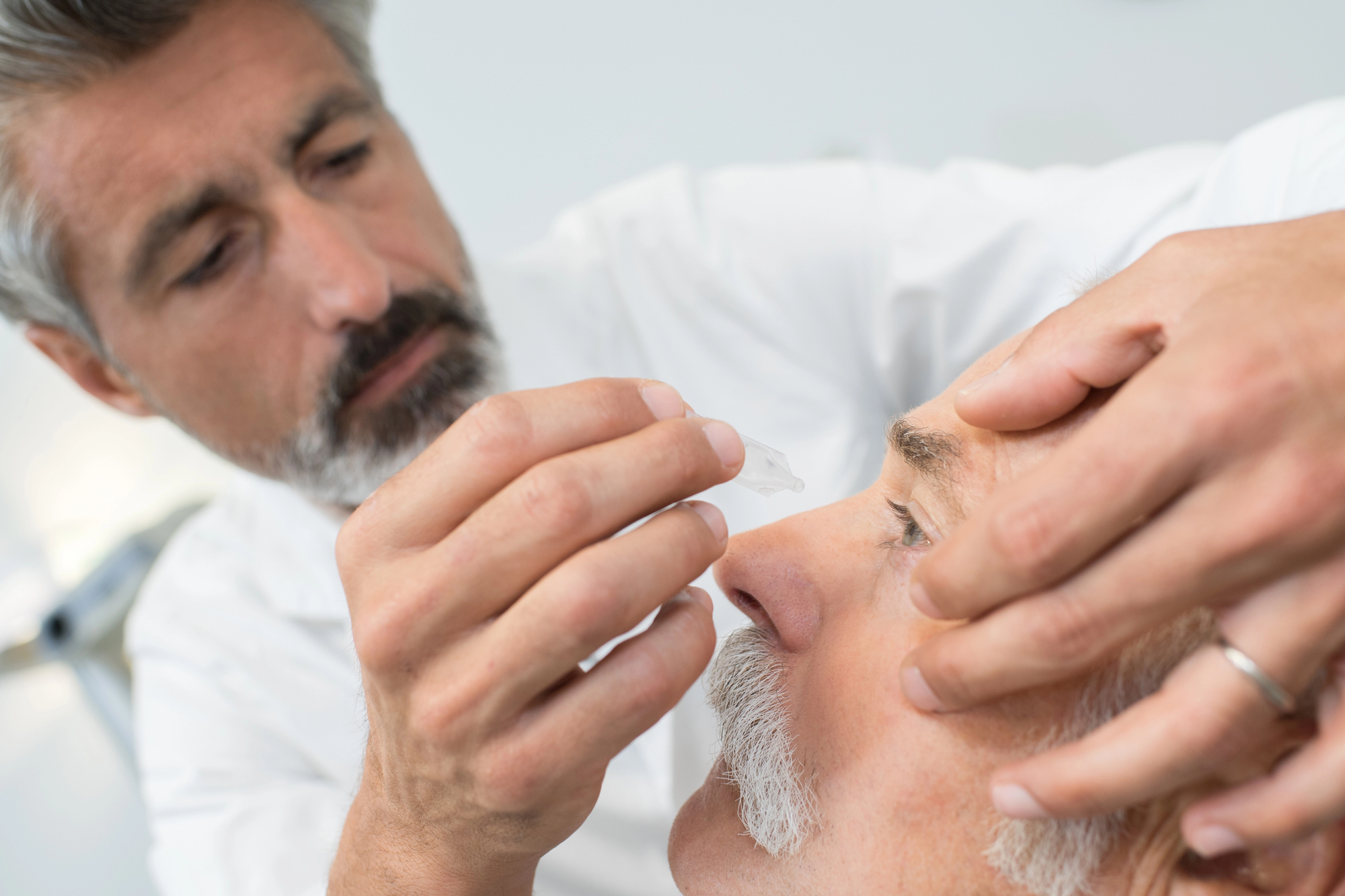
Scientists at the Institute for Bioengineering of Catalonia developed light-activated compounds that restored light perception and visually guided behavior in blind animal models, without gene therapy, implants, or specialized equipment. Two of the most promising worked when applied as ordinary eye drops.
The study, published in the Journal of the American Chemical Society, targets conditions like age-related macular degeneration (AMD) and retinitis pigmentosa (RP), which together affect roughly 200 million people worldwide and cost an estimated $400 billion annually in healthcare expenses and lost productivity.
Why do existing treatments fall short?
When photoreceptor cells in the retina die, the visual system loses its ability to convert light into neural signals. The deeper retinal circuitry often remains intact, but those surviving neurons have nothing to respond to.
Gene therapy can work, but only for patients with specific genetic mutations, a small fraction of those affected. Retinal prostheses help some people but are invasive and expensive, and require real training to use. Optogenetics and light-responsive drugs have made it into clinical trials, though restoring reliable vision at ordinary light levels has been harder to crack than early results suggested.
A drug that substitutes for lost photoreceptors
The IBEC team worked with photopharmacology, an approach that builds a light-sensitive molecular switch directly into a drug’s structure, so the compound’s activity changes when light hits it. Their molecules, called prosthe6, are designed to fill in for the photoreceptors that disease has destroyed.
“Our goal was to restore vision using a molecular mechanism that is as close as possible to how the healthy retina works,” said Rosalba Sortino, a co-first author of the study. “Instead of bypassing retinal processing, we aimed to reactivate it right at the same level of the retinal circuit as the lost photoreceptor cells.”
What the experiments revealed
Prosthe6 compounds target ON-bipolar neurons, which normally receive signals from photoreceptors and relay them deeper into the retinal network. In blinded zebrafish larvae, they restored saccadic eye movements. In mouse models of AMD and retinitis pigmentosa, they restored something harder to fake: the instinctive preference for darker environments that sighted mice have and blind mice lose.
After receiving prosthe6, the blind mice spontaneously avoided bright areas again with no training, at light levels comparable to being indoors or outside on a cloudy day. Two compounds, prosthe6-12 and prosthe6-15, stood out, and both worked as eye drops rather than injections.
“These molecules do not cure blindness, because they do not address the cause of photoreceptor degeneration,” said Pau Gorostiza, co-leader of the study. “But they are remarkably effective at restoring sight, and they do so using a very simple and potentially patient-friendly approach.”
Still some way from human trials
The results are in animals, not people. “Turning this into a therapy is a long and laborious process,” Gorostiza said.
One practical advantage: the treatment doesn’t require knowing which mutation caused the photoreceptor loss, so it could reach patients who don’t qualify for gene therapy. It’s also reversible. The research has been running for more than ten years across multiple Spanish universities and research institutions, and a spin-off company is being formed to push it toward clinical testing.
Source study: Journal of the American Chemical Society— Restoration of saccadic eye movements and visually guided behavior in ambient white light with photoswitchable small molecules
Did this solution stand out? Share it with a friend or support our mission by becoming an Emissary.