Episode Description:
A teenager built a supply distribution network where families request what they need without filling out any forms or declaring themselves as someone in need. She also added a program that researches each family’s cultural background and sends handmade crafts alongside the package. That’s Vivian Ho, the first nominated Local Changemaker in The Optimist Daily’s new series.
Arielle and Karissa cover ten solutions this week, including six countries that just put a dollar figure on their EV investments, a Columbia University finding on the minimum movement needed to offset a desk job, and what pest experts actually recommend instead of vinegar.
If you have questions, comments, feedback, suggestions, or just want to say hi, send a message to: podcast@optimistdaily.com.
Want to be part of the Optimism Movement? Become an Emissary.
Subscribe to our FREE Daily/Weekly Newsletter and follow us on Instagram, X, and Blue Sky.
The Optimist Daily is a project of the World Business Academy.
Donate link: https://www.optimistdaily.com/donate-to-support-the-optimist-daily/?lsc=41ef528d
Theme and all original music by Marvin Lanes
Transcript:
Karissa:
Hi, everyone. I’m Karissa.
Arielle:
I’m Arielle.
Karissa:
And welcome back to The Optimist Daily’s weekly roundup.
Arielle:
So good to be back this week. It’s feeling very spooky over here. How about you, Karissa?
Karissa:
Super spooky and Halloweeny as we prepare for the holiday over the weekend, and a time change over in the US. I know over in Amsterdam, you’re already having those darker evenings.
Arielle:
Yes, we had our time change last weekend, and yeah, it does get dark so early, and it feels quite wintry, but that’s all right.
Karissa:
Mm-hmm. I miss the sun. I know. Maybe a week of this weather and I’ll be longing for the sun, but there is no shortage of good news to brighten your day at The Optimist Daily.
Arielle:
No, especially because we started publishing our Local Changemakers series this week on Wednesday. You can look forward to one Local Changemaker feature every Wednesday in the run-up to Thanksgiving. This week was a little bit different. We have two features because we have the Student Maker story, which kind of inspired us to highlight younger changemakers this year, and then the first nominated Local Changemaker.
Karissa:
Mm-hmm. I can’t wait to dive into them. But before we do- Mm … that, we wanna remind you that all these solutions are available in our newsletter format, whether you want that every day or just a weekly digest. It’s free to sign up, and the link to do that is in the show notes.
Arielle:
If you’re more of a social media feed type of news consumer, then you can follow us on all social platforms, @optimistdaily on everything except for X.
There we are, @OdeToOptimism. You can also reach me and Karissa directly by emailing us at podcast@optimistdaily.com. We really love getting comments, questions, feedback, or anecdotes that you wanna share with us. So yeah, feel free to shoot us an email whenever.
Karissa:
We also encourage you to share with friends, loved ones, all this positive news from The Optimist Daily, and remind them that, you know, good things are happening out there in the world.
As usual, a big thank you to our Emissaries who financially support the mission of The Optimist Daily. If you would like to become an Emissary, the link to do that is also in the show notes. With all of that said and done, shall we jump into the spooky solutions of the week? Let’s get into it.
Age-by-age Halloween tips from a board-certified pediatrician
Karissa:
The first solution is “Age-by-age Halloween tips from a board-certified pediatrician”.
This piece is informed by an actual pediatrician about how to make Halloween work for every kid in your family, and the framing is really specific to each age group in a way that’s genuinely useful. For toddlers, one tip that I thought stood out was to bring a wagon, even if your kid insists they don’t need one when you’re trick-or-treating or attending some kind of Halloween event.
For school-aged kids, uh, Dr. Kristen Cook, who is the pediatrician that gives all this advice in the article, frames Halloween as giving earned independence when you’re trick-or-treating, so you can, you know, hang back a couple houses, let the kids lead, but keep them in sight. And then when it comes to teenagers, they might be going to Halloween parties, and at these parties they can come across some peer pressuring situations.
It’s good to talk to them about an exit plan for situations they might not be comfortable with and discuss how to deal with these potentially uncomfortable situations, but ultimately trusting them to handle it the right way. So lots of good tips here. This just brings so much Halloween nostalgia back for me.
Arielle:
Yeah, I, um… my parents didn’t let me participate in Halloween growing up. I know. Heartbreak. I think it just was, uh, you know, we are an immigrant family coming from a very Christian country- Yes, yeah … and they kind of saw it as, like, kind of like devil worship. But, you know, we got over that stage. I was already, um…
I kinda aged out of Halloween, uh, in the traditional sense where you go trick-or-treating and all of that. But my youngest sister was able to participate, and she had, like, really fun costumes. As a little kid, she wanted to be a tissue box one year. Um- That’s a good one … which was really weird. It was, like, a High School Musical tissue box, because we had
like, High School Musical, um, wrapping paper. And so that’s how she decided to dress up.
Karissa:
I love it.
Arielle:
Yeah, so I have vicarious Halloween memories through my youngest sister.
Karissa:
Well, I mean, as an adult now, maybe you can do some, some of this stuff.
NYC food pantries are stocking pet food for struggling households
Karissa:
The next solution is very heartwarming, and it’s that “New York City food pantries are now stocking pet food for struggling households”.
New York State just put $500,000 towards making sure pet owners don’t have to choose between feeding themselves and feeding their animals. There are now 22 food pantries across all five boroughs stocking free pet food, and the reason this program exists is kind of heartbreaking and kind of sweet at the same time.
The story mentions a woman named Cassandra in Brooklyn who sometimes eats less so her Shih Tzu doesn’t go hungry, and she’s far from alone. The demand for pet food grew after SNAP benefit cuts, which tells you a lot about just how far those cuts reach into people’s lives. Animal welfare groups have known for years that financial hardship and pet surrender are directly linked, but this program is essentially trying to catch families before they hit that wall.
5 research-backed ways to banish aches and feel better at your desk
Karissa:
The next solution is a health lifestyle related one, and it’s “Five research backed ways to banish aches and feel better at your desk”. Columbia University researchers ran a study trying to find the minimum effective dose of movement to counteract sitting all day. The answer was actually surprisingly specific.
It’s simply five minutes of walking every 30 minutes that makes a difference. NPR actually then tested that with 20,000 of their listeners and found the exact same thing. So this article breaks down that finding plus four other fixes. Arielle, have you ever heard of this tip to walk five minutes every 30 minutes?
Arielle:
No, but to increase focus, I use the Pomodoro Technique, which is when you set the timer for about 20- 25 minutes and then give yourself a five-minute break. Because I work from home- Yeah … I am always kind of hunched over my laptop. So that is a trick that I use, and I do generally get up and, like, walk around the house.
Um- Yeah … so I guess my body intuitively knew that this was a good thing to do, but it’s nice to have the science back it up.
Karissa:
The whole concept of this kind of, like, movement snack, um, short burst of activity is catching fire and a good suggestion. I guess I’ll mention one more thing about this solution, but you can check out the rest on optimistdaily.com.
The whole posture section of this article talks about how the idea of sitting up straight and holding it advice is actually not correct. The actual physical therapist guidance is that your best posture is your next posture, meaning any fixed position causes strain eventually.
New Jersey Transit is turning commuter stations into art galleries
Karissa:
Well, the next solution is “New Jersey Transit is turning commuter stations into art galleries”.
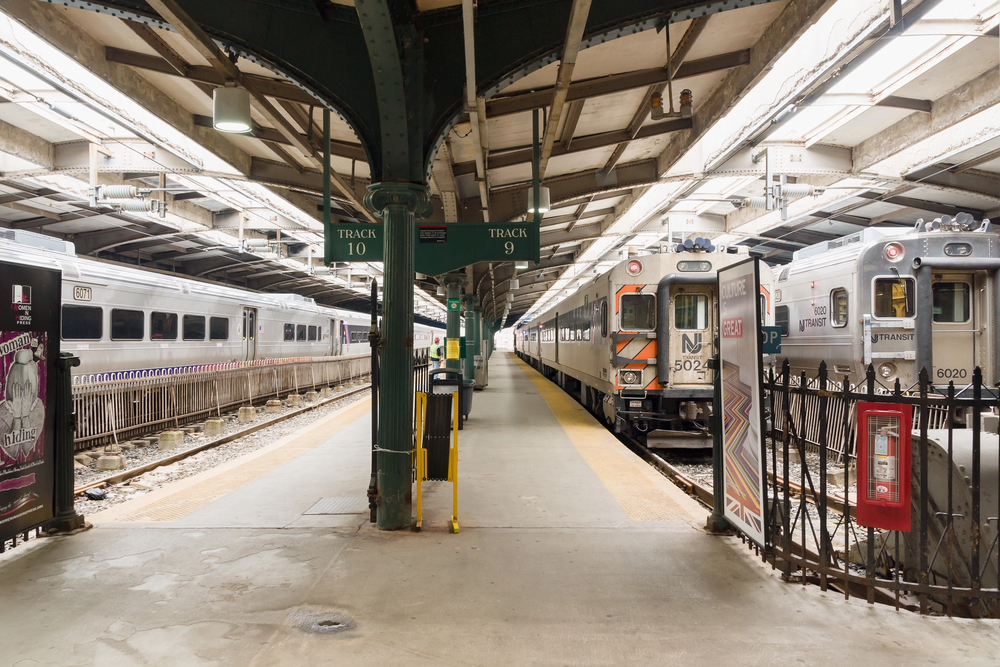
NJ Transit has been installing art exhibitions at train and bus stations since 2019, and the program just expanded to its eighth location. The new show is about railroads and 250 years of American history, which is a pretty fun yet informative thing to encounter while you’re just trying to catch your train, the history about railroads.
But the whole premise of this is that transit spaces are great for public art because nobody goes there expecting to see any. The encounter is accidental, which makes it different from an intentional gallery visit. I really like this, um, rise of art in public spaces, and it kind of reminds me of a solution we shared a couple months ago about how over in Warsaw they’re putting libraries in commuter stations.
So if you have a little time, a layover in transportation, you can go check out the library. So I think this is a really cool kind of global trend.
Arielle:
And it’s really nice that the program actually pays the artists stipends because public art rarely comes with a real budget, and a lot of the time public art is like a, a mural that maybe someone painted for free or graffiti, which honestly, I’m a huge fan of graffiti.
Some of the tags are really impressive, and some of them- Yeah … are just kind of silly, but they’re entertaining in their own way. Um, but that obviously doesn’t come with payment. If anything, it might come with a fine.
Karissa:
Right. Exactly. In this broader conversation about what public spaces are for, whether that’s a transit station, a library, park, you know, it can be a lot more than just something that people move through.
Student Makers: bringing free STEM to students on three continents
Karissa:
Moving on to the Changemaker series, we talked more about Student Makers in this deeper dive. They are a group bringing free STEM to students on three continents. And like Arielle mentioned, this is the story that made us decide to make the entire series this year about people under 30, because young people are really just doing so many impressive things to change the world.
At Student Makers, former students become the instructors. It’s often high schoolers teaching middle schoolers, and the founder’s whole argument is that it’s more relatable to have, um, you know, people who are closer in age to you to help teach things than an adult expert teaching the same material. Like we mentioned, we’ll have some of the main players behind Student Makers on the podcast in the beginning of 2027, which is crazy to even say that 2027 is around the corner.
But we look forward to welcoming them on and hearing directly from them.
Meet Vivian Ho: the 17-year-old who built a supply network around dignity, not charity
Arielle:
I will take over from here, Karissa, and my first solution is actually the first nominated changemaker for this series. The title- Ooh … of the article is “Meet Vivian Ho, the 17-year-old who built a supply network around dignity, not charity”.
Most programs that distribute supplies to low-income families ask that family to identify themselves before they get anything. So basically, you have to fill out a form, you check a box, you explain your situation to someone with authority over the outcome. Vivian Ho built her nonprofit, All the Same organization, around removing that whole process.
Families request what they need anonymously, and nobody has to declare themselves as someone in need to get the help they need. And she started this at just 16, which is quite impressive.
Karissa:
Mm-hmm.
Arielle:
The anonymous sign-up system is what makes this really special. Vivian’s read on situations like this was that the stigma of asking for help was keeping families from asking at all.
So she just said, “Let’s get rid of that.” There’s also something within this nonprofit. There’s another, uh, initiative called the Cultural Surprises program, and it’s something I hadn’t seen before. So volunteers research the cultural background of the family they’re packing for, and handmade crafts reflecting that culture go out alongside the supply package, and it turns a resource delivery into something more like recognition, something that makes that family feel really seen.
I’m not gonna get into all of the details, but I do encourage people who are interested in learning more about Vivian Ho and perhaps how to support her work to check out the article because it is really, really remarkable that she was able to do this as a teenager.
Karissa:
Congratulations to Vivian for being nominated by two of The Optimist Daily community members who are involved with the project as well, a nomination from her co-founder and a volunteer that she inspired to start his own project nominated Vivian.
So go check that out if you wanna learn more.
Kenya unlocks $160 million to protect the Maasai Mara and Tsavo ecosystems
Arielle:
The next solution is titled “Kenya unlocks $160 million to protect the Maasai Mara and Tsavo ecosystems”. Kenya just signed a $160 million deal to protect nearly 67,000 square miles of some of the most important wildlife habitat in Africa, including the Maasai Mara and Tsavo.
But the interesting part isn’t just the money, it’s the structure of how that money gets released, because this isn’t a grant that arrives and then disappears. So the funding mechanism is called Project Finance for Permanence. Money flows in tied to specific government policy benchmarks, and not all the money gets, uh, given upfront, let’s say.
If Kenya doesn’t hit the milestones, then those funds never get released. Tsavo holds 40% of Kenya’s elephants and 20% of its critically endangered black rhinos, and that’s just to give you an idea of what’s at stake for wildlife and geographically. Kenya committed to the global 30 by 30 target and was sitting at about 20% to 23% coverage, so this deal would largely close that gap by 2030.
Will vinegar actually keep bugs out this fall? Pest experts explain what works
Arielle:
The next solution is titled, “Will vinegar actually keep bugs out this fall? Pest experts explain what works.” So every fall, people reach for the vinegar bottle as a first line of pest defense. They spray the windows, they spray the door frames, and then it feels like they’ve done something. But two pest control experts basically say, “You’ve done nothing.”
The reason why is in this article, and there’s also one fall tip in here that’s actually kind of strange and useful. So vinegar unfortunately only kills soft-bodied insects on direct wet contact, and then once it dries, then the vinegar doesn’t really do anything against cockroaches, beetles, spiders, or ants.
And researchers found negligible effects on most common household insects. What really works is, like, caulking windows and weather-stripping doors and adding door sweeps. That will actually stop bugs from getting in. Spraying is just treating the symptom and not really addressing the entry point of where all of these pests try to come in and get cozy ’cause the weather outside is getting worse.
Um- Yeah … and then the, the weird tip, well, I found it weird or unexpected, is the acorn tip. If you are bringing acorns or pine cones inside this fall, then you should put them in 150-degree Fahrenheit oven for about 30 minutes first, and that will kill whatever’s living inside them, and then you can, like, decorate your home for the holidays in peace
knowing that there’s no hidden critter in your pine cone just waiting to make your house their home.
Karissa:
Exactly.
Arielle:
The DIY home pest control has surged since the pandemic. People want low-chemical solutions, and that’s why I think vinegar gets so much reach. But yeah, unfortunately it’s just not as effective as everyone thought it was.
Karissa:
Well, it’s good to know so we don’t waste our vinegar and our time.
Arielle:
Mm-hmm. Yeah.
Karissa:
I- I have to say, though, maybe this is bad, but I do like to use just the harsh chemicals and get them out of the way- … if they do come in the house. So I, I don’t hesitate to use the big stuff.
Arielle:
Yeah. It’s… You know, we appreciate your honesty here.
I’m sure there are a lot of listeners who struggle with pests and are like, “Yeah, I’m just gonna obliterate.”
The 7 best vegetables to plant if you want to offset rising grocery costs
Arielle:
The next solution is titled, “The seven best vegetables to plant if you want to offset rising grocery costs”. Grocery prices are unfortunately still high, and two university horticulture experts say there are specific vegetables that genuinely pay for themselves when you grow them at home.
Most of the list made sense to me, but there’s one of them that takes three years before it really starts producing, and both experts say plant it anyway. And yeah, there are pretty good reasons, which I will get into. So first, herbs are the economic winner here. They’re among the most expensive produce per ounce at the grocery store.
You usually buy more than you use, and growing them means you harvest exactly what you need when you need it. The strange one was the asparagus. It takes two to three years of establishment before you get a real harvest, so you really have to be committed to the asparagus, and also you have to like asparagus.
I like asparagus, but I know a lot of people aren’t the biggest fans. But a well-maintained bed produces for up to 20 years. One expert calls it something you’ll have basically for life. Both experts are clear that the garden only saves money if you plant what your household actually eats. So start with vegetables you already go through the most, and that will help you save money in the end.
How EV fleets are shielding Europe from oil price volatility
Arielle:
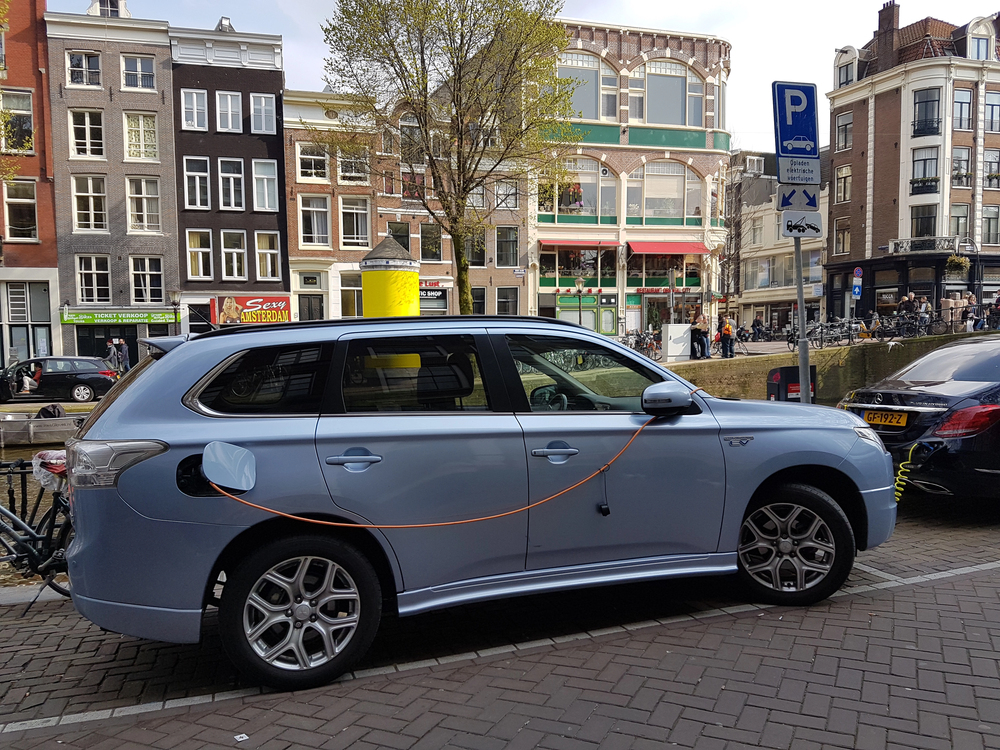
The last solution that we are gonna share with everyone this week is titled “How EV fleets are shielding Europe from oil price volatility”. So there is that conflict in Iran that has been driving oil prices up 33% this year. But six European countries collectively avoided nearly $2.2 billion in oil import costs just because they have enough EVs on the road.
That’s not a projection or a goal, that’s an actual number from a six-month window. Denmark alone displaced 13% of its entire 2025 oil consumption. So there’s a real dollar security argument for EV adoption here that goes beyond anything to do with the environment, although the environment is very important.
Karissa:
Yes.
Arielle:
Hopefully this, uh, this will encourage other economies to really invest in their EV development, but also hopefully this conflict ends soon.
Karissa:
Yeah. So- For multiple reasons, of course. But it just goes to show how moving towards renewable energy, sustainable energy across the board is just the best path towards energy security.
Arielle:
Definitely.
Well, those were all of the solutions we had this week, but before we go, we have a positive quote.
Karissa:
This week we have, “Part of being optimistic is keeping one’s head pointed toward the sun, one’s feet moving forward.” And that’s from Nelson Mandela.
Arielle:
Beautiful. Well, everyone, I hope you enjoy your Halloween weekend if you’re celebrating, and if not, then I hope you enjoy the, uh, candy sales that are inevitably-
going to happen after Halloween is over. We will both be back next week with more solutions.
Karissa:
Until then, have a great weekend.