BY THE OPTIMIST DAILY EDITORIAL TEAM
Water has always been part of how many American cities move people, but for most of the country’s history it has been an afterthought compared to roads and rails. A new generation of electric ferries is beginning to change that, and some of them work in a way that is surprising: they handle the problem of water by getting out of it.
The physics problem that held electric boats back
Electrifying boats has always been harder than electrifying cars, and the reason comes down to drag. Water resists a moving vessel far more than air resists a moving vehicle, which means boats require substantially more energy per mile. That high energy demand, combined with the weight of batteries, has made it difficult to design an electric vessel that can carry enough passengers far enough to be useful as everyday transit.
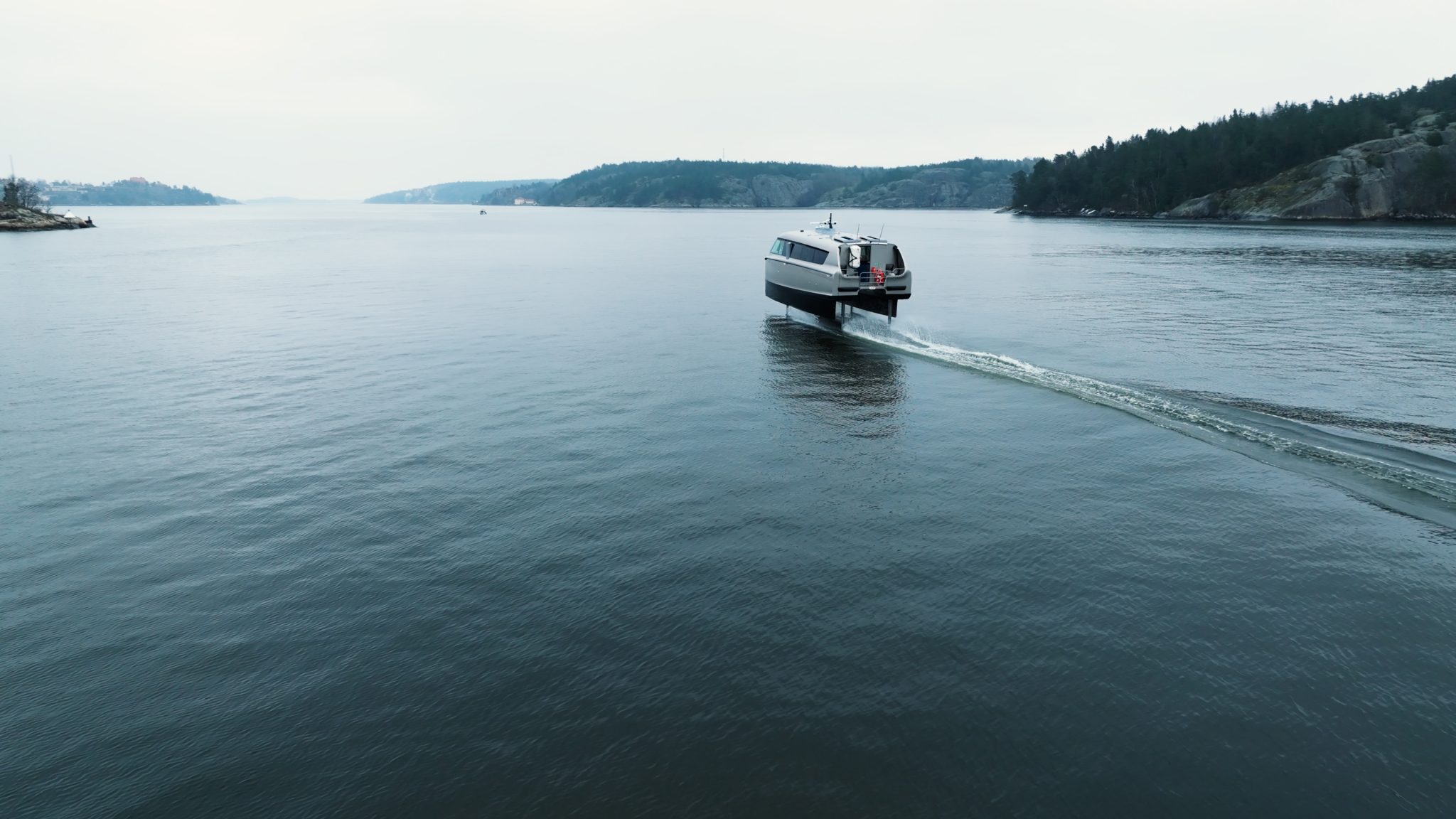
Hydrofoils get around this in a way that seems almost too obvious once you hear it. These vessels use underwater wings to lift the hull clear of the water as they accelerate, and once the hull is airborne, drag drops sharply. Vessev, a company that builds fully electric hydrofoil boats, says its design cuts drag by about 66 percent, which lets the boats carry smaller, lighter battery packs without sacrificing range. “We substantially reduce the drag that you feel, and that’s really what makes electrification viable,” said Eric Laakmann, Vessev’s chief executive and co-founder.
What the ride is like
The transition happens fast. As a Vessev boat accelerates through New York Harbor, the hydrofoils push the hull about a foot and a half above the surface, and the sensation of a boat working against waves gives way almost immediately to something smoother and quieter, closer to gliding than crossing water. “We’re picking up speed. We’re going for a takeoff,” Laakmann said during a recent demonstration, drawing curious looks from passengers on a nearby sightseeing ferry. His company is still a novelty to most people on the water, and he knows it.
From demonstration to daily commute
Vessev operates passenger services in New Zealand, with Australia next and its first US route planned for Lake Tahoe. Laakmann’s ambition runs past tourism: he wants electric vessels to be as unremarkable as buses, something commuters use because it’s there. “More like subways, more like buses, more like Ubers, more like taxis but on the water,” he said.
That idea has already taken root in parts of Europe. Stockholm commuters are riding electric hydrofoil ferries built by the Swedish company Candela, which says its design uses as much as 80 percent less energy than conventional vessels of a similar type. Norway has ordered 20 of the same boats for coastal service. The US is later to this shift, but several cities are starting to move.
San Francisco prepares for a half-billion-dollar overhaul
San Francisco carries about 3.5 million ferry passengers a year across a region shaped by its bay, and every one of the 18 vessels in the current fleet runs on diesel. Four battery-powered ferries are set to join the fleet over the next two years as part of an electric overhaul worth roughly half a billion dollars, including new charging infrastructure at its docks.
Converting a ferry network is more complicated than swapping out a car fleet. Ferries run on fixed schedules and cannot stop mid-route to recharge, so operators have to design the entire system around the relationship between battery range, trip time, and how much power the shoreside chargers can deliver in the minutes a vessel sits at the terminal. Seamus Murphy, who runs the agency, put it plainly: “We have a lot of waterfront.” San Francisco’s new vessels won’t use hydrofoil technology, but the agency says they’ll make it the first ferry operator in the country to run high-speed, all-electric service.
The economics of a fleet switch
For a long time, the financial math and the environmental math didn’t add up at the same time. Battery-powered ferries cost more upfront, but electric motors tend to be more efficient than diesel engines, and the savings on fuel and maintenance accumulate. Rising diesel costs have shifted the balance, as has continued progress in battery technology.
“You make the upfront investment at the beginning and then you save over time, and at the end of the day you’re going to have lower costs in the long term,” Murphy said. How well that holds up depends on the route: long distances, tight turnaround windows, and limited charging opportunities can all make the switch impractical. Not every waterway is suited to a fully electric vessel. For shorter commuter routes in cities with the right geography, though, the numbers are starting to work.
For San Francisco’s expansion, both the boats and their batteries are being manufactured in the US. Murphy sees this as a window that won’t stay open indefinitely. “These jobs are going to get created in other countries and we have an ability to create them here if we manage this in the right way,” he said. “We don’t want to be left behind.”
Water as working transit
Transportation is the largest source of greenhouse gas emissions in the US, and watercraft burning diesel contribute their share, particularly around busy ports and waterfront neighborhoods. Electric ferries could cut both emissions and the localized air pollution that diesel docks generate, while also opening up routes that weren’t previously viable and connecting communities by water without the cost of new roads or rail.
It won’t happen all at once. Some cities will move fast; others will take years to follow. But the direction looks clear. “I think in a more sustainable future we’re likely to see more and more vessels like this around the world,” Laakmann said, standing on a boat that had just crossed a harbor without burning a drop of fuel.
Did this solution stand out? Share it with a friend or support our mission by becoming an Emissary.