



UK cracks down on greenwashing
As is so often and tragically the case, commerce can adapt more quickly than policy. We’re seeing this right now in what’s known as greenwashing. This is where companies label their products as “eco-friendly,” “greener,” or “sustainable” to appeal to environmentally conscious Read More...

An extinct rock may’ve made life on Earth possible
By delving into our past, we afford ourselves ways to learn about our present and our future. Planetary scientists from Yale University have delved very deeply into our past and discovered perhaps how life was able to form on our planet. Earth’s uninhabitable period In the first 500 million Read More...

North Island brown kiwi “no longer threatened”
Kiwis are funny-looking, round, and flightless birds and are the only birds in the world with nostrils at the ends of their beaks. They have the highest body temperature of any bird, over 100 degrees Fahrenheit, and they also lay one of the largest eggs relative to their little bodies. The kiwi Read More...

Peatlands, a boggy carbon sink absolutely worth saving
For those in the world who have to live with it, you may wonder “what on earth is peat good for?” Peatland is a mossy wet mass that you can’t build on, you can barely walk on, you can’t grow crops on it, and all its stagnant water is a breeding ground for mosquitoes which bring Read More...

These nanoparticles deliver genetic info to treat diseases
Every day, scientists and medical researchers finetune previous technology and techniques, or they find new applications for existing ones. Recently, a team from Tufts University, with collaboration from Harvard Medical School and the University of Massachusetts, Boston, made a new application for Read More...
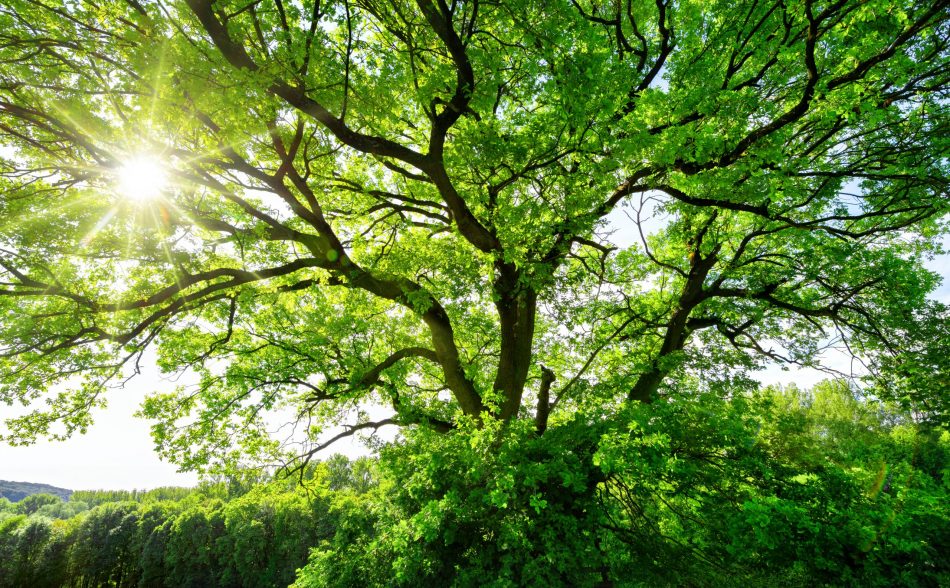
Fractals: why your brain prefers nature over cities
You’re probably very aware at this point that it’s healthy for you to spend more time outside. While we’ve certainly written about it a great deal, scientists keep unveiling new findings about the relationship between lower stress and nature. For instance, new research from the Read More...

Scientists discover an octopus from before the dinosaurs
They are alarmingly intelligent and can solve puzzles. They can change their color to blend into their surroundings and they can squeeze themselves through tiny spaces. Is it any wonder that octopuses, being some of the most adaptable creatures on the planet, may even pre-date the Read More...

Scientists gain ground in the race to reverse aging
So many of us do so much to keep ourselves healthy and live long lives. We exercise, we hydrate, we eat right, and we avoid harmful substances. There are so many things we can do to keep ourselves vital for a long time — there are whole industries aimed just at making us look fit — but time Read More...

What if you could power your home with your car?
One of the things we find reassuring about electric cars — besides the fact that they produce fewer emissions and don’t hurt our planet nearly as much — is the idea that we could charge one from our very own homes instead of having to drive to a gas station. What if it worked the other Read More...

Can galaxies exist without dark matter?
The nature of science is learning and revision. Our understanding of existence involves fine-tuning, sometimes completely restructuring our knowledge to comprise new discoveries. Physics, medicine, chemistry, all improve on themselves by revising older ideas, such as it is with dark matter and its Read More...