


Environment
Need some good news about the environment? The Optimist Daily is your go-to herald of positive environmental news, highlighting eco-friendly solutions and scientific progress around climate action, circularity, conservation, and more. Learn about everything eco in our Environment section.
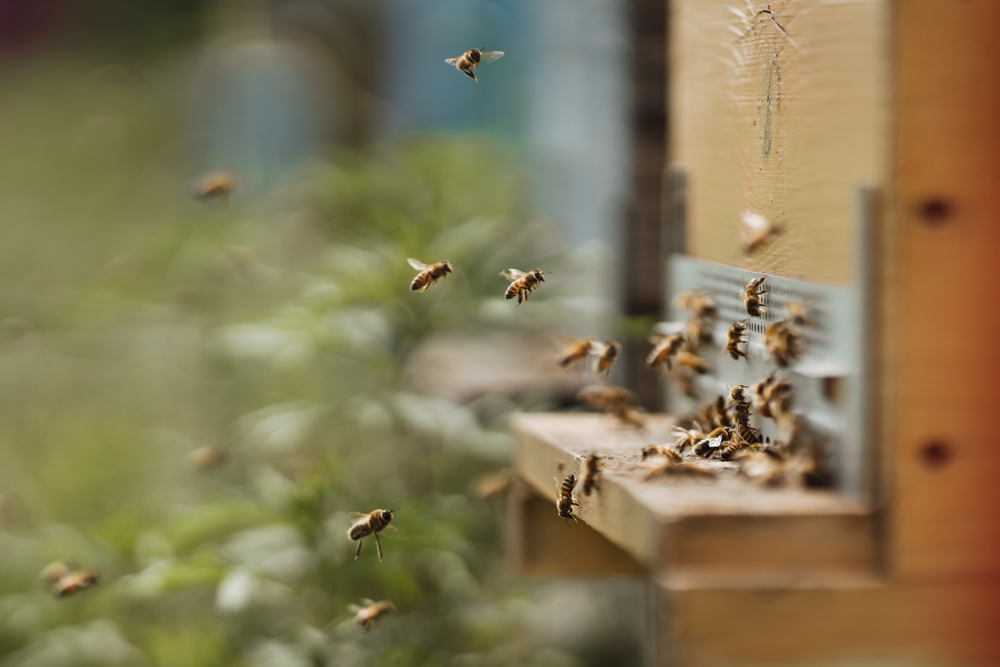
Automated beehive monitors bee health to prevent colony collapse
Here at The Optimist Daily, we're major advocates for solutions aimed at tackling the collapse of the global bee population. Today, we bring you a solution that may offer a snapshot of what beekeeping of the future will look like, tapping into AI and machine learning to keep the pollinators Read More...

Plantlife launches No Mow May campaign to support pollinators in the UK
Conservation charity Plantlife is urging gardeners in the UK to “do nothing for nature” this month as part of their No Mow May campaign. This campaign is designed to let wildflowers grow unrestrained in people’s yards, to provide more food for pollinators. Plantlife has even approached Read More...

Meet Cheyenne Sundance: The young advocate for urban agriculture
Cheyenne Sundance is a young Toronto resident passionate about urban farming. She believes that it can be a viable career, however, she also realizes that for many underprivileged communities, getting into urban agriculture just isn’t realistic. She states that “there is so much systemic Read More...

The Energy Garden empowers commuters to combat climate change
The Energy Garden is a London-based organization that is tackling climate change in a multi-dimensional way that educates and brings London’s communities together through gardening. Since its inception 10 years ago, the Energy Garden has expanded to include 34 solar-powered gardens and more Read More...

EPA announces plan to cut back hydrofluorocarbon emissions
Hydrofluorocarbons (HFCs) are a lesser-known pollutant used in air conditioners and refrigerators. Despite being less emphasized than CO2 in the effort to slow climate change, HFCs are actually more effective at trapping heat. Fortunately, the Environmental Protection Agency (EPA) announced this Read More...

The traveler urging Airbnb to adopt a "green" filter for accommodations
Airbnb has revolutionized the way the modern traveler moves through the world. Whether you’re a digital nomad who needs a tranquil spot and a fiberoptic internet connection or a casual sightseer on the lookout for a cozy room in a central location, Airbnb allows you to select from a long list of Read More...

South Africa will end the breeding of lions in captivity
Following a two-year study on the effects of raising and breeding wild animals in captivity, South Africa has announced that it will ban the breeding of lions in captivity for hunting, cub petting, and for the commercial lion-bone trade. Many tourists take photos with lion cubs bred in Read More...

This yacht will fuel itself with the trash it sucks up from our oceans
Professional yacht racer Yves Bourgnon was irritated at the sight of floating plastic trash in seawater and decided to turn that anger into the inspiration he needed to create the concept for the Manta, a water-cleaning sailboat that is powered by the litter it picks up. The Manta will be an Read More...

ActionAid initiative trains Cambodian women to adapt to climate change
We recently wrote about how farmers in Bangladesh are using floating gardens to survive when floods and monsoons raise water levels. Now, the ActionAid campaign She is the Answer is harnessing these same farming tactics to empower women in Cambodia whose livelihoods are increasingly threatened by Read More...

E-waste: Scientists develop the world’s first fully recyclable transistor
One of the main reasons why so many electronics end up as e-waste instead of getting recycled at the end of their life is the fact that it’s really difficult to separate and recover the valuable materials that make them up. Now, a new technique developed by scientists at Duke University may help Read More...