



More legal rights could mean less deadly algae for Lake Erie
Laws focused on natural spaces often hone in on protecting what humans can gain from the natural resource, rather than protecting the space itself. However, “Rights of Nature” laws, which give natural spaces protection as legal entities, are beginning to crop up in an effort to change the Read More...

A simple practice that can help make Monday so much more satisfying
Going back to work after a weekend off, or even after downtime in the evening, can be a challenge. A healthy life-work balance demands that we do take time to mentally detach from our jobs when we go home in the evening and over the weekend. The problem is, if we fully detach, it can be Read More...

Connecting over light waves? How LiFi will change communications
In today’s connected world, wireless data has become a critical utility: an invisible element of our modern infrastructure that increasingly underpins many of the services upon which we rely. But there’s a problem. The radio spectrum upon which much of our connectivity depends is getting Read More...

How fast fashion hurts the planet, and what you can do about it
If we could trace the ecological and social impact of our clothes, most of us would stop shopping altogether. The global fashion industry, specifically high volume producers of low-quality garments, such as Forever 21, H&M, Fashion Nova, and Zara, employ workers at sub-poverty wages. The Read More...

3 ways one business coalition is combating modern slavery
One of the harsh realities of business in the 21st century is that it’s still upheld by slavery. Shocking as it might seem, over 40.3 million people globally are victims of modern slavery today, and at least 16 million of them are being exploited in the private sector. The US Department of Labor Read More...

Researchers turn single-use plastics into kayaks and canoes
Today the world produces over 300 million tons of plastics every year. That’s almost equivalent to the weight of the entire human population. The vast majority of this is single-use and not designed to be recycled, ending up in landfills or sloughing off in the natural environment as Read More...
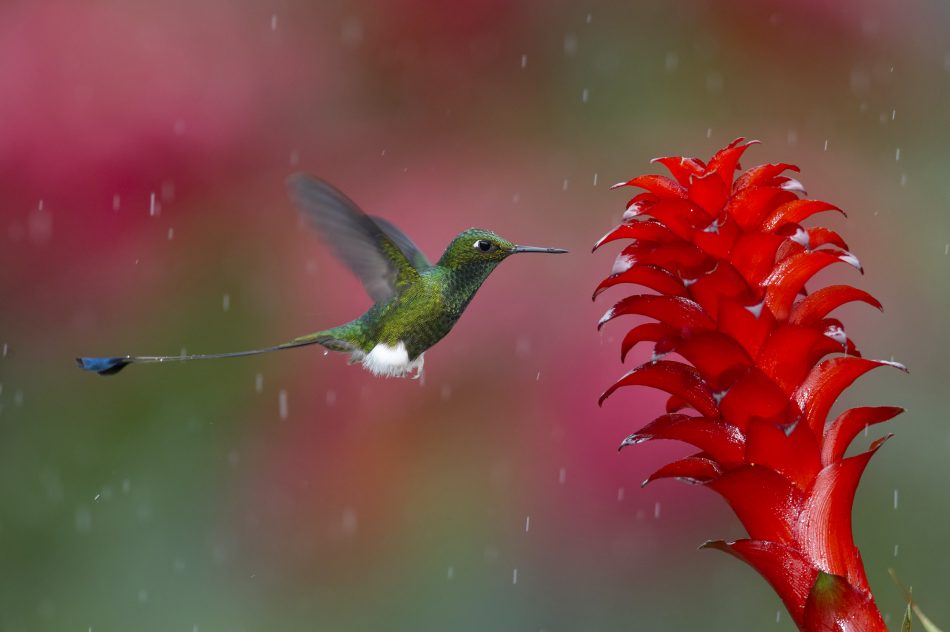
These are most gripping wildlife photos of the year
2019 marks the 55th edition of The Wildlife Photographer of the Year competition, which is hosted by the Natural History Museum in London. This year’s contest included some 50,000 entries, which were submitted by both professional and amateur photographers from around the globe and feature Read More...

How termites, beetles, and frogs are inspiring self-cooling buildings
When we need the most innovative solutions for structural issues, designers often turn to nature and its creatures for inspiration. The latest example of biomimicry comes from Mick Pearce, a Zimbabwean architect, who recently designed and constructed a self-cooling building modeled on the mounds Read More...

Secret sustainability: Why many businesses hide their green credentials
You would imagine any company that figures out how to do something more sustainably than other businesses would make it known to the public. That, however, is far from the truth. Cassandra Coburn unveils the unseen world of secret sustainability, whereby innovations are silently enacted and kept Read More...

New ‘super-cool’ storing method triples the life of donor organs
After organs are harvested following a donor’s death, there’s a very short window of time in which the transplant can be made. Livers, for example, can only be kept outside of the body for nine hours before irreparable damage is done, and the organ must be discarded. This is because freezing Read More...