


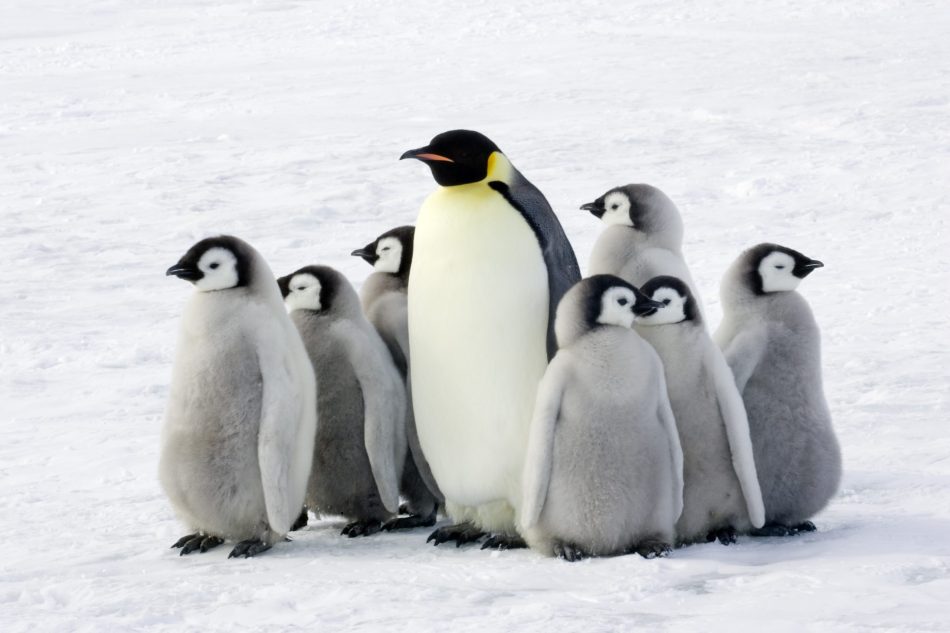
For all you penguin lovers, we have good news: recent satellite images have identified a raft of new Emperor penguin breeding sites.
The discovery lifts the estimated global Emperor population by 5-10 percent, to perhaps as many as 278,500 breeding pairs. It’s a welcome development given that this iconic species is likely to come under severe pressure this century as the White Continent warms.
So, how did scientists discover the new breeding grounds? Using satellite imagery, the locations were identified from the way the birds’ poo, or guano, had stained large patches of sea-ice. Lovely, right?
The new identifications take the number of known active breeding sites from 50 to 61.
“It’s good news because there are now more penguins than we thought,” said British Antarctic Survey (BAS) remote-sensing specialist Dr. Peter Fretwell.
“But this story comes with a strong caveat because the newly discovered sites are not in what we call the refugia – areas with stable sea-ice, such as in the Weddell Sea and the Ross Sea. They are all in more northerly, vulnerable locations that will likely lose their sea-ice,” he told BBC News. Climate heating is expected to negatively affect penguin populations in the future, giving us all the more reason to play our part in cutting the greenhouse emissions that warm up the planet.






