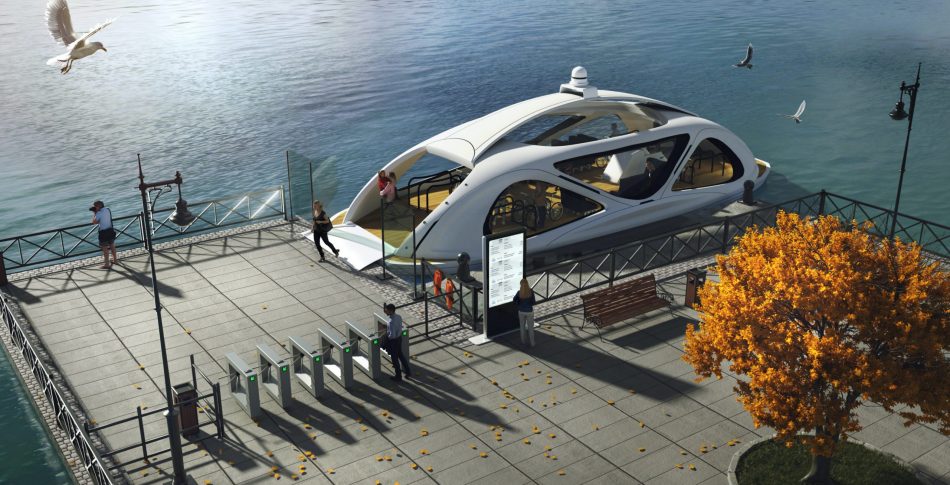
Water transportation is voyaging into the future after a Norwegian company announced it will launch a zero-emission ferry next year that is fully autonomous. Operating in a similar fashion to an elevator, passengers will be able to call the ferry to their location by simply pressing a button.
The ferry, which was designed by researchers at the Norwegian University of Science and Technology (NTNU), will be able to carry 12 passengers and is set to operate along the canal that connects the city center of Trondheim with the local port. Typically it takes 15 minutes to walk between the two locations, but the ferry will reduce the travel time to just 1 minute.
The ferry is the first of its kind and has the capacity to transport passenger bicycles, and it is designed to charge while docked. Riding the ferry will be free of charge, at least in Trondheim.
It seems automated water transportation will soon become a trend in cities around the world. Just this week, we wrote about MIT’s Roboat, a self-driving passenger boat that will act as a water taxi to transport people around the canals of Amsterdam.