Amanda Stiles and Beth Zotter, founders of the startup Trophic, are on a mission to develop the most sustainable supply chain for alternative protein in the world! Their key ingredient? Seaweed.
Seaweed has been a staple in Asian diets for centuries because of its high quantities of protein and carbohydrates, but for Westerners, the idea of a pile of seaweed on our plates may not always be the most appetizing. Stiles, a Ph.D. plant biochemist, and Zotter, a technology entrepreneur with a background in renewable energy, aim to change this perspective and establish seaweed as the alternative-protein source, eclipsing other popular plant-based proteins such as soy.
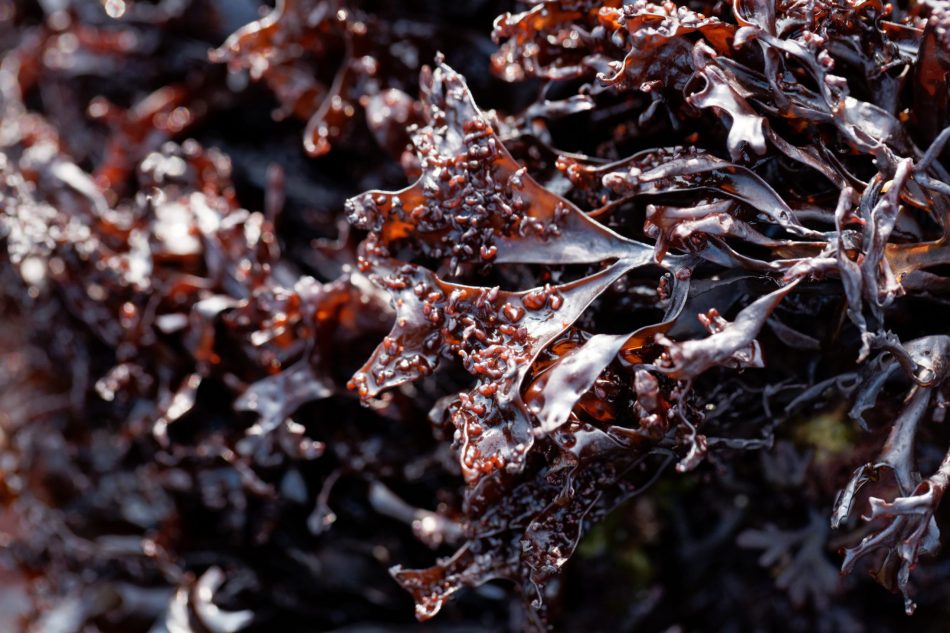
When most people conjure up an image of seaweed, they probably imagine something green, slimy, and stringy. However, Stiles and Zotter focus on Rhodophyta, or red seaweeds, because of their vivid color and high protein content. They also hone in on red seaweed as an ingredient for its ability to enhance faux meat so that it looks, cooks, and tastes more authentically meaty, rather than considering its potential as food on its own.
The research that Stiles and Zotter do for Trophic looks at red seaweed on a molecular level. Seaweed is mostly composed of protein and hydrocolloids, which are carbohydrates. They separate the hydrocolloids from the protein through a process called fractionation, so that they have more flexibility to play with the ingredients. Hydrocolloids have a particular texture that enables them to bind well, and better replicate the three-dimensional structure needed to simulate muscles in meat.
Seaweed will also maintain moisture and fat when cooked, which is a problem for other plant-based food products that lose much of their oil and moisture once cooked.
In addition to its meat-like and meat-enhancing properties, there is a lot of evidence that suggests that red seaweed could be the solution to many of the environmental issues we face today. In fact, the Department of Energy is funding Stiles and Zotter’s research because it is interested in seaweed as a renewable fuel! Seaweed could very well become the most sustainable source of protein on Earth by implementing the same technologies needed to extract renewable energy from this alternative, plant-based source.
Seaweed grows easily in harsh and salty climes and doesn’t require fresh water or fertilizers. And because it grows so quickly, seaweed farms will absorb carbon much faster than the vegetation we have on land. Farming seaweed in the ocean is like planting an underwater forest. If seaweed is farmed at a large scale, then sunk into deep ocean trenches, it has the potential to take carbon out of the atmosphere efficiently and permanently.
In addition to this, Zotter says that a seaweed farm that covers an area equal to the size of Massachusetts would generate enough protein to replace all the beef consumed around the world. And to make things better, there is a type of red algae called Dulse that even tastes like bacon when cooked!