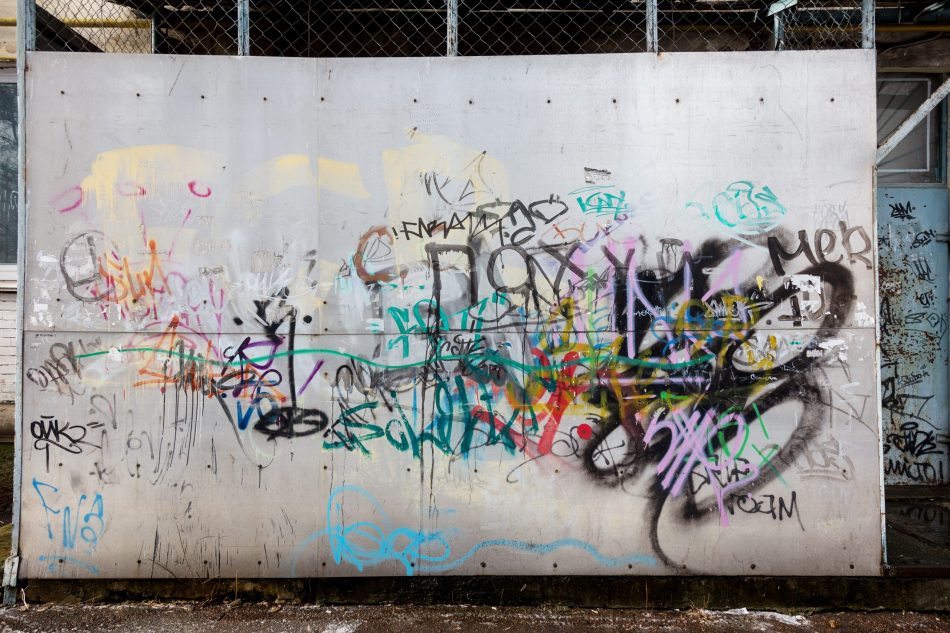
Graffiti can be a beautiful form of artistic expression, and some street artists have had a lot of success with what many would consider vandalism. However, graffiti can be especially unwanted when it defaces a mural, other works of art, or contains harmful and offensive messages.
Now, scientists from the University of Florence in Italy have developed a hydrogel that can remove just the overlying layer of graffiti without damaging the work of art underneath, even when both the art and the graffiti use the same medium.
The team, led by Michele Baglioni, has devised technology that is comprised of a cleaning fluid held in a hydrogel, a material that has an affinity for water. Unlike other gels, the hydrogel doesn’t spread or leave residues. Instead, it’s made from a network of polymers that have a fixed shape, allowing only small amounts of cleaning fluid to trickle out when it’s applied to a painted surface. According to Baglioni, “this helps in controlling very finely the cleaning action.”
The substance is comprised of mostly water with detergent-like surfactant materials and microscopic droplets of organic solvents. The solvents cause the first layer of paint to swell, allowing it to be removed from its surface.
The removal process is unique to each project, depending on factors such as the thickness of paint and its age. Sometimes, graffiti can be removed seamlessly a few minutes after the hydrogel is applied, and other times the wait may be a bit longer. The team suggests establishing the optimal application time by first testing out a small area of the graffiti.
For cities looking to clean up their streets or artists seeking a clean slate, this new technology is a game-changer!