BY THE OPTIMIST DAILY EDITORIAL TEAM
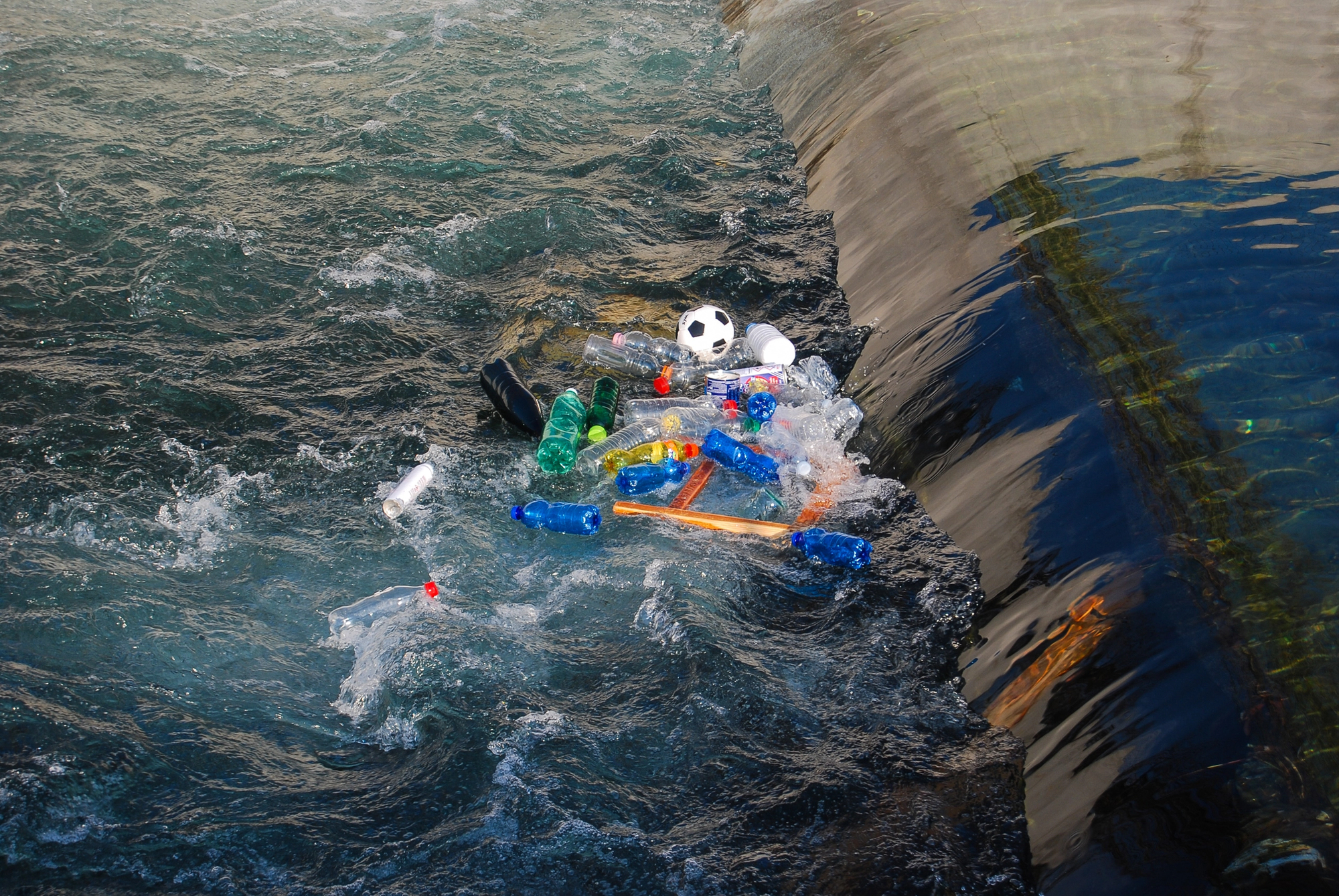
Rivers are how plastic gets to the ocean. Stop it there, and you stop it for good. The Great Bubble Barrier, a Dutch company, built a technology to do exactly that.
A perforated tube runs across the bed of a waterway and connects to an air pump. The pump creates a rising curtain of bubbles. Installed diagonally across the river’s flow, the current naturally carries floating plastic and material suspended lower in the water column to a collection point at the bank. The system does not block fish. It does not block ship traffic. It covers the full width and depth of the river.
What it catches
Universities and independent research institutes have validated the system. It captures around 86 percent of surface plastic. “That number is indeed quite stable,” says Anne Marieke Eveleens, the company’s chief business development officer.
The Great Bubble Barrier currently operates in Amsterdam, Katwijk, and Harlingen in the Netherlands, and near Vila do Conde in Portugal. Installations in Europe and the United States are under discussion.
Why rivers matter more than beaches
Less than 10 percent of plastic is recycled globally. The rest enters waterways through poor waste management or accident. Beach clean-ups and ocean collection efforts help. They are not keeping pace.
“The production of plastic is only increasing,” Eveleens says. “We expect it to triple by 2030. The demand for plastics is very high. We use it in all of our daily activities, and at the same time, we don’t really know what to do with this plastic at the end of its life.”
Catching plastic in rivers, before it disperses into the open ocean, is a different category of problem. The Great Bubble Barrier’s 86 percent capture rate is what becomes possible when you get to it early enough.
The scaling challenge
The company’s stated ambition is Southeast Asia, where some of the world’s most heavily polluted rivers flow. Getting there is not only an engineering problem.
“You need to make sure that permits are in place, that there’s a waste collection system so that our waste doesn’t end up a few meters further into the river again,” Eveleens says. “We work together with communities in the local area, we ask their help to figure out what the most frequent object is that we find and whether we can do something about it locally.”
Every deployment requires governments, local waste managers, and communities to coordinate. Recognition through the Earthshot Prize, Prince William’s global environmental award, accelerated that effort. “Almost everywhere we go in the world, people have heard of a bubble barrier,” Eveleens says. “It really made a huge push for us to go international and bring our solution to where it’s needed.”
Beyond collection
The barrier does more than pull plastic from rivers. Every deployment generates data: what types of plastic appear most frequently, where, and when. That information feeds back into policy upstream.
“All this data that we’re gathering is also a way to make new policy to prevent it from happening in the first place,” Eveleens says.
The technology is validated. It is operating across four sites in two countries. More are under negotiation. The engineering problem is solved. Getting the barriers into every river that needs one is the work that remains.
Did this solution stand out? Share it with a friend or support our mission by becoming an Emissary.