


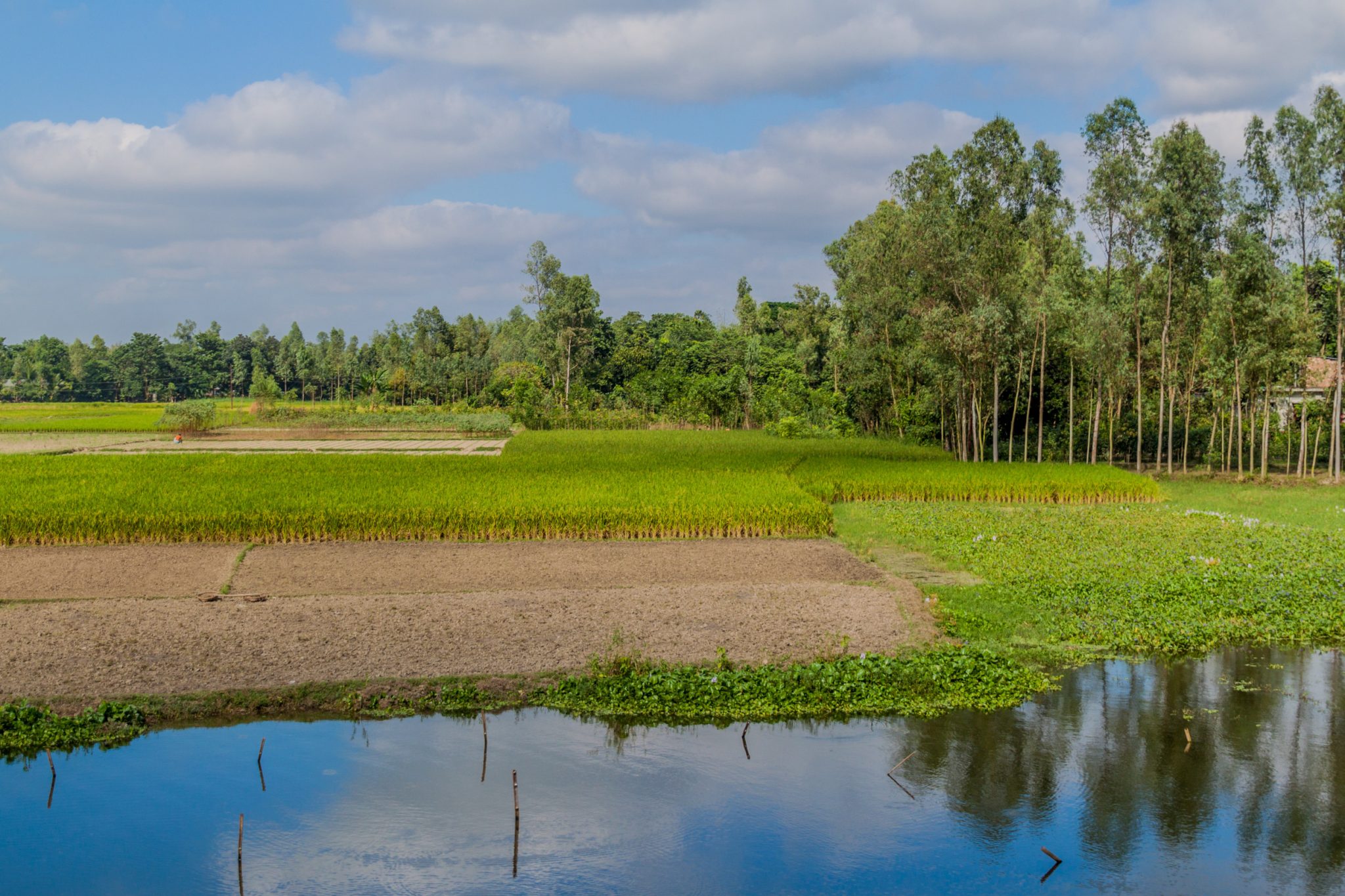
Farmers in Bangladesh are ahead of the game in developing creative solutions for planting in places with more water than land because Bangladesh’s wild monsoon season gives farmers no choice but to adapt to excess rains.
According to experts, 20 percent of the available land in Bangladesh will be permanently underwater by 2050. Other vulnerable countries will be in the same dire situation due to climate change, and researchers suggest that these countries, as well as the rest of the world, should pay attention to the successful tactics of Bangladesh’s farmers to adapt to conditions where there is less land and more water.
The country’s native farmers use floating platforms of greenery, which are constructed by cultivating plants such as water hyacinths several feet into the water. This provides a base that is then used to plant vegetables without the need for soil, ensuring the crops’ ability to adapt to even extreme rains.
The creation of these floating gardens is a community effort. The floating gardens supply families and businesses with diverse produce like okra, gourds, spinach, as well as numerous herbs and spices.
The best part is that this traditional use of hydroponic technology, the production of plants without soil, is completely environmentally friendly. According to Fahmida Akter, a senior research fellow at the James P Grant School of Public Health at Brac University in Dhaka, “All the necessary inputs and resources are natural, and it does not create any waste or byproduct which can impact the environment negatively.”
Once the monsoon season ends, the plants from these floating gardens are broken up so their nutrients can be mixed into soil for land-based crops like tomatoes and cauliflower.






