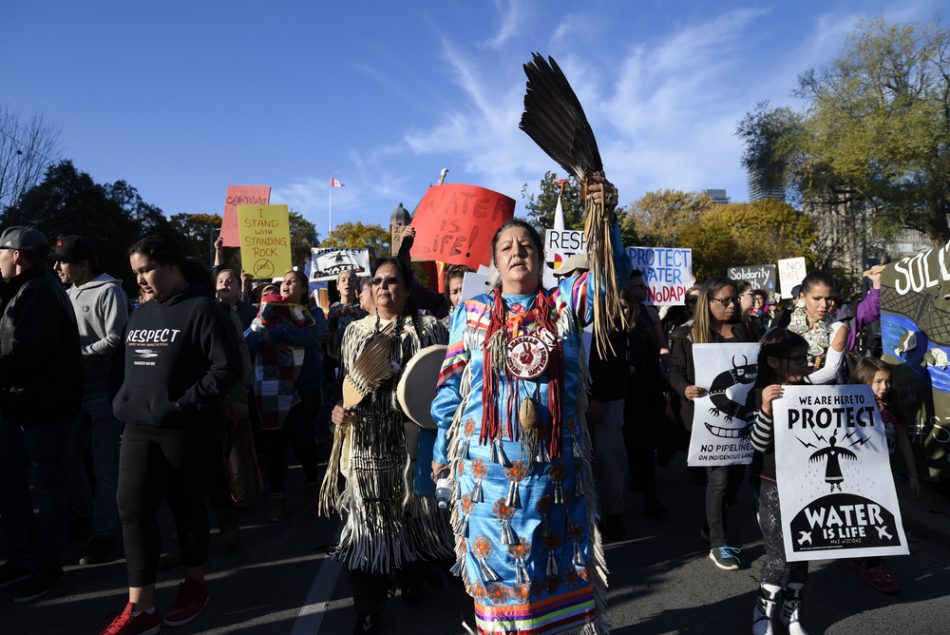
Indigenous communities have been at the forefront of many climate action and conservation initiatives. While some, like protesting and blocking the Dakota Access Pipeline, are well known, others, like stopping the Mountain Valley Gas Pipeline and installing renewable energy grids on Tribal lands, go largely unreported by mainstream media.
A new report from the Indigenous Environmental Network (IEN) demonstrates that these projects are having a profound impact. Specifically, Indigenous-led resistance to 21 fossil fuel projects across the US and Canada has stopped or delayed emissions equivalent to one-quarter of those produced annually by the US and Canada.
Indigenous resistance has stopped fossil fuel projects which would, in total, emit 780 million metric tons of greenhouse gases every year. They are currently protesting or legally-challenging projects that would dump an additional 800 million metric tons into the atmosphere annually. This resistance has prevented a total of 1.587 billion metric tons of annual greenhouse gas emissions, the equivalent emissions of 400 new coal-fired power plants. The report was generated using publicly-available data from nine different environmental and oil regulation groups.
Dallas Goldtooth, an organizer with IEN, told Grist, “What Indigenous peoples are providing is a roadmap for our allies and supporters to adopt as a way to address the climate crisis.”
This report dispels the myth that protesting and challenging fossil fuel projects has little impact on total emissions. It also demonstrates once again the critical role that Indigenous peoples have in restoring ecological balance. Despite their critical role as stewards of the land, Indigenous communities are also particularly vulnerable to these emissions-generating projects. Pipelines, refineries, and other fossil fuel projects are often placed near Indigenous and marginalized communities to reduce legal pushback.
As Indigenous communities resist these projects, 35 states have passed anti-protest laws and jailed or fined peaceful protestors. This report illustrates the efficacy of Indigenous climate action leadership and also the urgent need to uplift Indigenous voices and projects. You can learn more about the Indigenous Environmental Network and support their work here.
Source study: Indigenous Environmental Network – Indigenous Resistance Against Carbon