If you have any knowledge of Latin, then you may know that the adorable critter known as the “millipede” gets its name from the Latin words for thousand which is “mille” and for foot which is “pes.” So, you may be surprised to find out that no millipede with more than 750 legs has ever been discovered. Until now, that is.
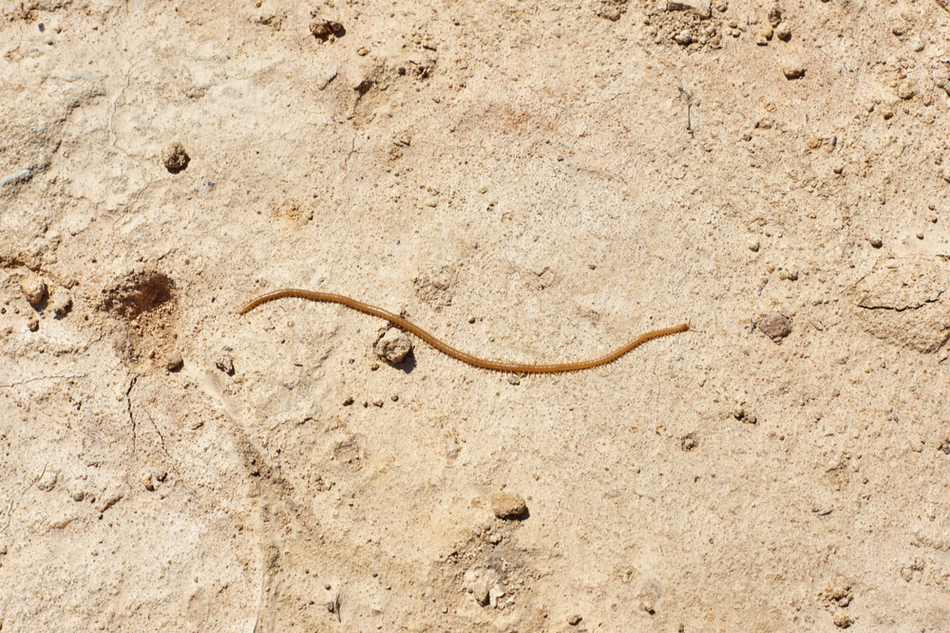
Researchers recently came across a millipede species in Australia with over a thousand legs. The Eumilipes persephone, as it has been called by researchers, has a “super-elongated” body, and has no eyes or pigment—but what it lacks in eyes and pigment it makes up for with its 1,306 legs.
The impressive millipede is 95.7 millimeters long and 0.95 millimeters wide, which is about as wide as the thickness of a credit card. The body is comprised of 330 segments, a cone-shaped head with large antennae, and a beak to help with eating.
“In September 2021, [study co-author] Bruno Buzatto emailed me about a millipede he discovered in Australia. He explained that one individual had more than 800 legs,” study author Paul Marek, associate professor in the department of entomology at Virginia Tech University, tells Treehugger.
Buzatto, an evolutionary biologist based at Macquarie University in Sydney explains that the find was a happy accident, as he was actually out in the field searching for subterranean fauna.
“As soon as I saw the animal in the lab (which happens several days after coming back from the field with the samples from the subterranean fauna traps), I realized that it was potentially longer (and had more legs) than the leggiest species on record so far. It was however only much later that we found out that it belonged to a different order to the other really long species, and that the two species are both adapted to subterranean life, in a typical case of convergent evolution,” Buzatto adds.
Buzatto uncovered this millipede in the Goldfields-Esperance region of Western Australia, which unfortunately faces continued threats from mining. According to Marek, the constant threat of mining means that there is a sense of urgency in documenting this species. Conserving its habitat should be made a priority.
If you’d like to learn more about this fascinating and record-breaking creature, check out the findings in more detail here.
Source study: Scientific Reports—The first true millipede – 1306 legs long