


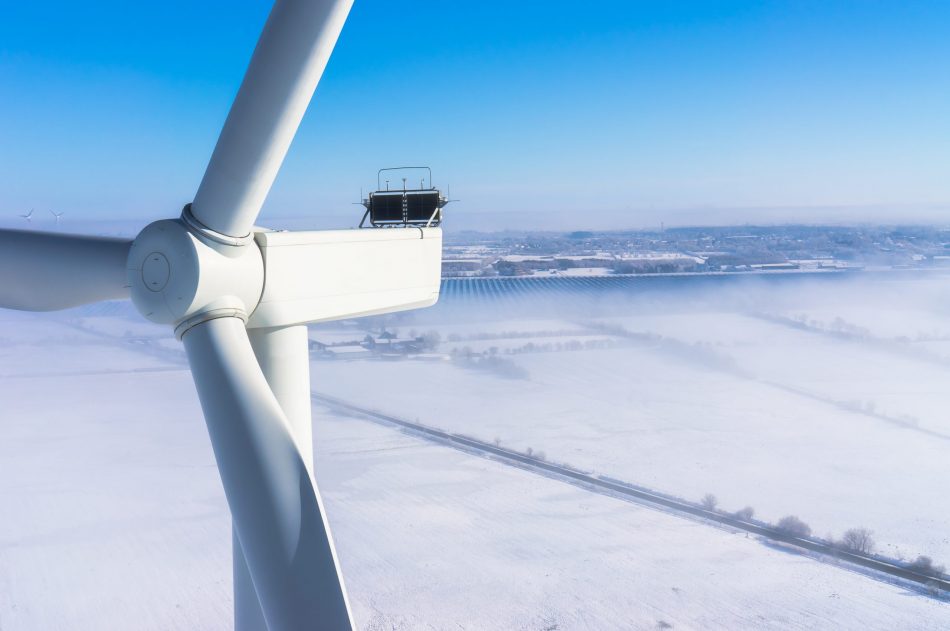
With storms growing in intensity the world over, such as Storm Eunice in Europe, solutions for enduring extreme weather are greater than ever. Adapting energy grids is particularly important to avoid blackouts.
Recent research shows, fortunately, that switching entirely to renewable energy would actually make energy grids more resilient to natural disasters.
How renewable energy makes grids resilient
A year after one of the coldest and most damaging winters on record hit Texas, the state has since improved its electrical grid to avoid major detrimental blackouts.
The state could go further, though, according to a new study, which found that Texas and the rest of the United States could avoid blackouts altogether by switching to 100 percent renewable energy such as wind, solar, and water.
The study, conducted by a team from Stanford University, created a simulated model where all fossil-fuel powered systems in the US were replaced with diversified renewable energy sources, such as solar-powered cars and wind power. The model showed that different energy sources supplemented each other in simulated natural disasters typical of certain regions, and interconnected energy grids that shared energy between states made the instance of blackouts almost nonexistent.
Switching to renewable also vastly improves energy efficiency which reduces how much is burned. In Texas, the overall energy demand would decrease by 56 percent, according to the model.
Is a 100 percent switch to renewable energy possible?
Contrary to widely held opinions, renewable energy solutions such as wind and solar are the least expensive. Additionally, adapting energy grids to renewable sources is very feasible.
One fifth of the nation’s energy is already powered by renewable energy. Not only that, in the past decade, renewable energy tech and costs have been optimized in such a way that they completely disprove the common opinion that a green shift would be more expensive.
“Technically and economically, we have 95 percent of the technologies we need to transition everything today,” said Mark Jacobson, lead author of the Stamford study.
In the face of increasingly severe weather events, evidence is pointing toward renewable energy being the world’s more economic, more preventative, and more protective solution.






