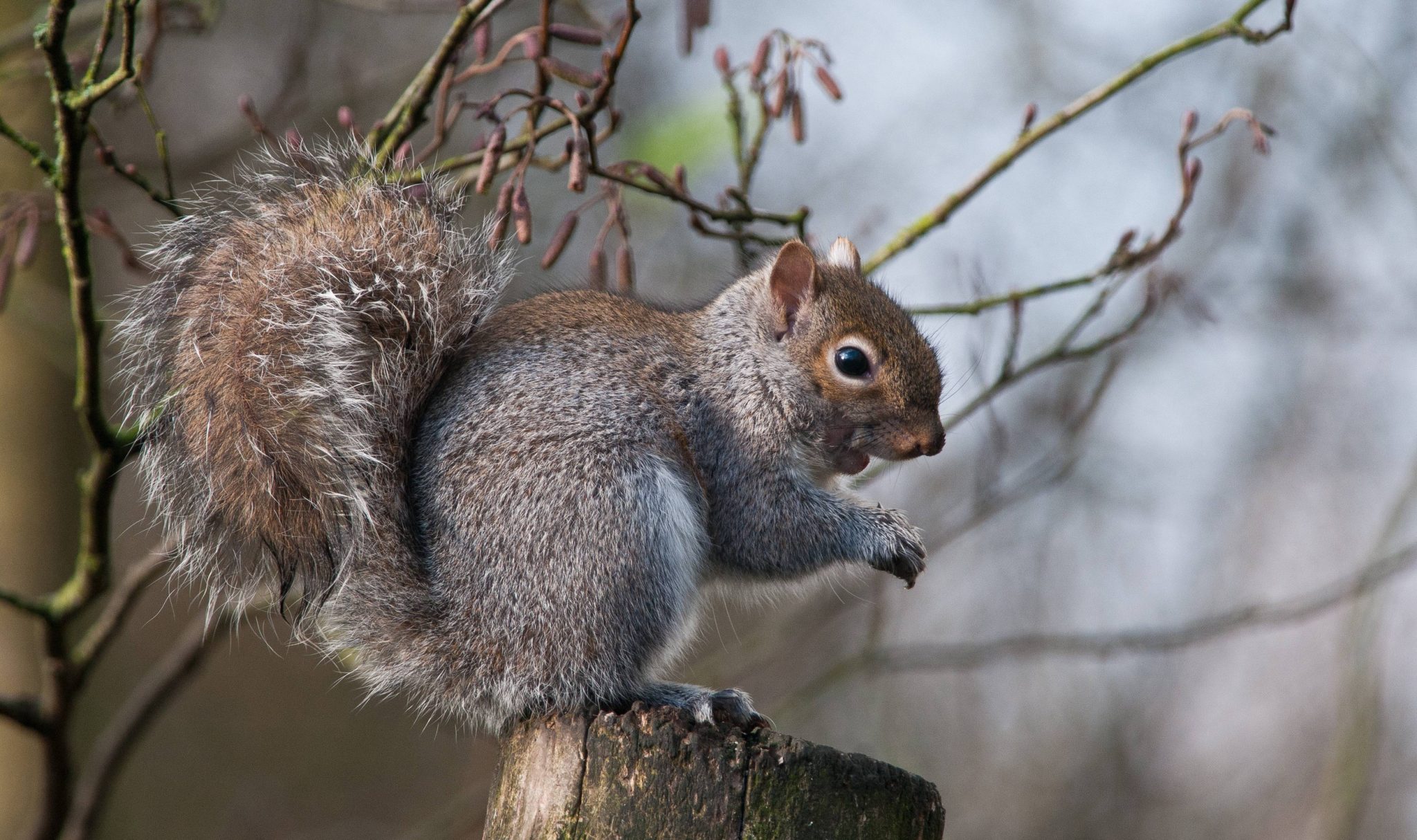
In the late 19th century, gray squirrels were introduced to the United Kingdom from the United States. Since then, the gray squirrel population has exploded in the UK to the detriment of the county’s woodlands. These squirrels strip the bark of trees to get at the sap beneath, and British forests are now under strain from the bushy-tailed troublemakers.
Luckily, scientists have developed a humane way to reduce the gray squirrel population and save the trees: squirrel contraceptives.
To address the 2.7 million gray squirrels in the UK, scientists plan to lure them into feeding boxes filled with contraceptives covered in hazelnut spread. This plan is currently in its testing phase and will soon be ready for field trials. Government scientists say this contraceptive makes male and female gray squirrels infertile.
Gray squirrels typically target young trees of 10-15 years old and prefer oak, beech, sweet chestnut, and sycamore trees. They create scarring which can leave entry points for rot and diseases in these trees, troubling the UK’s rewilding efforts. Not only that, but gray squirrels are also bigger and stronger than the native red squirrel and transmit squirrel pox. These factors have put the UK red squirrel at risk.
While hunting and culling populations are the traditional method of eradication, gray squirrels reproduce quite quickly. Scientists maintain that contraceptives are the best option to tackle the gray squirrel population. These contraceptives aren’t permanent, and scientists are working on ways to improve the length of effectiveness.
Conservationists and animal rights groups such as People for the Ethical Treatment of Animals (PETA) recognize the importance of controlling this species and approve of nonviolent means of control.
Many of the native red squirrels now only live on islands and are out of the way of many of the gray squirrel populations, so these feeding boxes with contraceptives will not put the reds at risk. In early tests, these feeding boxes were able to reach 70 percent of the gray squirrel population. This is good news for the trees like, say, an oak, which can support up to 2,000 different species.