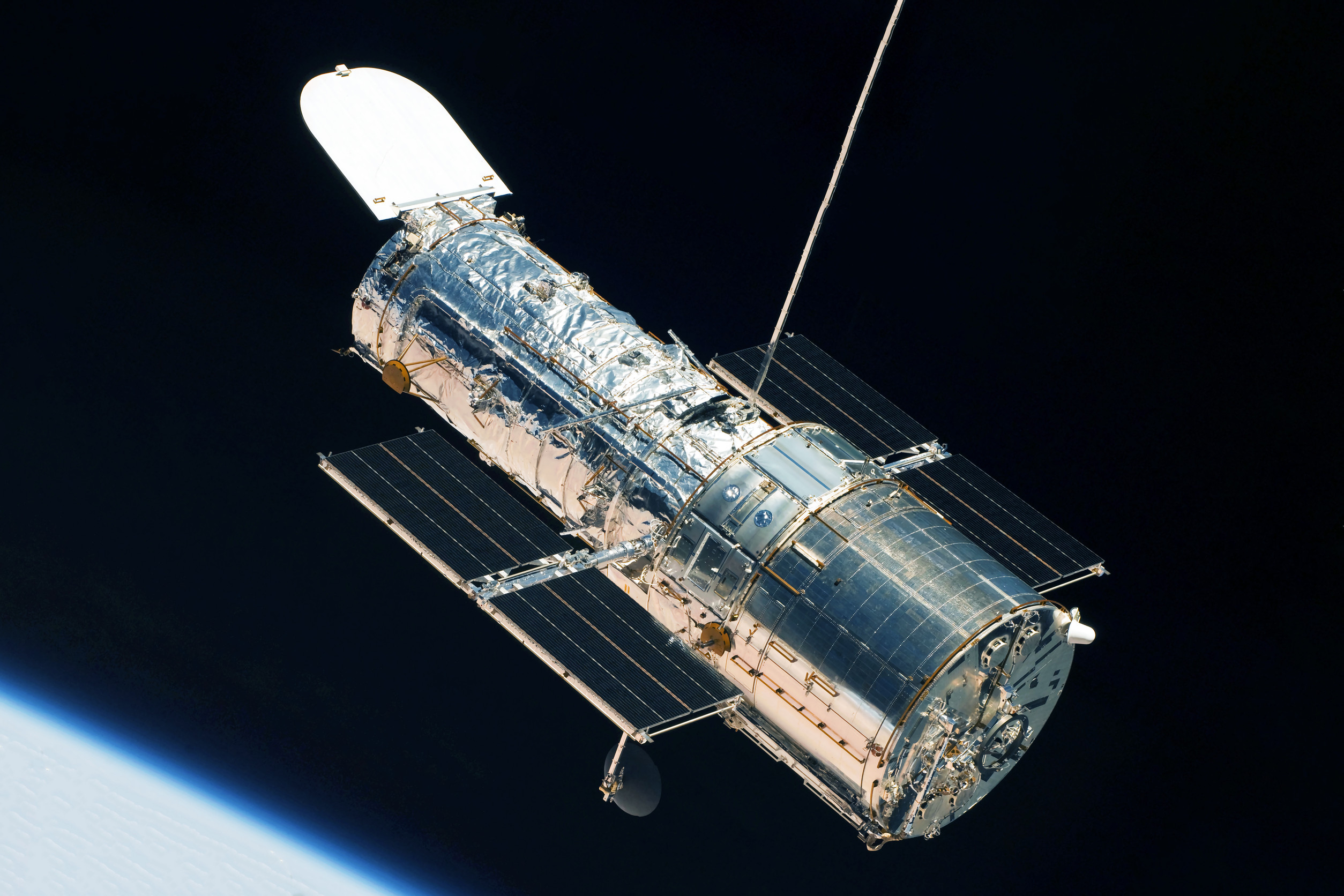
The Hubble Space Telescope ventured into space over three decades ago in 1990, and has observed around 50,000 celestial bodies to date. During this time, the incredible machine fundamentally changed our understanding of the universe.
Some of these achievements include its recent sighting of the furthest star on record and its dazzling footage capturing a supernova five billion times brighter than the Sun.
Capturing “dancing” galaxies
Adding to this impressive list, Hubble has now captured a glorious image of a galaxy cluster, named Hickson Compact Group 40 (HCG 40), engaging in a leisurely dance. This eclectic group includes three spiral-shaped galaxies, a lenticular (lens-like) galaxy, and an elliptical galaxy.
These five galaxies are packed particularly close together and would be able to fit in a region less than twice the length of the Milky Way’s stellar disk! What makes this group even more unusual is that they are isolated in their own patch of the universe. This notable separation is still not fully understood, though astronomers theorize it is because of large amounts of dark matter between the galaxies.
Colliding towards a giant galaxy
Around one billion years from now, these individual bodies will collide and merge into one giant elliptical galaxy. Therefore, this snapshot captures a very special moment in their lifetime, aligning perfectly with our small blip of human existence.
This time scale was able to be predicted using various pieces of equipment that recruit visible light, radio, X-ray, and infrared wavelengths. Through these, rates of star formation, gravitational interaction, and the presence of supermassive black holes can be estimated.
What can this image teach us?
In the more than 100 compact galaxy groups scientists have spotted, HCG 40 is the most densely packed. It is predicted that close-knit formations such as this were common in the early universe and provided fuel for black holes. Studying this rare example is key to understanding early galaxy formation by looking at when and where galaxies assemble and what these beautiful formations are made of.
The James Webb Space Telescope is a shiny new kid on the block and will soon take the lead in investigating our mysterious universe. With Webb’s more updated pieces of equipment, Hubble’s work can be paired and updated to strengthen current theories.
This story was part of our Best of 2022 series highlighting our top solutions from the year. Today we’re featuring solutions in science and technology.