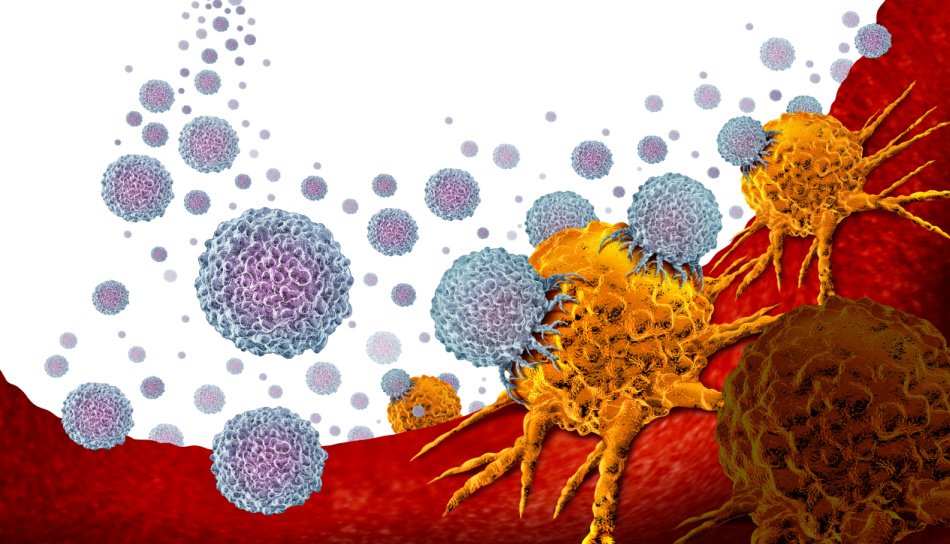
Scientists at ETH Zurich have made significant progress in developing a ready-to-use immunotherapy treatment for cancer. A synthetic protein modification can allow immune cells from any donor to be delivered to any patient without the risk of an adverse immunological reaction.
What is immunotherapy?
The human immune system is a robust first line of defense against disease, but cancer has a few sneaky tricks up its sleeve that allow it to hide and avoid elimination. Immunotherapy is a new treatment that gives the immune system the upper hand by supercharging a patient’s immune cells to seek out and destroy cancers.
Typically, the approach involves extracting a patient’s immune cells, genetically modifying them to spot cancer, and reintroducing them into the body. Not only does this require time, which many cancer patients lack, but it isn’t always practical if a patient’s immune system isn’t up to the task.
Immune cells from a healthy patient would be ideal, but this comes with its own set of challenges. Because immune cells are adept at recognizing and attacking “foreign” cells, donated cells frequently end up targeting the recipient’s healthy cells.
What is TCR-CD3?
The ETH Zurich researchers discovered a solution to potentially overcome this obstacle in the latest study, paving the path for standardized, off-the-shelf immunotherapy. The researchers focused on a specific chemical combination known as TCR-CD3, located on the surface of killer T cells, and activate them towards specific antibodies – including both desired triggers such as cancer and unwanted ones on healthy cells.
The researchers developed a synthetic version of the TCR-CD3 complex that prevents killer T cells from attacking healthy cells while yet allowing them to be modified to target cancer cells. So far, laboratory tests on human cells have been positive, with no signs of harmful immunological responses.
While there is still much work to be done, such as testing in human patients, the team believes that the research will eventually lead to a standardized, off-the-shelf cancer therapy product that can be administered to any patient without the need to remove, engineer, and return their own immune cells. This would make it far less expensive, simpler, and faster to roll out to patients.
The researchers have applied for patents and intend to establish a spin-off company to assist in bringing the approach to the market.