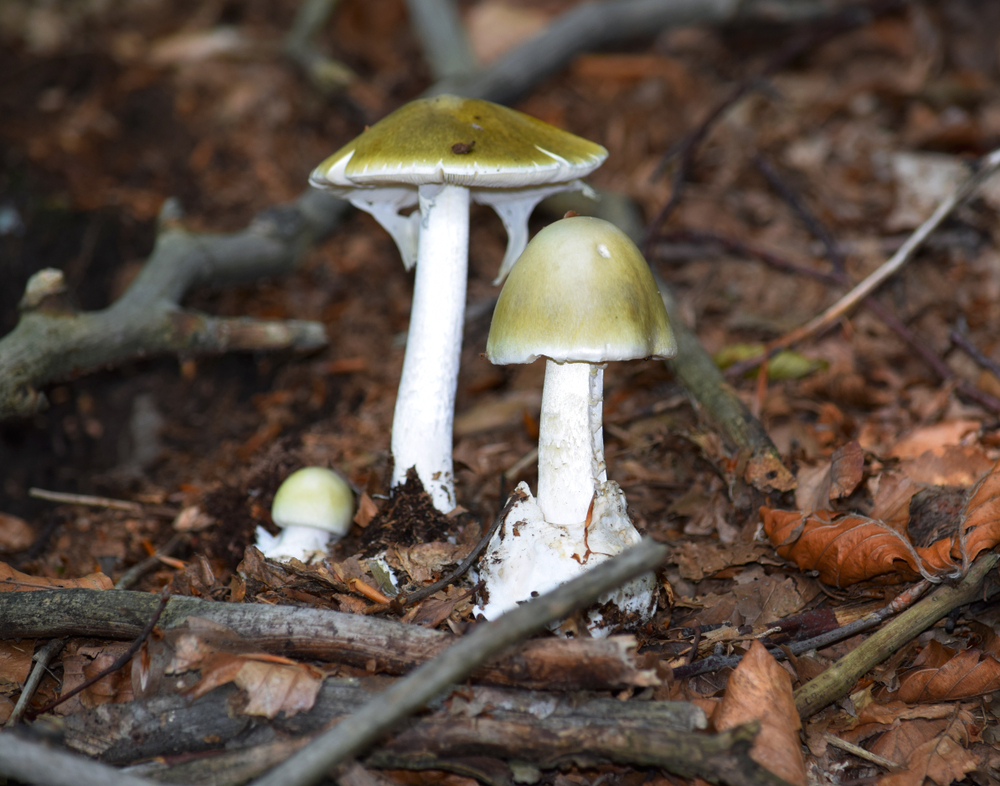
A collaboration between Chinese and Australian researchers made a significant breakthrough in the fight against the death cap mushroom, the most poisonous mushroom known to mankind. The toxic fungus, scientifically known as Amanita phalloides, is responsible for the vast majority of mushroom-related deaths worldwide. However, a viable antidote may now exist, providing hope to people poisoned by mushrooms.
Mushroom toxins: Unraveling the mysteries
Scientists looking into the harmful effects of the death cap fungus discovered an unexpected ally in their hunt for a cure. Indocyanine green, a medical imaging dye already approved for use in the United States, demonstrated its potential in blocking the lethal impact of the death cap’s primary toxin, α-Amanitin. Prof Qiaoping Wang of Sun Yat-Sen University in Guangzhou, China, who led the study, expressed excitement over the discovery, saying, “Previously, no specific antidote existed for death caps because we know little about how mushroom toxins kill cells.”
Researchers discovered that indocyanine green efficiently protected liver and kidney damage induced by α-Amanitin in rigorous trials involving animals and human cell lines. Surprisingly, it also increased survival rates after poisoning. While more clinical trials are needed to validate these findings in humans, the preliminary results are very encouraging. Prof Wang emphasizes the need for ongoing study, stating, “While the results are promising, further clinical experiments are needed to determine whether indocyanine green has similar effects in humans.”
Mushroom safety education
The study, conducted with the support of experts in the field, sheds light on the dangers of death cap mushrooms and the difficulties in distinguishing them from other safe varieties. Prof Brett Summerell, a fungal expert and principal scientist at Sydney’s Royal Botanic Gardens, stressed the importance of education, saying, “Death cap mushrooms are extraordinarily dangerous and toxic,” often resembling less dangerous species. He urges people to be cautious when seeing mushrooms under oak trees, where death caps abound, and to be aware and skeptical in such situations.
Mushroom poisoning is still a leading cause of death in food-related occurrences around the world. The discovery of indocyanine green’s antidote potential provides renewed hope for countering the damaging consequences of α-Amanitin. The researchers discovered that α-Amanitin’s harmful effects are mediated by a protein in the body called STT3B. Indocyanine green appears to inhibit STT3B action, hence mitigating the toxin’s impact.
Treatment strategy optimization
The study’s findings emphasize the need of providing indocyanine green as soon as feasible after α-Amanitin exposure. In mice, prompt intervention within four hours of poisoning was found to be the most effective. However, medication given later in the process did not have the same favorable results, implying irreparable harm had occurred. This underscores the importance of quick action and the importance of early discovery and treatment in cases of mushroom poisoning.
The discovery of a potential antidote for the lethal toxin of the death cap mushroom, α-Amanitin, provides a ray of hope in the fight against mushroom poisoning. While more research is needed to demonstrate its efficacy in humans, the use of indocyanine green appears to be promising. This discovery emphasizes the need for public knowledge and early intervention in minimizing mushroom-related mortality. With ongoing scientific progress, we are getting closer to a safer future in which mushroom poisoning will be a thing of the past.
Source study: Nature Communications— Identification of indocynanine green as a STT3B inhibitor against mushroom α-Amanitin cytotoxicity