


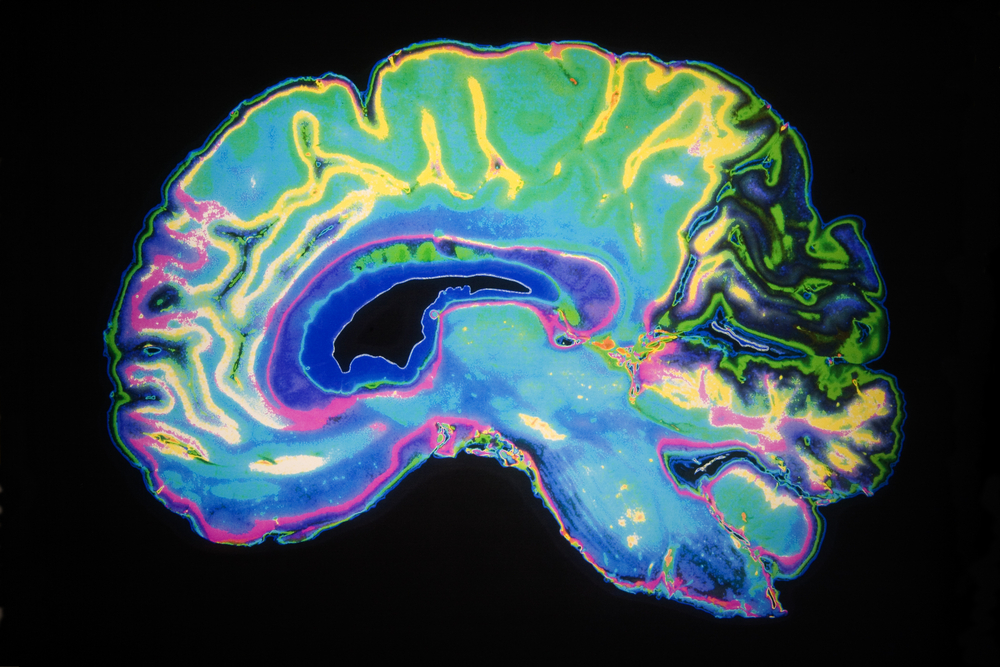
Neuroscientists at Wake Forest University (WFU) and the University of Southern California (USC) developed a pioneering prosthetic system that investigates the complexities of memory recall. Unlike traditional brain stimulation treatments, this unique approach aims to improve not only overall cognitive performance but also the remembering of specific memories.
“Here, we not only highlight an innovative technique for neurostimulation to enhance memory, but we also demonstrate that stimulating memory isn’t just limited to a general approach but can also be applied to specific information that is critical to a person,” explains neuroscientist at Wake Forest University School of Medicine and the study’s corresponding author Brent Roeder, Ph.D.
From sci-fi to reality
While electrical and magnetic brain stimulation have shown promise in improving overall cognitive processes, the idea of employing a brain ‘zap’ to retrieve specific details has long been associated with science fiction. However, a recent collaboration between WFU and USC has transformed this futuristic notion into an attainable reality.
The study involved 14 persons with epilepsy who had brain electrodes fitted to pinpoint seizure epicenters. The researchers have refined their approach, building on prior work from 2018, in which neural implants were utilized to encode information into the hippocampus. They used a computer model to decipher brain activity patterns related to the recollection of individual images, which marked a considerable improvement in accuracy.
“Our goal is to create an intervention that can restore memory function that’s lost because of Alzheimer’s disease, stroke or head injury,” Roeder said. This underscores the prosthetic system’s potential real-world uses in treating memory-related disorders.
Precision in memory retrieval
In a visual memory test, participants’ brains were examined, and stimulation patterns were developed depending on individual brain activity. These patterns were subsequently linked to memory for specific categories like animals, buildings, plants, tools, and vehicles. When these neural codes were reintroduced into the hippocampus, a 22 percent increase in matching previously viewed images from memory was reported. Notably, when both brain hemispheres were activated, accuracy climbed to over 38 percent, especially among those with poor recall.
“We found the most pronounced change occurred in people who had impaired memory,” Roeder said. This emphasizes a potential breakthrough for people who are battling memory issues.
Challenges and future prospects
While the findings demonstrate the potential of deep brain stimulation for memory alteration, obstacles remain. The search for ‘static codes’ unique to individual memories necessitates additional development of the existing model. Questions remain about the encoding of memory patterns and how they interact with the complexity of visual categories. The researchers’ goal is to decode the principles of memory encoding and investigate the possibility of transmitting memory patterns between individuals.
“Each of these questions will move the research forward to the point of developing a memory prosthetic operating on general features of memory encoding that are common across patients, yet specific enough to facilitate retention of specific memory content,” the study’s authors write.
Towards memory restoration
Dr. Brent Roeder of WFU School of Medicine anticipates a future in which this technology can restore memory abilities lost due to memory-related diseases and brain injuries. The study, while still in its early stages, represents a significant step toward harnessing brain ‘hacking’ for focused memory augmentation.
Source study: Frontiers in Computational Neuroscience—Developing a hippocampal neural prosthetic to facilitate human memory encoding and recall of stimulus features and categories






