


BY THE OPTIMIST DAILY EDITORIAL TEAM
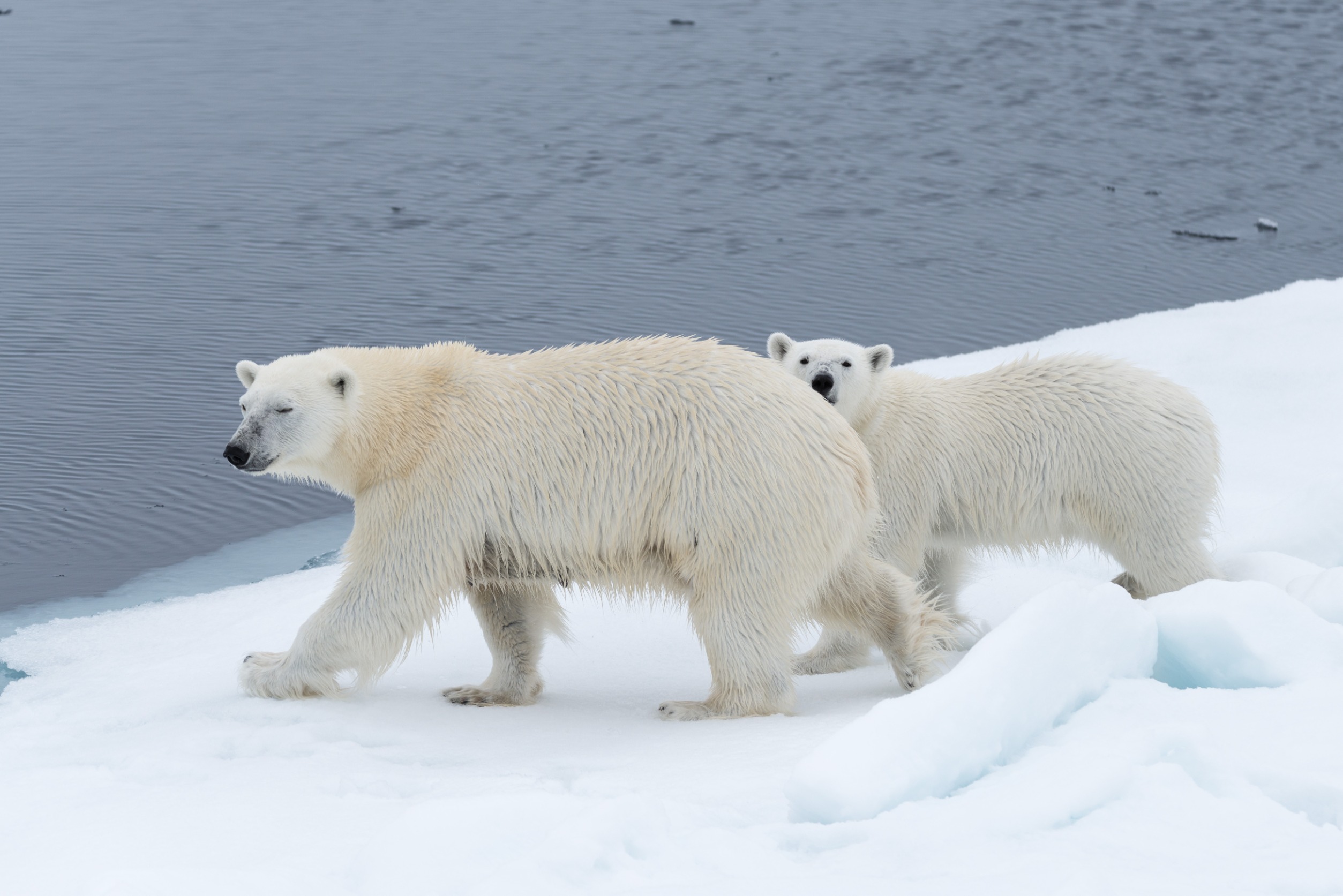
As summer ends in the Canadian Arctic, polar bears begin their trip inward, waiting for the ice to form. While tourists rush to see these gorgeous creatures, researchers are developing novel strategies to avoid hazardous confrontations between humans and bears. New tracking devices designed to attach to polar bear fur could revolutionize animal monitoring and ensure both species’ safety.
Monitoring polar bears from afar
With Arctic sea ice melting faster than ever before, polar bears are spending more time on land, prompting fears about more human-bear encounters. The tracking tags, which have been successfully tested on bears in the Canadian Arctic, are intended to “keep a remote eye” on their travels, potentially preventing unexpected confrontations.
Tyler Ross, a PhD candidate at York University in Toronto and the project’s chief researcher, emphasized the tags’ potential for minimizing human-bear interactions. “These tags are particularly promising for the prevention of human-bear interactions,” Ross said. Bears that approach too closely in southern Canadian Arctic towns often get relocated. The new tags could be attached to these bears to track their movements after release, providing conservationists with real-time data to intervene if bears approach human settlements again.
Innovative tagging tech
Traditional tracking measures, such as collars, are unsuccessful for male polar bears because their heads are smaller than their necks, allowing collars to slip off. Another option is to utilize ear tags, which entail recapturing the animal and can occasionally result in harm. The new fur tags, created by 3M in conjunction with Polar Bears International, provide a noninvasive option.
Among the three tags tested, the SeaTrkr tag performed the best. Crimped into the bears’ fur, it remained attached for an average of 58 days and provided exact location data via an in-built GPS device. “It’s ideal to have something that falls off naturally and isn’t permanently attached to the bear,” Ross explained. “But anything that lasts in the order of a few months would be great for our research.”
Filling gaps in the research
The new tracking device could help us understand polar bear migrations better, especially as the Arctic climate warms. “There’s a dearth of information about male polar bear movements because they can’t be equipped with conventional tracking collars,” Ross explained. With sea ice melting quicker and the winter hunting season shorter, understanding how bears adapt is more important than ever.
A 2022 US Geological Survey study employing satellite monitoring collars on nearly 400 polar bears in Alaska discovered that their time onshore had increased dramatically in recent decades. This shift emphasizes the importance of tracking their movements to avoid dangers. “Getting a better sense of polar bears’ movements is really crucial,” Ross commented. “Particularly given the state of their environment at this point.”
Implications for conservation
The findings, published in the journal Animal Biotelemetry, show that these novel tags have the potential to increase our understanding of polar bear behavior and help conservation efforts. As climate change brings bears and humans closer together, these tags could become an important tool for guaranteeing their protection.
The capacity to track bears accurately and non-invasively opens up new options for conservation measures. Knowing where bears are likely to move allows wildlife officials to take preventive measures to keep them away from human populations, lowering the likelihood of conflict.
As Ross and his team work to optimize these tags, their objective remains clear: to find long-term solutions to coexist with one of the Arctic’s most iconic inhabitants.
Source study: Animal Biotelemetry—Telemetry without collars: performance of fur- and ear-mounted satellite tags for evaluating the movement and behaviour of polar bears






