BY THE OPTIMIST DAILY EDITORIAL TEAM
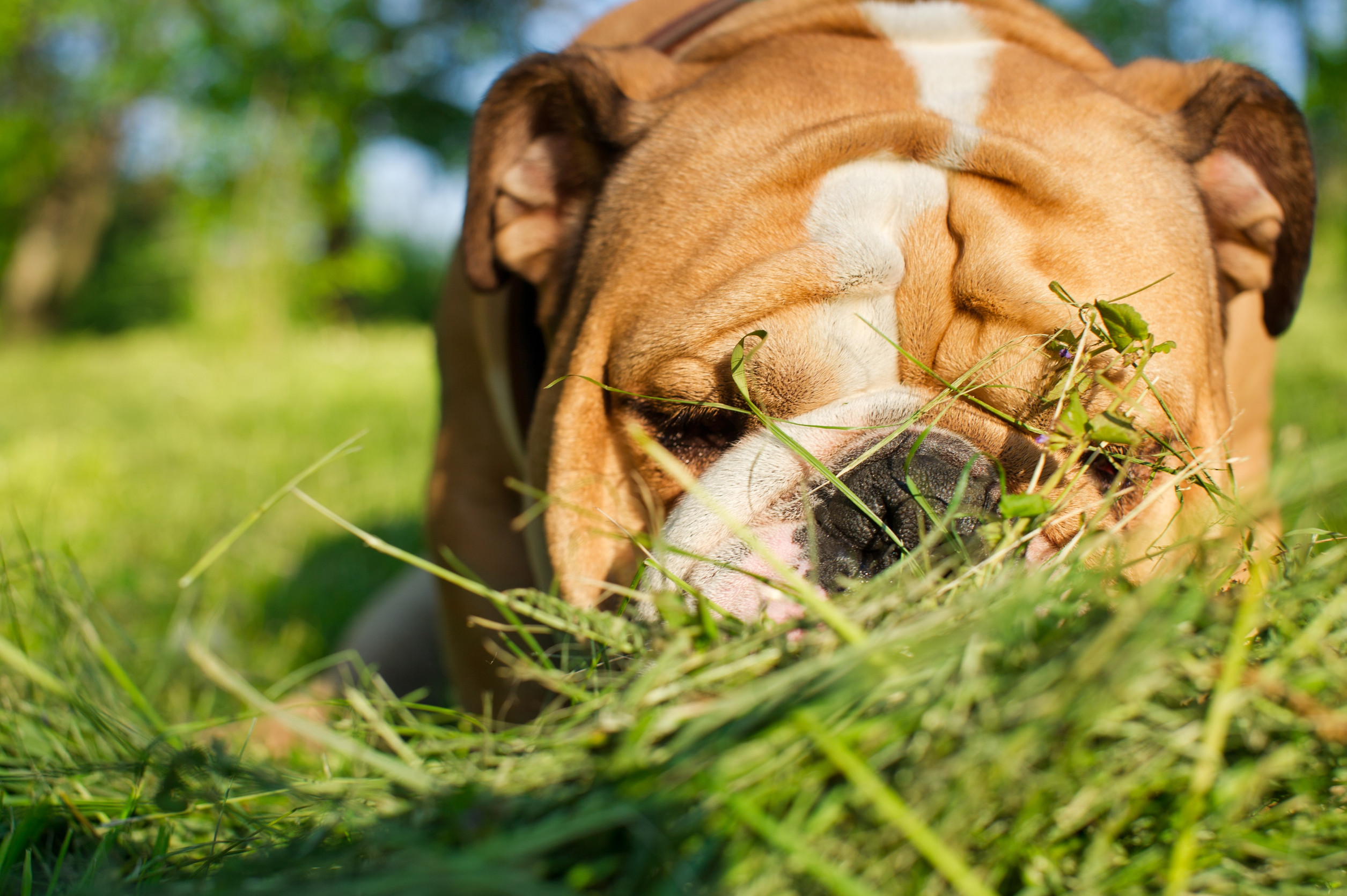
You’re out walking your dog or watching your cat in the backyard when, out of nowhere, they start nibbling grass like it’s a gourmet salad. It’s odd behavior, especially for cats, who are strict carnivores. So what’s going on here?
According to Dr. Jamie Lovejoy, veterinarian at Stack Veterinary Hospital in Syracuse, New York, “We do see grass-eating behavior in both dogs and cats, and these are two species that technically really don’t have the equipment to digest a lot of grass.” Herbivores, after all, have specialized gut bacteria, longer digestive tracts, and even multiple stomach chambers to handle grass’s tough cellulose. Cats and dogs? Not so much.
More than a tummy ache
The old wives’ tale goes like this: pets eat grass to soothe an upset stomach. “Most of the time when it comes out, it comes out kind of unchanged, either by vomiting or defecation,” Lovejoy told Live Science. “And so I think it inspires a lot of old wives’ tales.” But is that actually true?
Apparently not. In a 2008 survey of 1,571 dog owners, only eight percent reported their dogs showed signs of illness before eating grass. Cats? Similar story. A 2021 survey published in the journal Animals found just six to nine percent of cat owners believed their feline seemed sick before the munching began, even though vomiting after eating grass was more common.
What the research really says
Interestingly, these studies also poke holes in another popular theory: that cats eat grass to hack up hair balls. While long-haired cats do tend to vomit hairballs more often, researchers found “no evident difference” in grass-eating behavior between long- and short-haired cats.
So if it’s not always about nausea or fur balls, what gives?
A habit rooted in the wild?
Researchers have observed that wild canines and felines like wolves, foxes, and bobcats eat grass too. This hints at an innate behavior that may have evolved as a kind of self-cleansing strategy. “Scientists have hypothesized that wild cats and wolves eat grass to clear their intestines of parasites,” Lovejoy explained. Could domesticated animals be doing the same?
It’s hard to say. “Most of our pets really don’t have these high worm burdens,” Lovejoy noted, making this theory difficult to test in today’s household pets.
Micronutrients or just a craving?
Some scientists speculate that grass could provide trace nutrients like B vitamins or even fiber. But that’s unlikely to be the driving factor for most pets who eat a well-balanced commercial diet.
“If you have a healthy pet who is getting a well-balanced diet and occasionally decides to go eat some grass, nibble on catnip, things like that, then [there’s] absolutely nothing to worry about,” said Dr. Lori Teller, a clinical professor at Texas A&M’s College of Veterinary Medicine & Biomedical Sciences.
But if your pet is going after grass like it’s a buffet, or throwing up every time, that’s a red flag. “If they’re ravenous for these plants, or constantly eating them and then throwing up, then I would certainly be looking for an underlying problem,” Teller added.
When to be concerned
In most cases, grass-eating is harmless, if a little odd. However, some plants are toxic to pets, and others may be treated with pesticides or fertilizers that are unsafe for ingestion. Lovejoy recommends checking the American Society for the Prevention of Cruelty to Animals’ list of toxic plants before letting your pet graze.
Scientific studies on this topic remain few and far between. “I think a lot of these questions are kind of technically unanswered,” Lovejoy said.
So what’s the most likely reason your pet chews grass? According to both Lovejoy and Teller, it might be as simple as curiosity or preference. “There is no one reason why cats and dogs want to or choose to eat grass,” Teller said. “There are probably as many reasons as there are different types of grass out there. Some dogs and cats just like it.”