BY THE OPTIMIST DAILY EDITORIAL TEAM
In a quiet lab in the Netherlands, Professor Han Wösten holds up what looks like a spongy brick. It may not seem like much at first glance, but this block, made from the rooting networks of fungi, could be a window into the future of sustainable construction.
“Ten years from now, we should have the first fungal buildings,” says Wösten, a molecular biologist at Utrecht University.
These aren’t the moldy walls you’re used to. They’re a new class of materials that are alive, made from mycelium, the underground root-like structure of fungi that acts as nature’s communications network. And if Wösten and his team have their way, these materials could eventually form the very walls around us.
A new kind of living material
Wösten is part of Fungateria, an EU-funded research initiative bringing together scientists from Belgium, Denmark, Greece, the Netherlands, Norway, and the UK. Their ambitious goal is to create engineered living materials (ELMs) that don’t just exist in the built environment but actively participate in it.
By combining fungal mycelia with bacteria, the researchers are developing materials that can grow, heal themselves, and even sense changes in their environment. Picture insulation that repairs its own cracks, or a wall that absorbs carbon dioxide and cleans the air around it.
“Already we can make leather-like materials or insulation panels from these extended fungal networks,” Wösten explains. “Now we want to go to the next stage and grow buildings, but in a controlled way.”
From waste to wonder: the science behind fungal buildings
The process starts with agricultural waste, which feeds the fungal hyphae, which are thread-like filaments that form the basis of the material. The resulting composite is strong, lightweight, insulating, and, crucially, biodegradable.
The construction sector is responsible for over one-third of the EU’s total waste. On top of that, material extraction and manufacturing contribute five to twelve percent of total national emissions across member states. Fungal buildings could dramatically cut those numbers by reducing carbon output and upcycling existing waste.
Smarter architecture, inspired by nature
Not everyone is comfortable with the idea of buildings made from living organisms. For Professor Phil Ayres, a biohybrid architecture expert at the Royal Danish Academy, this discomfort should flatline in a matter of time.
“We’ve eaten foods with living organisms for hundreds of years,” Ayres notes. “We have only been looking at the potential applications of these organisms in the building sector for the last 20 years.”
Ayres wants to shift architecture away from seeing materials as static and controllable. “All constructions change over time in quite dramatic ways,” he says. “If we began to think about buildings more like organisms in a continuous state, we might create architecture that is more ecologically connected.”
Growth, control, and safety
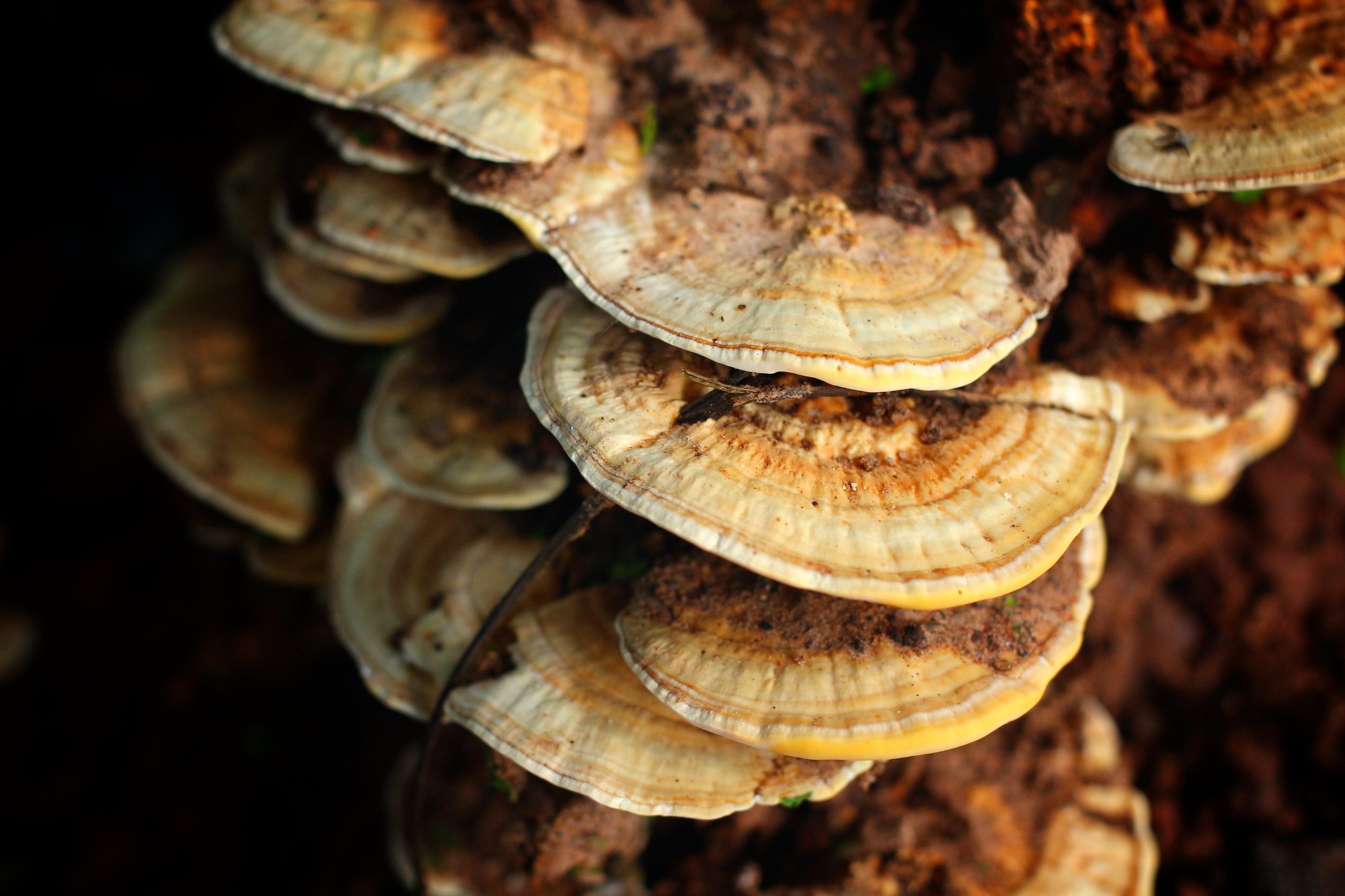
To prevent the materials from going rogue, controlling fungal growth is essential. The species most often used, Schizophyllum commune (the splitgill mushroom), thrives on dead wood. To keep it from eventually consuming its own supports, researchers have introduced two methods of control: manipulating growth through light and temperature, and using specially engineered bacteria from the University of Ghent.
These bacteria feed the fungus essential nutrients, and when they are removed or destroyed, the growth stops. Some bacteria are even programmed to release antifungal compounds as an extra safeguard.
Buildings that adapt to the future
So far, these fungal materials have shown impressive resilience, withstanding drought and high temperatures. Considering the undeniable fact that the world is facing more extreme weather, this is a great sign.
“In the future, I can imagine that we will grow complete buildings where the wood will be the supporting structure and the fungus grows along and between the wood frames,” says Wösten.
As cities look for greener, smarter, and more adaptive ways to build, fungal architecture may offer something radical: materials that are not just inspired by nature, but of it. The future of construction could very well be alive.