BY THE OPTIMIST DAILY EDITORIAL TEAM
In a world where news about endangered species is often bleak, a sprawling underwater canyon off the coast of Nova Scotia is offering something rare: hope.
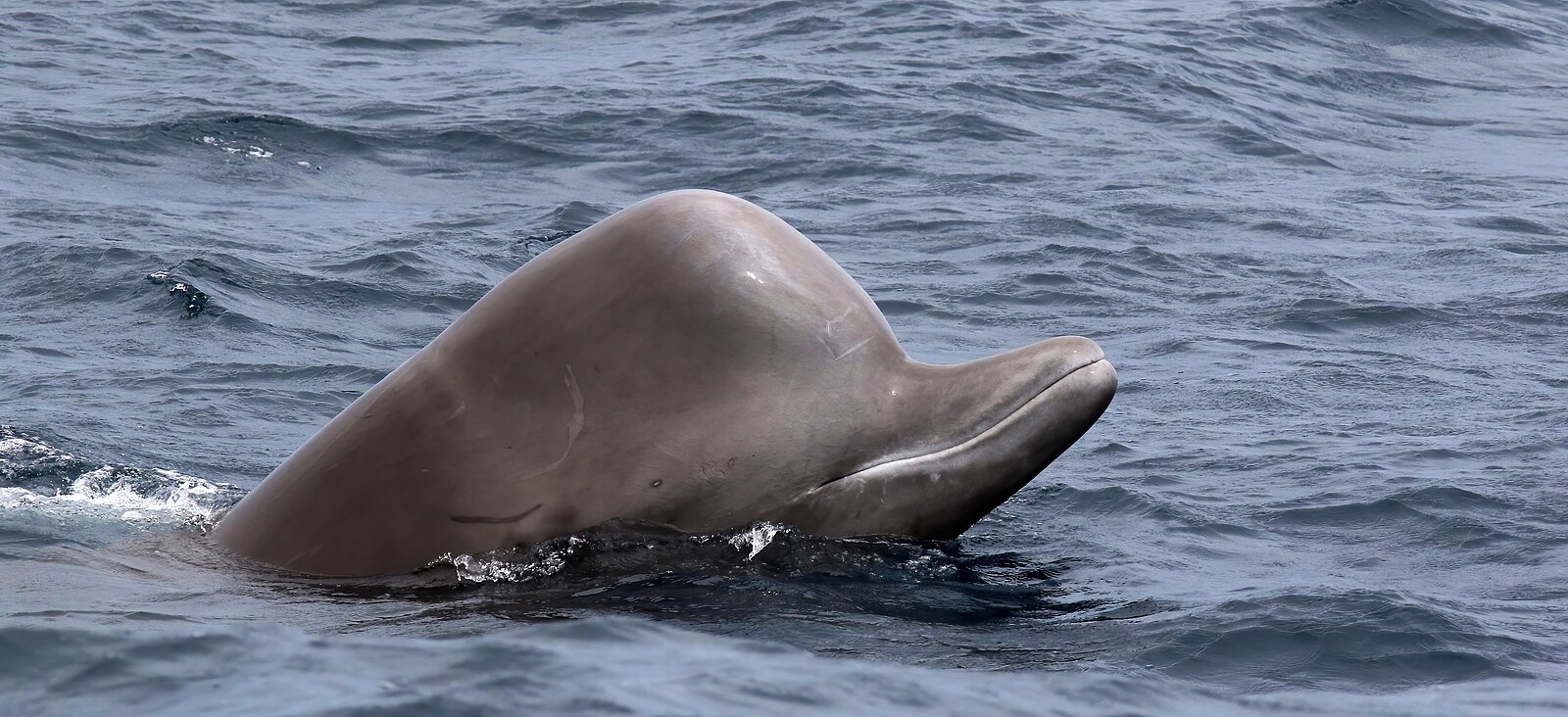
There, in the dark, nutrient-rich waters of the Gully, a vast submarine canyon roughly the size of the Grand Canyon, Canada’s northern bottlenose whales are making a remarkable recovery. Once hunted to near collapse, these deep-diving whales are now rebounding after decades of protection, a new study published in the Journal of Applied Ecology found.
“This study really does provide excellent evidence that knowledge of a species, its needs and its threats can be used to generate conservation success,” said Ari Friedlaender, a marine ecologist at the University of California, Santa Cruz, who was not involved in the research.
What makes the Gully special
The Gully’s dramatic topography consists of steep walls, deep channels, and strong ocean currents, and creates ideal conditions for marine life to flourish. “At the broadest scale, submarine canyons stir up the oceanography, and that typically translates into more productivity, life and food—good for everything!” said Hal Whitehead, marine biologist at Dalhousie University and co-author of the study.
This makes the Gully a perfect year-round home for the Scotian Shelf population of northern bottlenose whales, a group classified as endangered by the Committee on the Status of Endangered Wildlife in Canada.
Whitehead first encountered these whales in 1977 and was struck by their unusual friendliness. “These wonderful whales came up to the boat. Unlike most whales, they were friendly,” he recalled. “I thought, wow, that’s very cool.”
Unfortunately, that same friendliness made them easy targets during the commercial whaling era. Before Canada banned whaling in 1972, whalers exploited their curious nature. “The whales would come around, and they just slaughtered them all,” Whitehead said.
From collapse to cautious optimism
By the mid-2000s, decades of whaling and continued threats from fishing gear and ship strikes had pushed the Scotian Shelf population to just 130 individuals.
But in 2004, a turning point came when Canada designated the Gully as a Marine Protected Area (MPA) under legislation first passed in 1996. This law gave the government authority to protect ecologically valuable marine zones.
“We worked with experts to find places that are high value for conservation and good science,” said Paul Macnab, senior oceans biologist and project lead for the Gully MPA. Though not involved in the study, Macnab noted the Gully was chosen as a place where the effectiveness of marine protection could be properly tested.
In the Gully’s core zone, commercial fishing and other harmful activities were banned, protecting both the whales and the prey they rely on.
Tracking the impact of protection
To understand whether the protections were actually helping, researchers used 35 years of observational data, analyzing both whale sightings and human activity in the area. What they found was promising.
Fishing and vessel traffic had declined significantly in the heart of the MPA. Meanwhile, the whale population grew by nearly two-thirds, reaching an estimated 210 individuals by 2023. That’s more than were present when Whitehead first studied them nearly five decades ago.
A rare marine conservation win
Globally, northern bottlenose whales still face challenges. Low birth rates and ongoing risks like fishing gear entanglement continue to slow recovery in other regions. But in the Gully, years of consistent protections and monitoring have paid off.
“The Gully is one of the few places where we’ve been able to track a distinct population long enough to see real trends,” said Whitehead.
Still, as encouraging as the rebound is, scientists caution that a single protected canyon is not enough. Many marine species, including whales, migrate across vast ocean areas. “For many other species, it’s only part of their habitat, and we have to protect them in a lot of other ways,” Whitehead said.
That means developing networks of protected zones that safeguard marine life not just where they feed, but where they travel.
The bigger picture
The Gully’s whales show what’s possible when science, policy, and long-term monitoring come together. It also highlights how marine protected areas, if properly enforced, can make a measurable difference for endangered species.
At a time when biodiversity loss dominates global headlines, the story from this deep-sea canyon is a reminder that recovery is possible with the right tools and commitment. And that, sometimes, protection pays off, not just for whales, but for the planet.
Source study: Journal of Applied Ecology—Reversing decline: The impact of spatial conservation on endangered northern bottlenose whales