


BY THE OPTIMIST DAILY EDITORIAL TEAM
The global push to safeguard oceans is gaining momentum. With the United Nations’ target of protecting thirty percent of the seas by 2030, marine protected areas (MPAs) are being established at a record pace. But a new study from the eastern tropical Pacific sends a cautionary message: without enforcement, protection is just a label.
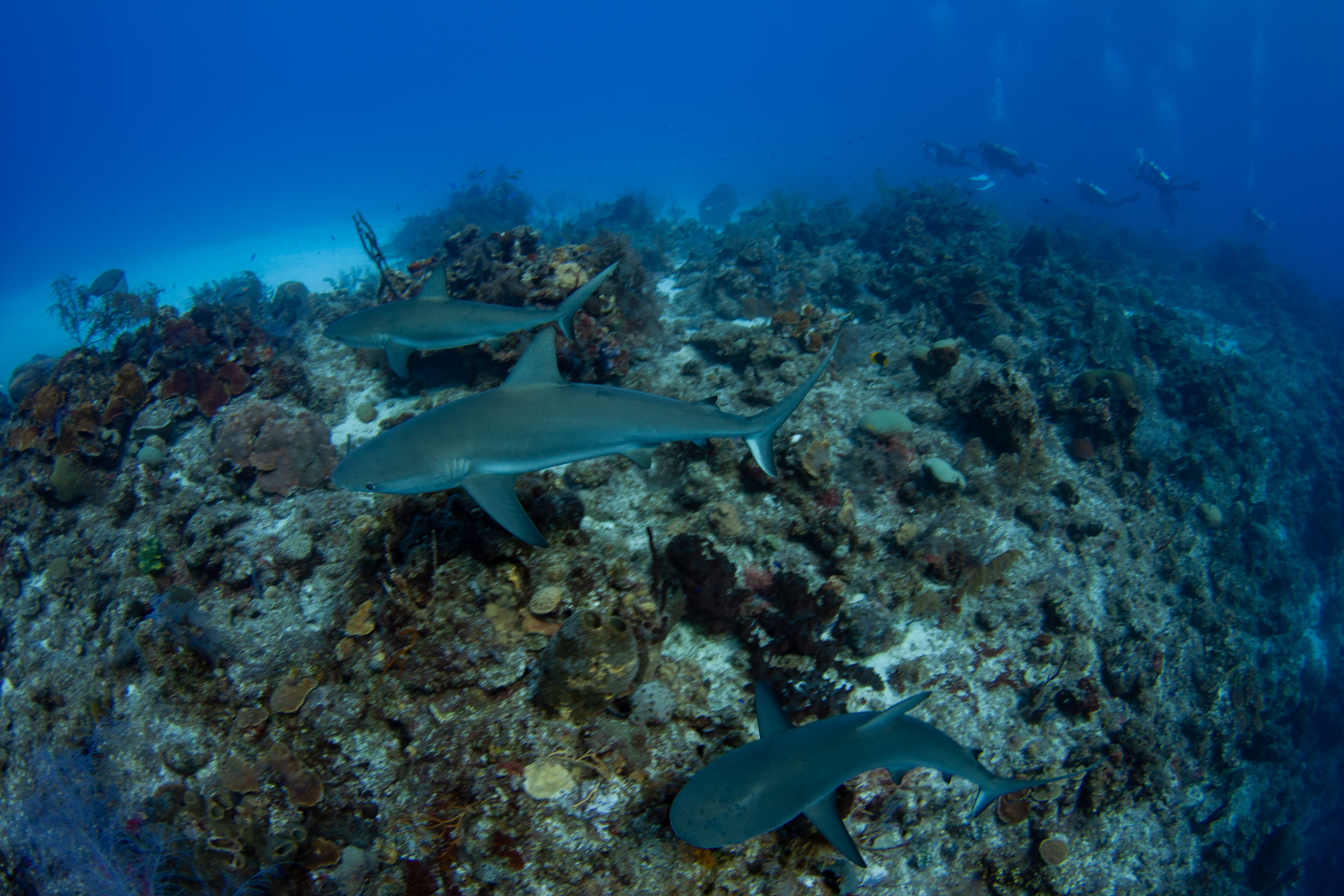
Surveying seven marine parks from Mexico to Ecuador, researchers found that shark populations are key indicators of healthy ecosystems, and they’re thriving in remote, strictly protected waters. In parks closer to shore, this is certainly not the case, even in areas labeled as protected. This makes it clear that designation alone doesn’t work. Enforcement does.
Sharks as health checks for ocean ecosystems
Often called “reef managers,” sharks serve as natural regulators by culling sick prey, keeping populations in balance, and maintaining the integrity of marine food webs. Their presence is a signal of ecosystem health, while their absence is a red flag.
In the study, published in PLOS One and supported by National Geographic’s Pristine Seas, scientists used baited remote underwater video systems (BRUVs) to observe where sharks are still thriving. The devices were placed 65 to 80 feet deep, attracting predators with oily bait, and recorded over 100 minutes per deployment.
What they saw tells a bigger story.
When the label doesn’t match the reality
Sharks showed up in droves at offshore sanctuaries like Darwin and Wolf Islands (Galápagos), Malpelo (Colombia), and Clipperton and Revillagigedo (Mexico). These parks are remote and tightly controlled, with no fishing allowed and patrols in place.
But in Machalilla, Galera-San Francisco, and Caño Island, three coastal MPAs, the results were nearly empty. Across 30 separate deployments in these zones, only four sharks appeared.
Even Caño Island, where fishing is banned, suffers from illegal activity that goes largely unpunished. “It’s easier and cheaper to fish close to shore,” noted Samantha Andrzejaczek, a marine scientist at Stanford who was not involved in the study. Offshore protections are harder to reach, but harder to exploit, too.
According to study co-author Enric Sala, only three percent of the ocean is currently protected from fishing. “Marine protected areas that allow fishing do not work,” said Sala, who also leads the Pristine Seas initiative.
Protecting biodiversity and coastal economies
The problem extends far beyond sharks. One third of fish species are now overfished, unable to replenish their populations fast enough to recover. “It’s like having a checking account where everybody withdraws and nobody makes a deposit,” said Sala. Strictly protected MPAs act like investment accounts: they compound benefits over time.
Those benefits can spill over. When marine reserves are well-managed, fish populations expand beyond their boundaries, supporting nearby fisheries. “Fishers can actually catch more by fishing just outside these zones,” said Andrzejaczek.
And the payoffs aren’t just theoretical. Countries like Palau, Gabon, Seychelles, Niue, Colombia, and Chile have already protected at least 30 percent of their waters, and are already starting to see both ecological and economic returns.
“These leaders understood that they need highly protected areas if they want their fishing and coastal economies to have a future,” Sala said.
Building real protection, not paper parks
The study’s clearest message is that marine parks work but only when they are enforced. Remote locations have natural advantages, but it’s not distance alone that determines success. It’s the rules, and whether they’re followed.
MPAs closer to people are not doomed to fail, but they do require more investment in surveillance, governance, and community engagement. “It needs to be properly enforced,” said Andrzejaczek. “Otherwise, it’s not doing its job.”
As more nations race to meet global conservation targets, this research provides a critical reality check: more protected areas won’t matter if they’re just lines on a map.
To truly protect sharks, and by extension the oceans they help balance, we need to move from declarations to implementation. It’s not just about reaching 30 percent. It’s about making that 30 percent count.






