BY THE OPTIMIST DAILY EDITORIAL TEAM
Each summer, a humble Belgian town becomes the stage for one of nature’s most dramatic rituals. In Chimay, about 1,000 virgin queen bees take to the sky for what beekeepers call the “wedding flight.” High above the fields, males mate with the queens in midair. While this may seem a romantic event, the act is actually fatal for the male; his endophallus is torn away, and he falls to the ground. The queen, meanwhile, continues flying, her mission accomplished, storing enough genetic material to build thriving colonies for years to come.
Within days, beekeepers from Belgium, the Netherlands, France, and Germany arrive to collect their newly fertilized queens, transporting them sometimes more than 300 kilometers to return home to their small, brightly painted hives. The goal is simple but urgent: to rebuild populations of the endangered European dark bee, Apis mellifera mellifera.
Restoring Europe’s native bee
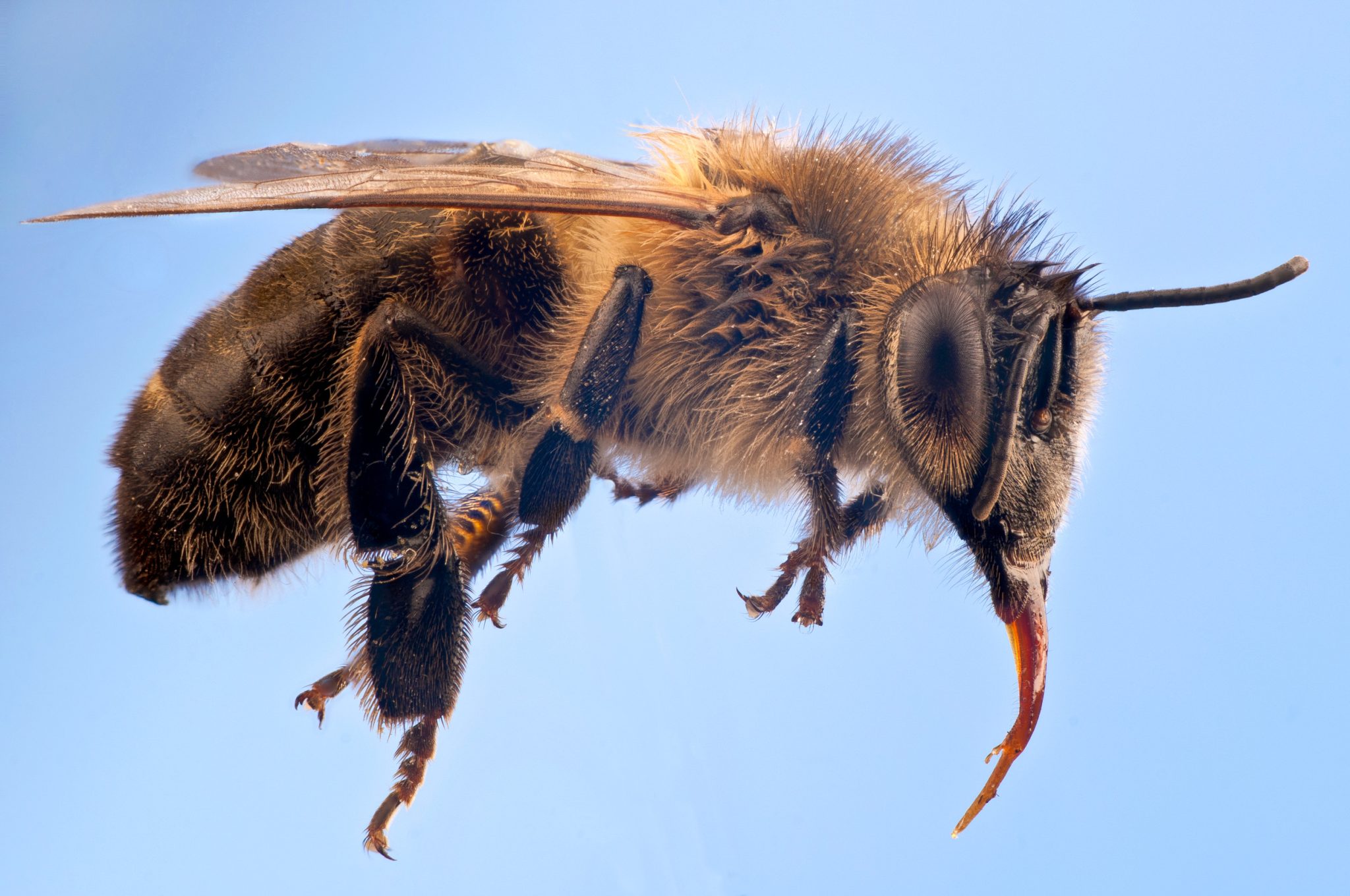
The European dark bee is the native honeybee subspecies that evolved alongside the flowers, forests, and damp climates of northern and western Europe. It is one of at least 24 subspecies of Apis mellifera, yet conservationists argue it is the only one truly suited to this region.
For thousands of years, dark bees thrived across colder parts of Europe, but that changed in the mid-twentieth century, when beekeepers began importing hybrid honeybees bred for higher honey yields. The hybrids interbred with native bees, causing what many describe as “irreparable” genetic damage.
Over time, dark bee populations became fragmented and scarce, surviving mainly in pockets of Scandinavia, France, and Spain. They were even thought extinct in the United Kingdom until small populations were rediscovered just over a decade ago. The annual Chimay gathering, launched in 2000, is now one of the species’ most important lifelines.
A sanctuary in southern Belgium
Beekeepers reserve space at the Maison de l’Abeille Noire, also called the “dark bee house”, much like booking a campsite. Over two weeks, young queens mate with up to 20 males, storing millions of sperm in a pouch in their abdomen. That reserve can sustain egg-laying for several years.
At the heart of this revival is Belgian beekeeper and biologist Hubert Guerriat. Guerriat has worked tirelessly with dark bees for four decades and founded the organization Mellifica to unite dark beekeepers across Europe.
The difference between raising dark bees and hybrid bees, Guerriat says, is like comparing “a Scottish highland cow versus an intensive dairy cow. They are not the same animal.”
In 1983, Guerriat established a beekeeping school to train locals in caring for dark bees and preventing the spread of hybrids. Today, across 30,000 hectares around Chimay and Momignies, only dark bees are permitted. An estimated 50 to 100 beekeepers participate, with plans to expand the protected zone.
One of them, cheesemaker Isabelle Noé, manages more than 100 hives. She began her colony in 2017 in a retrofitted Aldi van turned mobile bee shelter. “It’s addictive,” she claims. Her hives, painted in different colors and patterns to help bees find their way home, produce around a tonne of honey annually. Each 250-gram jar of “miel de noire” sells for €4.50 ($5.30 USD), alongside products such as lip balm, candles, sweets, and throat syrup.
A more resilient approach to beekeeping
Dark bees typically produce less honey than hybrids. Their colonies are smaller, and they forage more conservatively, but on the plus side, they require fewer winter sugar feedings and suffer fewer losses.
The hybrid queen lays large numbers of eggs, even during winter, requiring significant food stores. By contrast, the dark bee queen lays fewer eggs, resulting in smaller worker populations. “This means the European dark bee’s needs are much lower, allowing it to more easily withstand periods of bad weather,” Guerriat explains.
That resilience has become increasingly valuable. Dark bees are better adapted to cold, humidity, and sudden climate swings. Impressively, some populations even survived the last ice age in France. According to local beekeepers, during a rainy 2024 summer that hurt hybrid honey yields, dark bee colonies proved less affected.
Globally, honeybees face mounting threats. In the United States, beekeepers have reported losing an average of 60 percent of their colonies in recent years, largely due to parasites and disease. Research suggests locally adapted bees may be more resistant to such pressures than imported strains.
There is also cautious optimism about dark bees’ potential resilience against invasive Asian hornets. Guerriat notes that dark bees tend to remain inside their hives during the hornets’ most active months. “It’s just a deduction based on the black bee’s lifestyle, and it remains to be proven,” he says.
Pollinators are not interchangeable
The western honeybee is the world’s most important single pollinator species in natural ecosystems. Yet growing evidence suggests that large-scale commercial beekeeping with non-native strains can disrupt wild pollinator populations.
“All the beekeepers who use foreign bees contribute to the disappearance of the native bee,” Guerriat says. “Nature is like a high-precision watch. You can’t swap in one bee for another… Pollinators are not interchangeable, just like you can’t put random parts inside a Swiss watch.”
Conservationists are also restoring wild dark bee populations in forests by installing log hives that mimic natural tree cavities. Protecting the species is “also a way to contribute to the resilience of our forest ecosystem,” says Estelle Doumont, a conservation biologist at the University of Liège.
A model for sustainable beekeeping
As climate change, invasive species, and disease reshape agriculture, Chimay’s annual wedding flight offers more than spectacle. It represents a shift toward working with local biodiversity rather than against it.
“In apiculture, you have to explain to people how to work with dark bees,” Guerriat says. “With time they find that it is a beautiful bee.”
Did this solution stand out? Share it with a friend or support our mission by becoming an Emissary.