BY THE OPTIMIST DAILY EDITORIAL TEAM
Every remyelination drug candidate tested in multiple sclerosis research has failed. A doctoral thesis from the University of Helsinki, defended earlier this month, reports two that didn’t.
Tapani Koppinen, working in Associate Professor Merja Voutilainen’s research group, identified two separate drug molecules that successfully triggered myelin regrowth in MS disease models. Both reduced neuroinflammation. Both crossed the blood-brain barrier in laboratory animals. They work through entirely different mechanisms and yielded strikingly similar results.
The problem they’re targeting
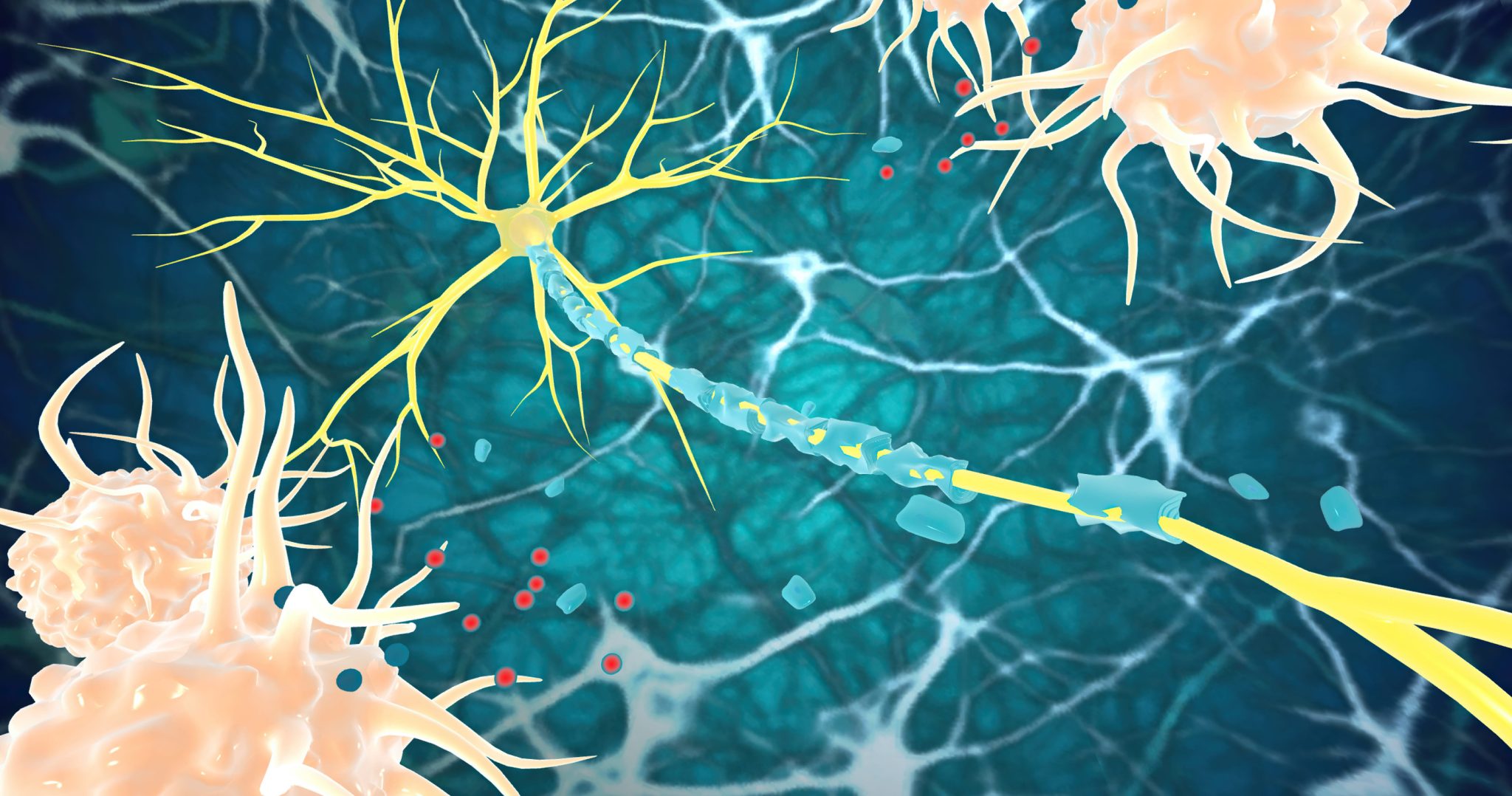
MS affects approximately three million people worldwide, with the highest rates in Northern Europe and Canada. The disease occurs when the immune system attacks myelin, the protective sheath around nerve fibers, disrupting signaling throughout the brain and spinal cord. Current treatments suppress that immune response but none of them repair damage that has already occurred.
What remyelination is
Remyelination is the process by which myelin, once damaged, grows back. Specialized cells called oligodendrocytes generate new myelin sheaths around exposed nerve fibers, restoring the insulation that allows electrical signals to travel efficiently along them. In a healthy nervous system, remyelination is an active repair mechanism, the brain’s way of recovering from injury. In MS, that capacity becomes increasingly impaired as the disease progresses, particularly in areas where repeated damage has accumulated.
That gap is most consequential in progressive MS, where injury accumulates over years and immune suppression does little to slow it. Researchers have searched for ways to restart remyelination. Every drug candidate tried for that purpose has fallen short.
Part of the obstacle is structural. In later-stage MS, damaged areas of the central nervous system develop local tissue conditions that actively block repair, at both the cellular level and through physical scar formation.
Two mechanisms, one outcome
Koppinen’s first approach targets the unfolded protein response, a stress mechanism inside brain cells that stays chronically overactive in MS-damaged tissue, preventing repair-promoting cells from doing their job. Blocking it with the new molecule increased remyelination and accelerated the process in tissue showing MS-like damage. The results appeared in Molecular Therapy in October 2025.
The second approach targets scar tissue that forms around damaged areas and creates a physical obstruction to nerve repair. A different molecule changes the composition of that scar, allowing remyelination to proceed. That work was published in Neuropharmacology in November 2025.
Both molecules successfully crossed the blood-brain barrier in laboratory animals, addressing one of the core technical challenges for brain-targeted drugs.
What comes next
The findings are from animal and cell models. Human MS involves considerably more complex tissue conditions, and no candidate has yet entered clinical trials specifically for remyelination.
“The goal is to enable the molecules we have developed to reach clinical trials, which could one day produce the first drugs that enhance remyelination in MS,” Koppinen says. “In the meantime, our findings can help in investigating the pathogenic mechanisms of MS that inhibit remyelination.”
Three million people with MS have treatments that slow disease progression. None have a treatment that repairs what the disease has already taken. These molecules don’t change that yet. They are, however, the furthest along that any remyelination candidate has come.
Did this solution stand out? Share it with a friend or support our mission by becoming an Emissary.