BY THE OPTIMIST DAILY EDITORIAL TEAM
Conventional satellites can’t detect a wildfire until it’s roughly the size of a cruise ship. Greece just launched four that catch them when they’re four meters (about 13 feet) across.
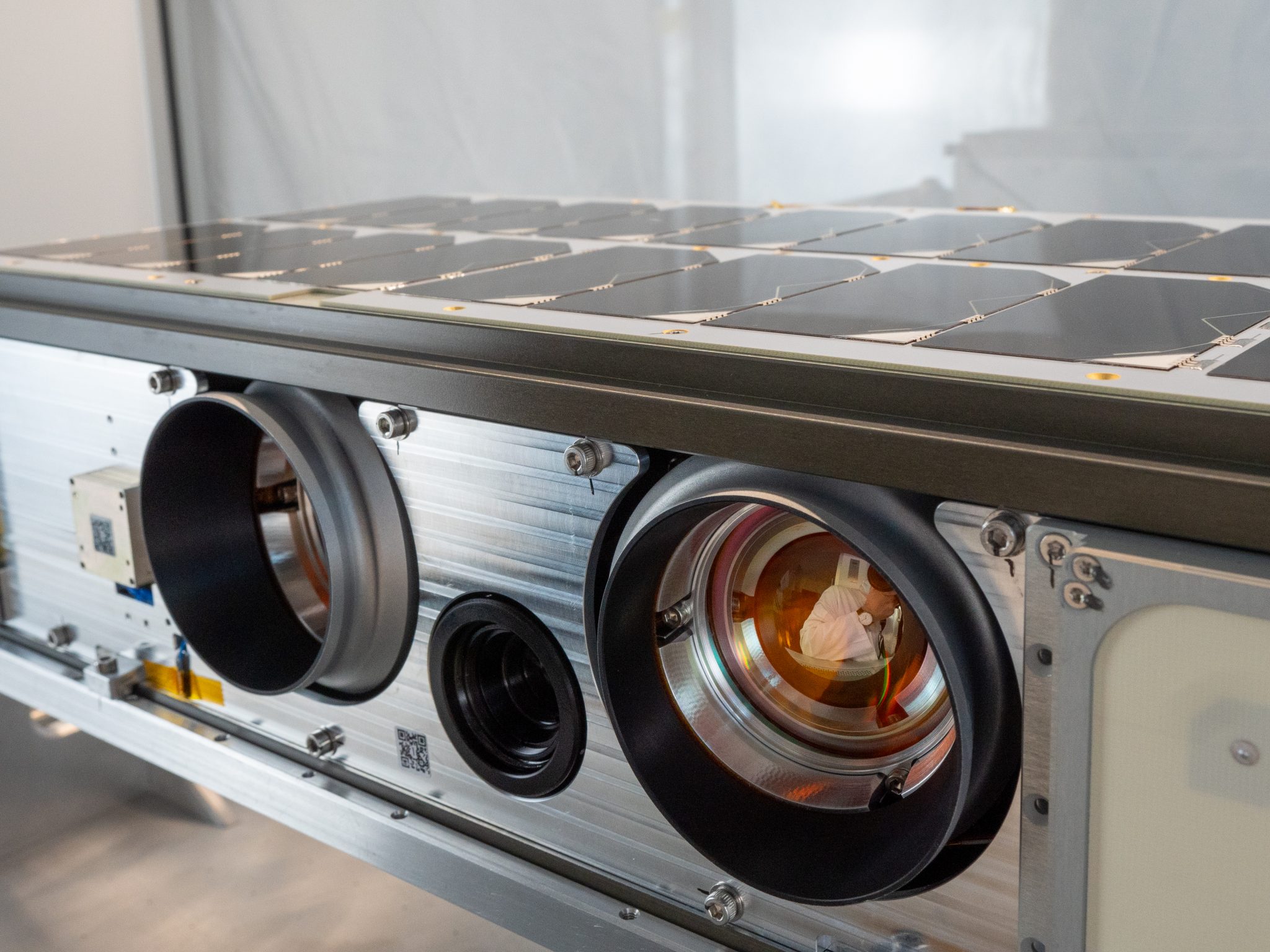
The four OroraTech nanosatellites, each smaller than a carry-on bag, went into low Earth orbit in May. Greece is the first country to deploy a satellite constellation built specifically for wildfire response. Updates come every hour with no gaps.
How it works
Each satellite captures thermal images and feeds them to AI models that analyze the data at a four-by-four-meter grid resolution. The AI filters out heat from solar panels, overheated factory rooftops, and sun-warmed rock before anything reaches emergency services.
When a fire is confirmed, incident commanders get an alert with the location, size, and intensity already calculated.
“We scan an area, use these images and send them to our artificial intelligence models. They analyze them with precision down to grid cells of four by four meters,” said Ioannis Lantouris, CEO of OroraTech. “Based on that analysis and the data held by the AI models, they can determine whether it is a fire or not. We then take this information and pass it on to the fire service or any other authority connected to the system.”
The platform also runs spread simulations. Field commanders can pull up a tablet view showing where a fire is likely to move and how crew positions shift the probable outcome.
No coverage gaps
“With the four nanosatellites OroraTech launched in May, we will have this type of information every hour. There will be no gaps in coverage,” said Fire Brigade Commander Zisoula Dasiou. “This is important not only for early detection but also for the models that predict how a wildfire will spread. In this way, we will know every hour how the fire is developing and moving.”
The hourly cadence matters most in remote terrain. Urban fires get spotted fast because people see the smoke. In a national park or an isolated valley, hours can pass before anyone notices, which is exactly when a small fire stops being small.
Why Greece
Greece has had some of the worst wildfire seasons in Europe in recent years. The system went live heading into summer.
“These satellites will help us in critical periods, such as the summer in Greece, when unfortunately we often face large wildfires,” said Dimitris Papastergiou, Greece’s Minister of Digital Governance. “A fire in a national park or a remote area can be detected much more quickly by such a satellite, which, thanks to its thermal cameras, can pick up these hot spots.”
The system was EU-funded. All four satellites are operational now.
Did this solution stand out? Share it with a friend or support our mission by becoming an Emissary.